If you are planning a home extension, conservatory, or outbuilding in the West Midlands, there is a good chance your build will be near a public sewer. Most homeowners don't know this until their architect flags it or they get an unexpected letter from the water company. The solution is a build over agreement, and getting one sorted early can save you weeks of delays.
What is a build over agreement?
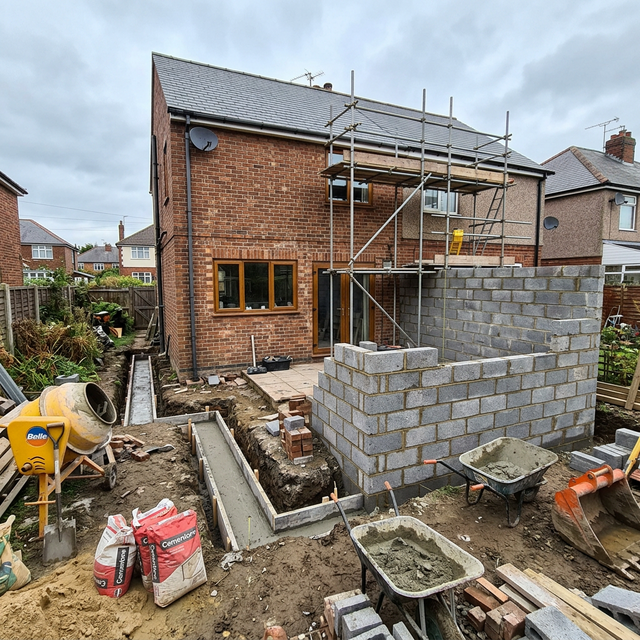
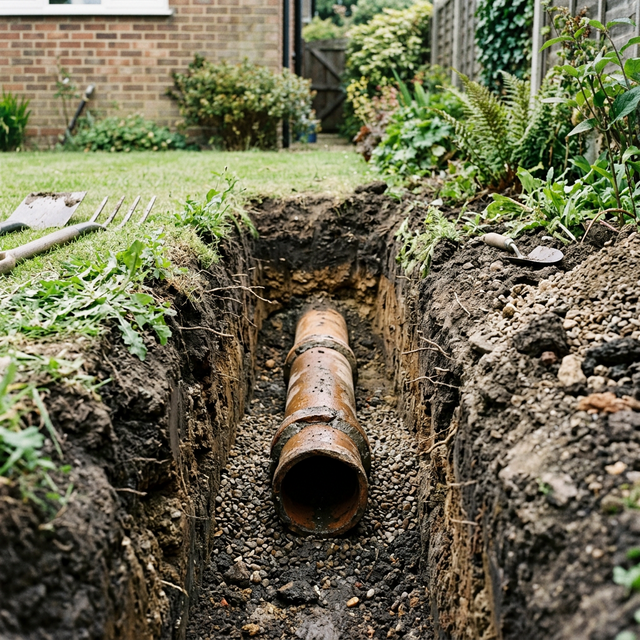
A build over agreement is written approval from your water company that allows you to build over or near a public sewer. In the West Midlands, Warwickshire, and Worcestershire, this usually means Severn Trent Water. The agreement confirms that your planned construction will not damage the sewer, block access for future maintenance, or interfere with the flow of wastewater.
You need one whenever your build falls within three metres of a public sewer. That distance catches a lot of rear and side extensions, especially on properties built from the 1960s onwards where sewer routes commonly run through back gardens.
Do I definitely need one?
Not every extension requires a build over agreement. There are two key questions to answer first:
- Is there a public sewer within three metres of your proposed build? You can check Severn Trent's sewer maps online, but they are not always accurate. Sewers can run in unexpected locations, and maps don't always reflect diversions or connections made after the original drawings were filed.
- Is the sewer a public or private drain? Private drains that only serve your property are your responsibility and don't need a build over agreement. But many drains that homeowners assume are private were actually adopted by the water company under the 2011 transfer of private sewers. If in doubt, check with Severn Trent or have a CCTV drain survey carried out to confirm what is beneath your property.
The two types of build over agreement
Severn Trent offers two routes depending on how close your build is to the sewer and the condition of the pipe:
1. Self-certification
This is the quicker and cheaper option. It applies when your build is near a public sewer but not directly above it. You complete a declaration form, submit your CCTV survey report showing the sewer is in good condition, and Severn Trent processes the approval. Turnaround is usually a few weeks.
2. Formal build over agreement
This is required when your extension is directly over the sewer or the pipe is in poor condition. Severn Trent may need to inspect the site themselves and can impose conditions such as bedding requirements, minimum clearance above the pipe, or specific foundation designs. The process takes longer, typically four to six weeks, and comes with a fee from the water company.
Why you need a CCTV drain survey first
Both application routes require you to submit evidence of the sewer's current condition. A professional CCTV drain survey provides exactly that. Our engineers insert a camera into the drainage system to record the pipe's condition, identify any defects, and produce a report that meets Severn Trent's requirements.
The survey also gives you a clear picture of where the sewer actually runs. We produce a site plan showing the pipe route, depth, material, and any connections, which your architect and builder will need for the structural design. We have seen cases where the sewer was in a completely different location to where the maps suggested, which would have caused serious problems if discovered during construction.
What our survey report includes
- Full CCTV video recording of the sewer pipe
- Screenshots of any defects or points of interest
- WRc-standard condition classification for each section
- Pipe type, material, diameter, and depth measurements
- Site plan showing the pipe route in relation to your property
- Written report with findings and any recommendations
We format everything to meet Severn Trent's submission requirements, so your architect or builder can send it straight off without reworking it.
What happens if the sewer is damaged?
If our CCTV survey finds defects in the sewer, it does not necessarily stop your project. It just means Severn Trent is likely to require the sewer to be repaired before or during construction. The good news is that we handle drain repairs in-house, including no-dig relining for minor cracks and joints, which can often be completed in a day.
Discovering a damaged sewer during the survey, before you break ground, is always better than discovering it once the builders are on site and the clock is running. We have worked with homeowners who found collapsed sections of pipe during their build over survey that would have caused subsidence under the new extension if left unchecked.
How much does it cost?
Our CCTV drain surveys for build over applications start from £150. That covers the camera survey, the report, and the site plan. There may be an additional fee from Severn Trent for processing a formal build over agreement, but the self-certification route is free to apply for.
Given that a failed or delayed application can hold up an entire building project, the cost of the survey is a small fraction of the overall build budget and often saves more than it costs by catching problems early.
Our experience with build over surveys
We carry out build over surveys across Birmingham, Solihull, Coventry, the wider West Midlands, Warwickshire, and Worcestershire. Our team regularly works with homeowners, architects, and builders who are planning extensions and need Severn Trent approval quickly.
If you are at the early stages of a project and are not sure whether a build over agreement applies, give us a call. We are happy to talk through your plans and advise whether you need a survey before you commit to any costs.
Planning a Home Extension?
Get your build over survey and Severn Trent application sorted quickly. We cover the whole of the West Midlands.
Call: 0121 296 7829