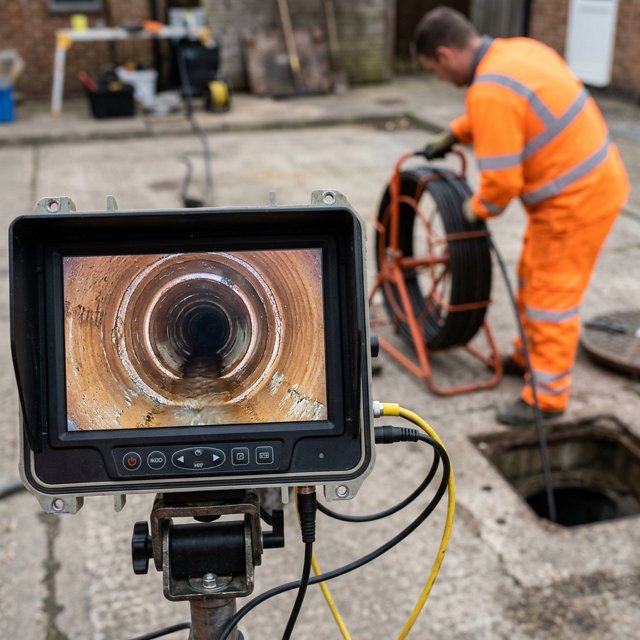
A CCTV drain survey is the single most useful diagnostic tool in drainage work. A small, waterproof camera travels through your underground pipes and sends back live footage so we can see exactly what is going on down there, without digging a single hole. If you have ever wondered what actually happens on the day, this is the full walkthrough from arrival to written report.
Step 1: assessing the access points
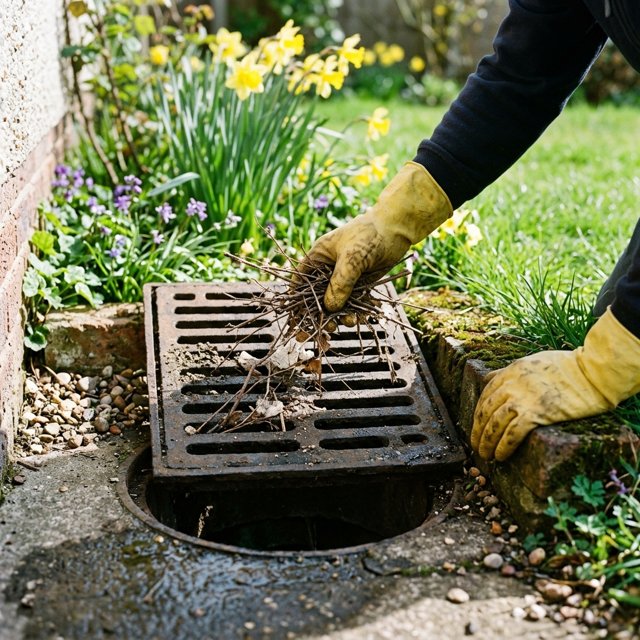
The first thing any drainage engineer does on site is locate every available access point. On a typical domestic property, that means lifting inspection chamber covers (manholes), checking gully pots at ground level, and identifying any rodding eyes built into the pipework. We need to know where the pipe runs start, where they connect, and which direction waste flows before we put a camera anywhere near the drain.
This initial assessment takes around 10 to 15 minutes. We also check the condition of the chambers themselves, because cracked benching, missing brickwork, or a collapsed channel inside a manhole can cause problems just as easily as a defect further down the line. If there is standing water in a chamber, that already tells us the blockage or restriction sits downstream.
Step 2: choosing the right camera
Not every drain camera survey uses the same equipment. We carry two main types on every job, and the choice depends on the pipe diameter, the length of run, and whether the pipe is accessible from a standard chamber.
The push-rod camera is the workhorse of domestic drainage work. It consists of a flexible fibreglass rod, typically 60 to 100 metres long, with a self-levelling colour camera head at the tip. The head is about 25mm in diameter and fits comfortably into 100mm (4-inch) and 150mm (6-inch) domestic pipes. An engineer feeds the rod into the pipe by hand, controlling the speed and direction as the camera sends a live feed back to a portable monitor. This is the camera we use on the vast majority of residential surveys.
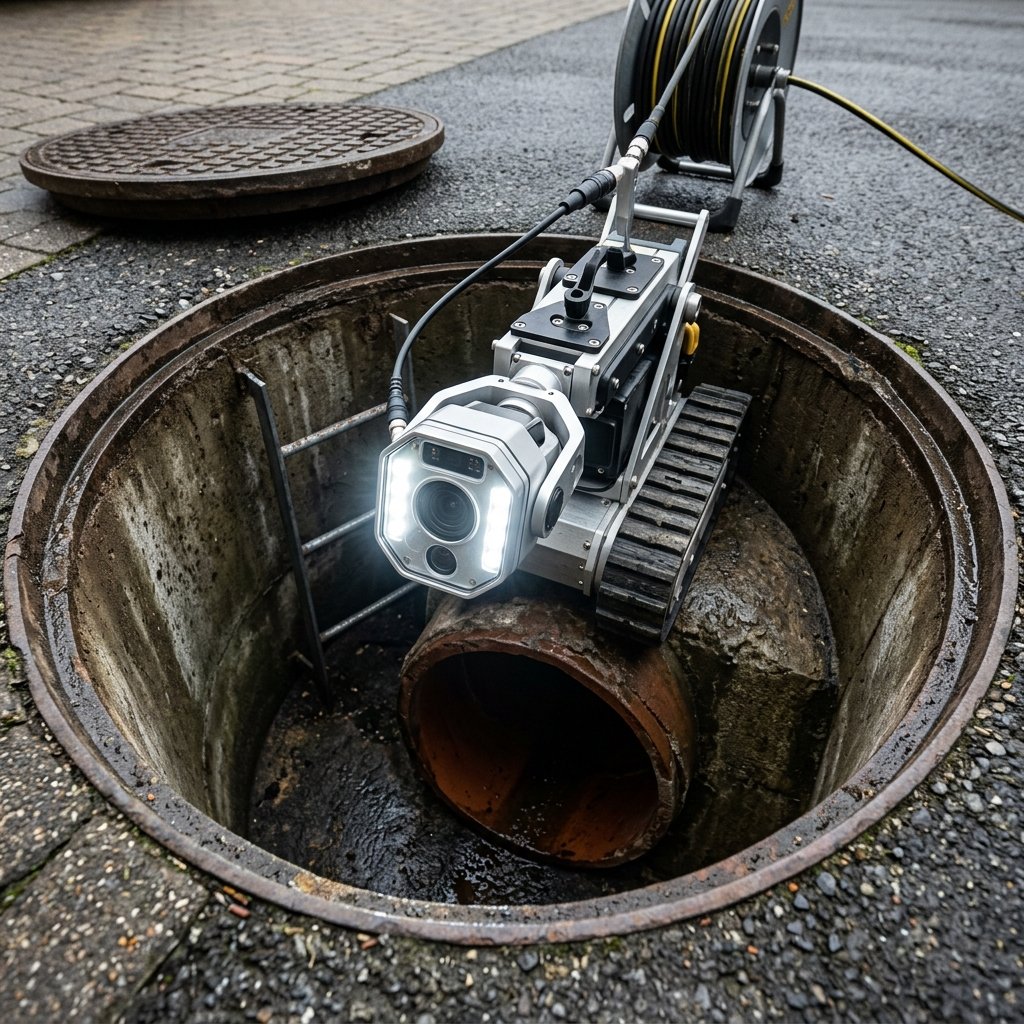
The crawler camera is a motorised robotic unit that sits on wheels or tracks inside the pipe. It carries its own lighting rig and can pan, tilt, and zoom independently. We use crawlers for larger-diameter pipes (225mm and above), longer commercial runs, and shared sewers where push-rod reach is not enough. Crawlers produce extremely detailed footage and are the standard for any commercial or pre-purchase sewer survey. They are heavier and take longer to set up, so we only deploy them when the job genuinely calls for it.
Step 3: the camera goes in
With the camera selected and the access point open, the survey begins. The camera head enters the pipe and travels at a controlled pace, usually around one to two metres per second for a push-rod. The live colour feed appears on a ruggedised field monitor that sits beside the manhole so the engineer can watch in real time.
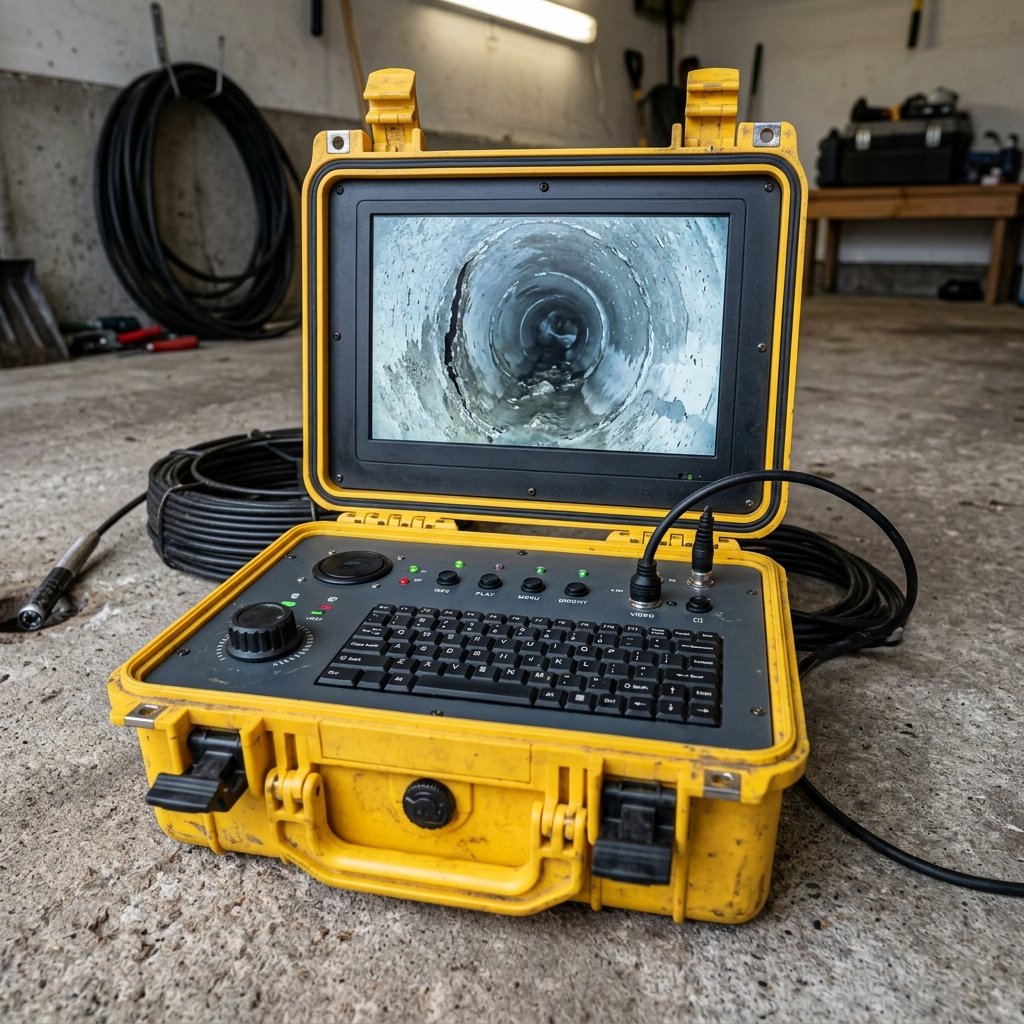
As the camera moves through the pipe, the engineer records footage and takes still images at every point of interest. The distance counter on the rod or crawler logs the exact position along the run, so every defect or feature can be pinpointed to within a few centimetres. This is critical for any follow-up repair work, because it means we can tell you precisely where a problem sits without guesswork.
What we look for inside the pipe
A CCTV drain inspection is not just about finding blockages. The engineer is trained to identify and grade a range of structural and service conditions:
- Cracks and fractures. Hairline cracks in clay or concrete pipes that may worsen with ground movement or frost.
- Joint displacement. Where two sections of pipe have shifted apart, creating a step or gap. This is one of the most common defects in older properties. Elmdon's 1930s to 1950s housing stock has ageing clay pipe runs where CCTV surveys commonly reveal joint displacement from decades of ground movement.
- Root ingress. Fine tree roots that have entered through joints or cracks and grown into a mass inside the pipe, restricting flow.
- Scale and calcification. A hard mineral crust that builds up on the inside walls of cast iron and older clay pipes, gradually reducing the bore.
- Fat, oil, and grease (FOG) build-up. Congealed cooking fats that coat the pipe walls, narrowing the available flow area until waste can no longer pass.
- Pipe material identification. The camera confirms whether pipes are clay, PVC, cast iron, concrete, or pitch-fibre. This matters because repair options differ significantly between materials.
- Deformation. Oval-shaped distortion in plastic or pitch-fibre pipes, often caused by external loading or poor backfill when the pipe was originally installed.
- Collapsed sections. Where the pipe has lost its structural shape entirely and soil has entered the drain.
Rat activity can also be a reason to investigate the pipework when a pest controller suspects a drainage route. See our CCTV drain survey guide for rats for a real rodent recording, possible entry defects and the difference between drainage repairs and pest treatment.
Step 4: sonde locating to map the pipe route
Most CCTV drain survey cameras carry a built-in sonde transmitter, a small radio beacon inside the camera head. Once the camera reaches a point of interest, such as a defect, a junction, or the boundary between private and public drainage, the engineer switches to a handheld sonde locator above ground.
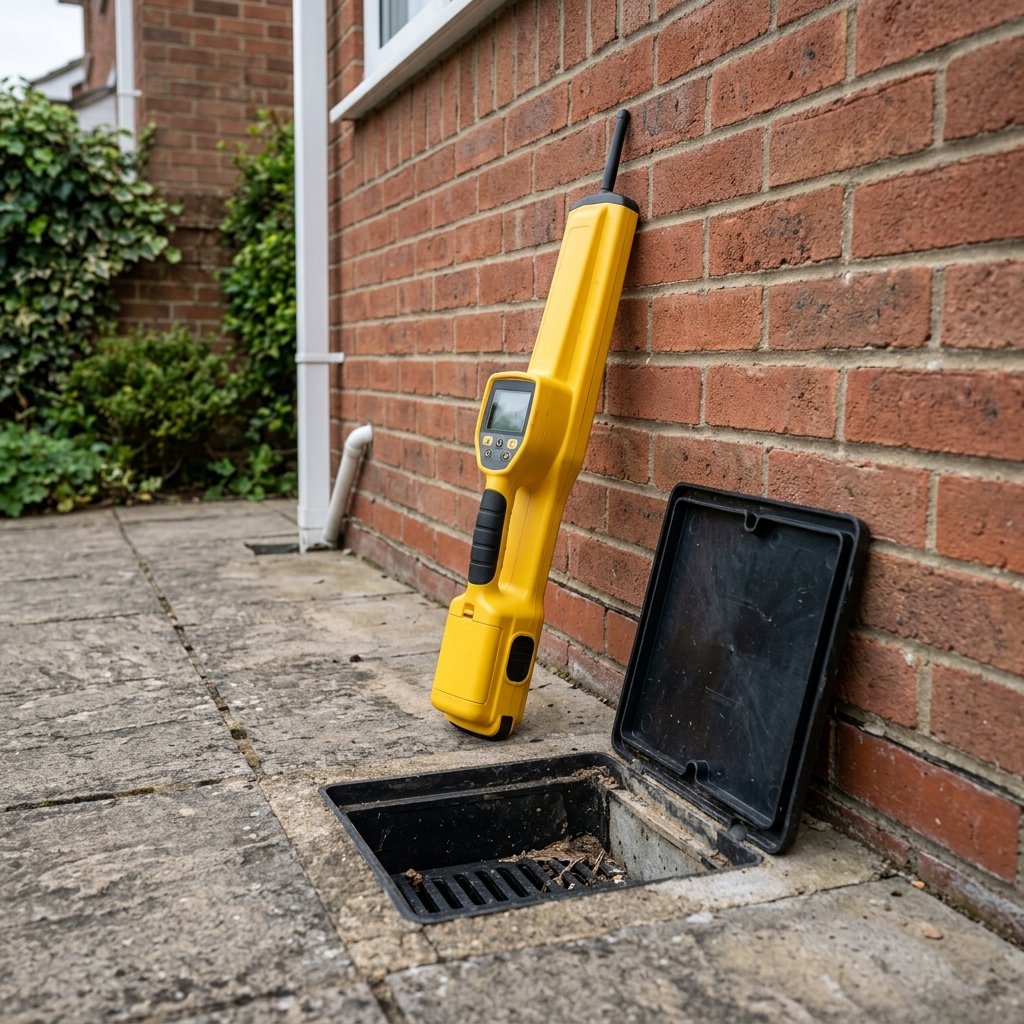
The locator picks up the sonde's radio signal and pinpoints the camera's position and depth below ground. This lets us mark the pipe route on the surface with spray paint or pegs, and record the depth at key points. The information is invaluable for anyone planning a building extension, a new driveway, or landscaping work near the drainage. It also tells us exactly where to dig if excavation is ever needed, saving time and money by avoiding unnecessary trial holes.
The post-war estates around Longbridge, where the former Rover plant area presents mixed commercial and domestic drainage configurations, are a good example of why sonde locating is so important. Pipe runs on these properties often follow unexpected routes because the original drainage was laid to serve an industrial site before being adapted for residential use. Without sonde mapping, you are working blind.
Step 5: the written HD report
After the physical survey is complete, the engineer compiles a formal CCTV drain inspection report. This is not just a set of photos. A proper report includes:
- HD video footage of the entire pipe run, with distance markers and timestamps.
- Annotated still images of every defect, junction, and change of direction.
- A drainage plan showing the pipe route, chamber positions, and pipe diameters overlaid on a property map.
- A condition grading for each section of pipe, following WRc (Water Research Centre) classification standards.
- Recommendations for any repair or maintenance work, with priority gradings.
We send the report as a digital file, typically within 24 to 48 hours of the survey. You can share it with your solicitor, your insurance company, or your builder. The footage and images are yours to keep permanently.
Homebuyer drain survey vs diagnostic survey
We carry out two distinct types of CCTV drain survey, and it is worth understanding the difference before you book.
A homebuyer drain check is commissioned when you are buying a property. The purpose is to give you (and your solicitor) a full picture of the drainage condition before you exchange contracts. The survey covers every accessible pipe run, maps the drainage layout, identifies any defects, and provides a formal report you can use in price negotiations or to request remedial work from the seller. This is especially common on pre-1970s properties where clay pipes and pitch-fibre pipes may have degraded. It is also increasingly popular on new builds, where we sometimes find installation defects that the developer has not picked up during construction.
A diagnostic survey is reactive. You already have a problem, whether that is recurring blockages, slow drainage, bad smells, or damp patches in the garden, and you need to find the cause. We focus the camera on the suspected problem area, identify the defect, and provide a targeted report with repair options and costs. Diagnostic surveys tend to be quicker and more focused than full homebuyer surveys.
How long does a CCTV drain survey take?
A standard domestic survey on a typical three-bedroom property takes between 45 minutes and 90 minutes on site. Larger properties, commercial premises, or sites with extensive pipe runs can take two to three hours. The report follows within one to two working days.
Our CCTV drain survey service covers domestic and commercial properties across Birmingham and the wider West Midlands, Warwickshire, and Worcestershire. Prices start from £250 for a standard domestic survey, with no hidden charges. For a full breakdown of what affects that price, see our guide to CCTV drain survey costs.
Need a CCTV Drain Survey?
Whether you are buying a property, investigating recurring drainage problems, or planning a building extension, we can survey your drains and give you a clear, honest picture of what is going on underground. Call us to book your survey.
Call: 0121 296 7829