Water pooling around your outside drain. It stinks. It will not clear. Before you pick up the phone and call a drain unblocking company, there are a few things worth checking yourself. Some blocked outside drains can be sorted in minutes with nothing more than a pair of gloves and a garden hose. Others need professional equipment. This guide helps you tell the difference.
Why outside drains block: the 6 most common causes
We clear blocked outside drains every day across Birmingham, Solihull, and the wider West Midlands. These are the six causes we see most often:
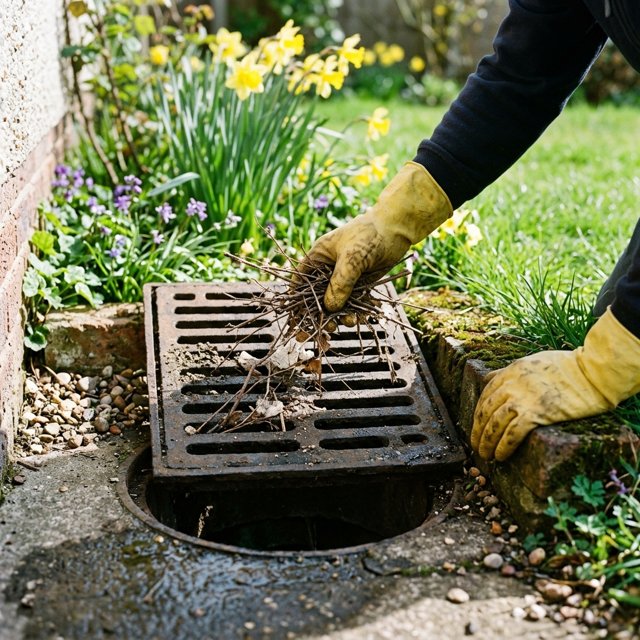
- Leaves and garden debris. Autumn is the worst season for it, but it happens year-round. Leaves, twigs, moss, and cut grass wash off patios and paths straight into the nearest gully. Once the grate is covered, water backs up fast. Our guide to why blocked drains get worse in autumn explains what happens after wet leaf material passes the grate and meets an existing restriction.
- Fat, oil, and grease. Kitchen waste pipes run to outside drains. When cooking fat hits cold underground pipes, it solidifies on the walls and slowly narrows the bore until nothing gets through. We have written a full guide on how fat, oil, and grease destroy your drains.
- Wet wipes and sanitary waste. Material flushed through a toilet can catch further along the underground run and eventually fill an outside chamber. See the compacted wet wipes removed during a recent drain clearance.
- Tree root ingress. Fine roots seek out moisture. They find their way into clay pipe joints, cracks, and displaced connections, then grow into a dense mass that blocks the flow. Mature trees within five metres of a pipe run are a known risk. Our guide on tree root damage to drains covers this in detail.
- Silt and soil. Heavy rain washes soil off garden beds and into open gully drains. Over months, silt settles in the bottom of the pipe and gradually reduces the flow until the drain blocks completely.
- Collapsed or displaced pipe. In older properties with clay or pitch-fibre pipes, ground movement, tree roots, or heavy surface loading can crack, displace, or collapse a section of pipe underground. This is the one cause you cannot fix yourself.
How to check if your outside drain is blocked
Not every drainage problem is a full blockage. Sometimes the pipe is partially restricted, and the water drains slowly rather than stopping altogether. Here are the signs of a blocked drain to watch for:
- Standing water in the gully. The most obvious sign. If the water level sits above the outlet pipe, something is blocking the flow downstream.
- Bad smell. A blocked outside drain traps waste water and organic matter. In warm weather, the smell can be noticeable from several metres away.
- Slow drainage. Water takes longer than usual to clear from sinks, baths, or showers inside the house. This often points to a partial blockage in the outside drain pipe that is building towards a full block.
- Gurgling noises. Air trapped behind a partial blockage causes bubbling or gurgling sounds when you run water indoors.
- Overflowing drain outside. When the blockage is severe, water rises out of the gully or inspection chamber and floods the surrounding area. At this point, you need a professional.
Can you unblock an outside drain yourself?
Sometimes, yes. If the blockage is surface-level or in the first section of pipe, you can often clear it without specialist equipment. Here is what to try:
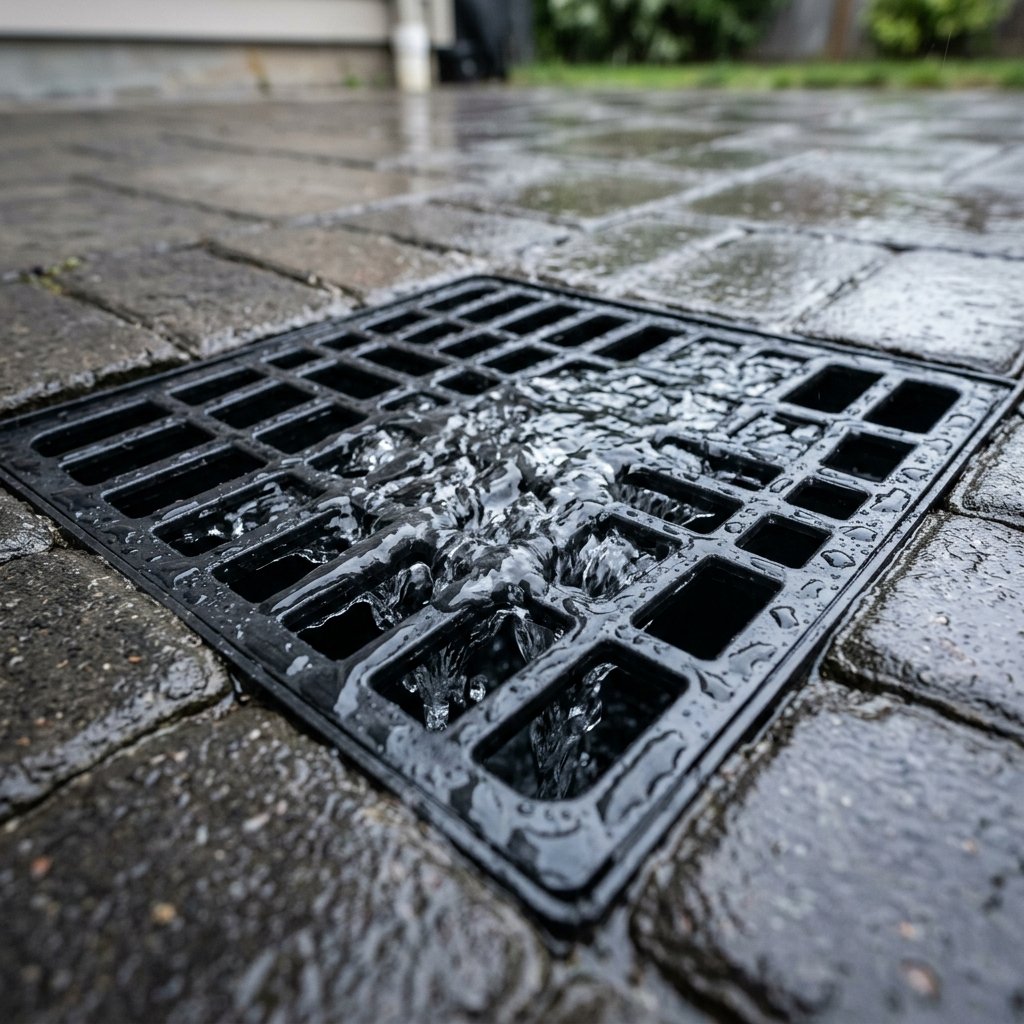
- Clear the grate. Pull on a pair of rubber gloves and lift the gully grate. Remove any leaves, mud, or debris sitting on top. This alone fixes a surprising number of blocked outside drains.
- Check the trap. Most outside gully drains have a small water trap underneath the grate. Reach in and pull out any silt, grease, or debris that has settled in the trap.
- Flush with a hose. Run your garden hose into the drain on full pressure. If the water clears quickly, the blockage was localised to the gully itself.
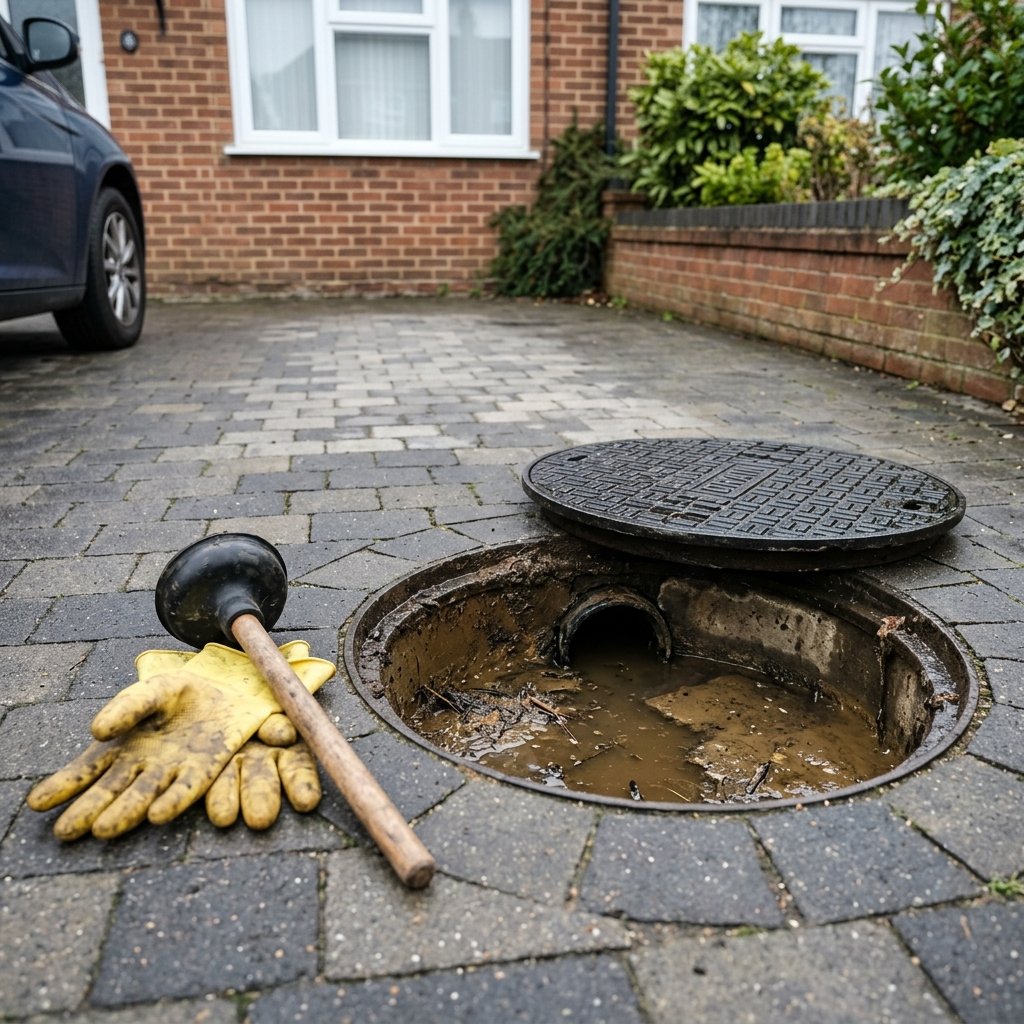
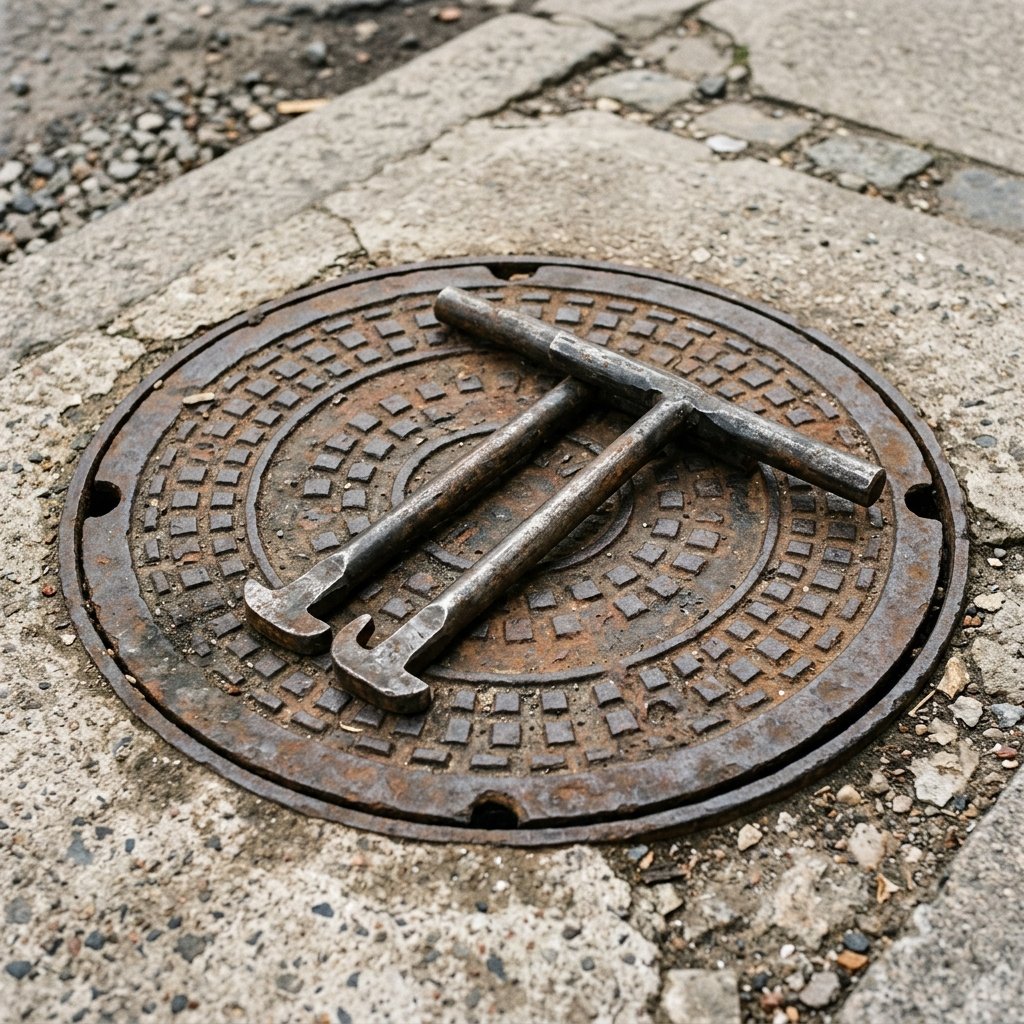
- Lift the nearest manhole cover. If the gully is still not clearing, find your nearest inspection chamber and lift the cover. If the chamber is full of standing water, the blockage sits further downstream. If the chamber is dry, the blockage is between the gully and the chamber.
- Try drain rods. You can buy basic drain rods from any DIY store. Feed them into the pipe from the inspection chamber and push gently towards the blockage. Twist clockwise only, never anticlockwise, or the rods can unscrew underground.
When to call a professional drainage company
DIY has its limits. If any of the following apply, stop what you are doing and call a drainage company with the right equipment:
- You have tried rods and the blockage will not shift.
- The blockage keeps coming back within days or weeks.
- Multiple drains are blocked at the same time (this suggests a problem on the main run).
- You can see tree roots inside the pipe or inspection chamber.
- There is sewage or foul water backing up into the property.
- The drain has been overflowing outside for more than a few hours.
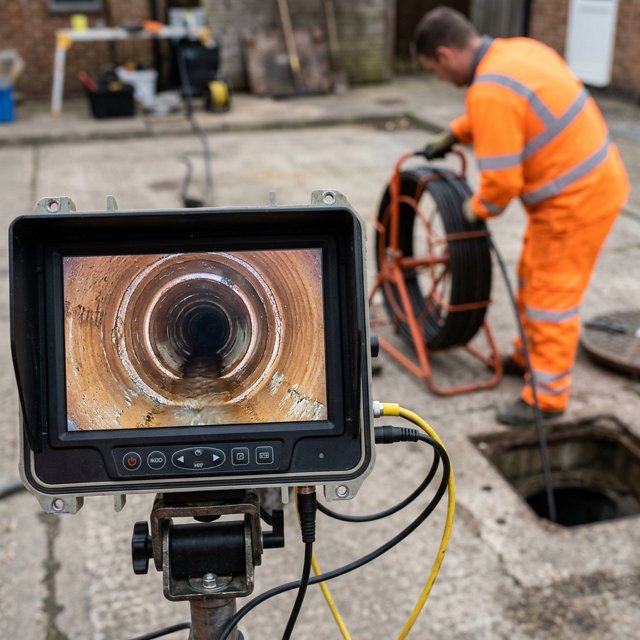
Professional high-pressure drain jetting is the most effective method for clearing stubborn blockages. A jet of water at up to 4,000 PSI cuts through grease, root masses, and compacted silt that drain rods cannot touch. If the blockage keeps returning, a CCTV drain survey will find the underlying cause so it can be fixed permanently rather than just cleared repeatedly.
Avoid tipping a strong chemical into standing water. It may not reach the obstruction and can leave corrosive liquid trapped above it. Read our guide to using drain cleaner in an outside drain before choosing a DIY product.
How much does it cost to unblock an outside drain?
Costs vary depending on the method needed. Here is what you can expect to pay:
- Drain rodding: from £80 to £100. Effective for soft blockages close to an access point.
- High-pressure jetting: from £120 to £180. Clears fat, grease, root masses, and compacted silt.
- CCTV survey (if needed): from £150 to £350. Identifies the root cause of recurring blockages.
We have a full breakdown of pricing in our drain unblocking cost guide. We charge a fixed price with no call-out fee, so the price we quote is the price you pay.
Areas we cover across Birmingham and the West Midlands
We unblock outside drains for homeowners and landlords across Birmingham, Solihull, and the wider West Midlands. Our engineers are out on the road every day in areas including Stirchley, Bournville, Kings Norton, and beyond. If your outside drain is blocked and you cannot shift it yourself, we can usually get to you the same day.
We also cover emergencies around the clock. If your drain is flooding and you need someone fast, our emergency drainage service operates 24 hours a day across the West Midlands region.
Questions about blocked outside drains
How do I unblock an outside drain?
Start by clearing any leaves, mud, or debris from the grate. Lift the inspection cover and check for standing water. If the chamber is full, the blockage is downstream. Try flushing with a garden hose. If that does not shift it, you will need a professional with drain rods or high-pressure jetting equipment.
Why is my outside drain blocked?
The most common causes are a buildup of leaves and garden debris on the grate, fat and grease that has solidified inside the pipe, tree root ingress through clay pipe joints, silt or soil washing into open gullies during heavy rain, and in older properties, a collapsed or displaced pipe section underground.
Can I unblock an outside drain myself?
You can clear surface debris from the grate and flush with a hose. If the blockage is visible in the inspection chamber, you may be able to shift it with drain rods. But if the water will not clear, or if you suspect root damage or a collapsed pipe, stop and call a drainage company. Forcing rods into a damaged pipe can make things worse.
How much does it cost to unblock an outside drain?
Basic drain rodding starts from around £80 to £100. High-pressure jetting, which is more effective for stubborn blockages, typically costs from £120 to £180. If a CCTV survey is needed to identify the cause, add £150 to £350 depending on the length of the pipe run.
Outside Drain Still Blocked?
If you have tried clearing the grate and flushing with a hose but the water still will not shift, give us a call. We carry jetting and CCTV equipment on every van, so we can clear the blockage and find the cause on the same visit. No call-out fee. Fixed pricing from £100.
Call: 0121 296 7829