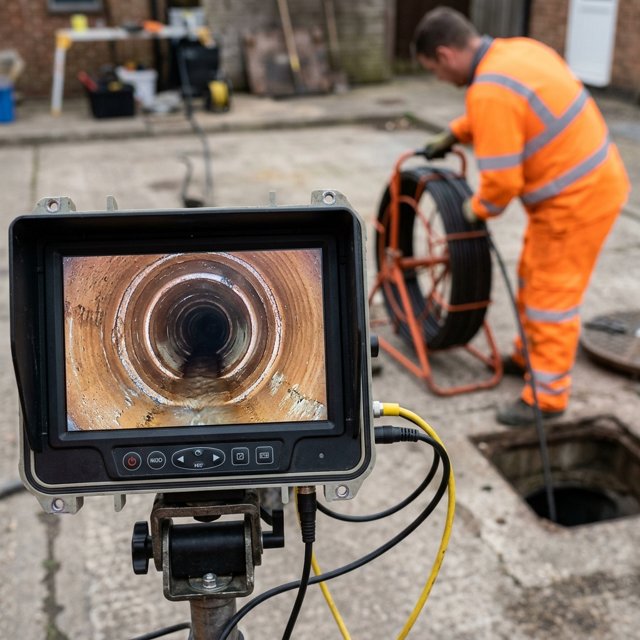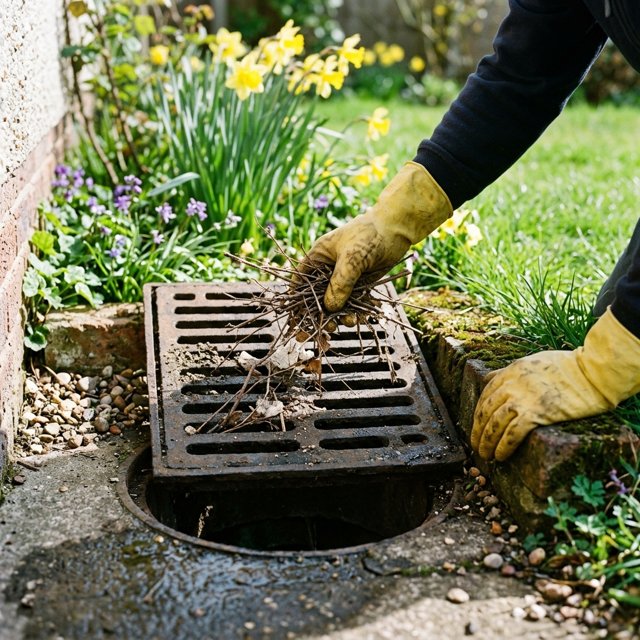
A blocked drain puts you under pressure. Water may be rising in a chamber, a toilet may be out of use, or an unpleasant smell may be spreading through the house. That is exactly when a vague advert, a low headline price or an unsupported promise can look more convincing than it should. Taking ten minutes to check who you are calling can prevent a hurried clearance turning into an expensive argument.
The best drainage company is not automatically the largest, the nearest or the one with the most polished advert. Look for a contractor who can explain the first sensible test, price the work clearly and show why any extra repair is needed. The same checks apply whether you need routine drain unblocking, a recorded survey or a damaged pipe repaired.

Before work begins, ask the engineer to explain what they have found, what they recommend and what it will cost.
Start by checking the company, not the advert
Ask for the legal or trading name, a working telephone number and an address. If the business says it is a limited company, its name and company number can be checked at Companies House. A branded van and local telephone number can be reassuring, but neither proves who will take responsibility for the job. You need enough information to identify the business on the quote and invoice.
A genuine local drainage company should also be clear about where it operates. Someone attending a blocked drain in Stourbridge or drainage work in Halesowen should be able to discuss travel, response time and any out-of-area charge before setting off. Be cautious if the person taking the call refuses to identify the attending contractor or says every price must wait until the engineer is inside your home.
Read reviews for detail, not just stars
A high score is only the first clue. Read recent reviews and look for descriptions of work similar to yours. Useful feedback mentions whether the engineer arrived when expected, explained the fault, kept the customer informed, agreed additional work and left the area tidy. A page filled with one-line praise tells you less than a smaller group of specific accounts written over several years.
Check more than one source where possible. A scheme profile can confirm membership and display customer feedback, while the contractor’s own website may show case studies and contact details. Citizens Advice recommends checking that a trader really belongs to any scheme or association they claim. Cofton’s public Checkatrade profile shows its membership history, vetting checks, service categories and individual reviews. Our customer reviews page brings together further feedback, but the original platform remains the right place to verify the current record.
Ask what the first price actually includes
Drainage prices are difficult to compare when one figure covers rodding, another covers jetting and a third is only a call-out charge. Ask whether VAT is included, what equipment is covered, how long the engineer will remain on site and whether a quick camera check follows the clearance. If a blockage cannot be cleared by the first method, the contractor should explain the next option and its price before continuing.
There is an important difference between a quotation and an estimate. A quotation sets an agreed price for defined work. An estimate is a guide that may change when more becomes known. Official Worcestershire Trading Standards advice on finding a trader recommends asking for a detailed written quote with the trader’s identity and contact details. For a simple unblock, that can be a short written confirmation. A repair quote should set out the defect, method, length or area, access assumptions, reinstatement and total cost.
Six questions to ask before booking
- What is included in the stated price, including VAT and any call-out charge?
- Which clearance method will you try first, and when would the price change?
- Will you ask before carrying out CCTV work, jetting or a repair?
- Do you hold current public liability insurance for this type of work?
- What evidence will I receive if you say the pipe is damaged?
- Will the invoice describe the work completed and any remaining defect?
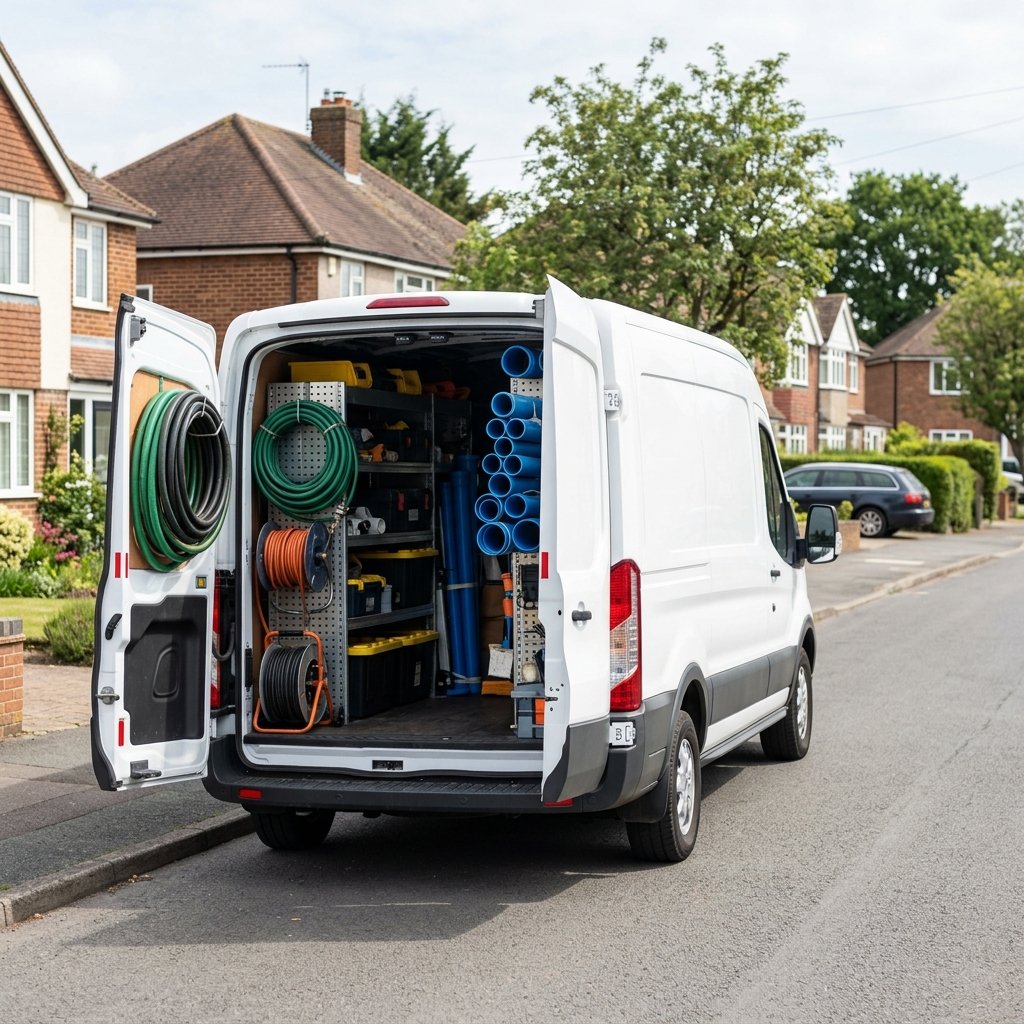
The engineer should choose equipment that suits the pipe material, the access point and the cause of the blockage.
Equipment matters, but judgement matters more
Rodding can clear a straightforward soft obstruction. High-pressure water jetting can remove grease, scale, silt and stubborn deposits farther along a run. A camera can show why a blockage returned. None of these tools should be used automatically. Pressure, nozzle and cutting head need to suit the pipe, and a camera view is much clearer after the standing water and loose waste have been removed.
Listen to the questions the engineer asks. Which fixtures are affected? Did the problem appear suddenly? Does an outside chamber rise when one appliance is used? Are neighbours affected? Has the line blocked before? Those details help distinguish a local trap obstruction from a main private drain, a shared lateral or a structural fault. Someone who jumps straight from a smell to a major excavation has skipped the diagnosis.
Do not approve a drain repair without evidence
A repair recommendation should identify the defect and its position. Ask to see the CCTV footage or still image, the measured distance from the access point and an explanation of how the proposed repair deals with it. A local patch may suit one cracked joint. A longer liner may suit several defects in a suitable host pipe. Excavation may be necessary where the pipe has collapsed, lost its shape or needs a new connection. The least disruptive option is not always the right one, but the reason should be visible.
If the work is not urgent, take time to compare a second quote. A reputable contractor should not object to you using paid survey evidence to seek another opinion. Ask whether the repair price includes cleaning, preparation, curing, a final camera check and reinstating the surface. Those details are more useful than a long guarantee with unclear terms.
Warning signs that should slow the decision down
- A very low price that excludes VAT, equipment or the call-out without saying so.
- Pressure to approve a repair immediately when sewage is no longer overflowing.
- No written description of the fault or refusal to show camera evidence.
- A demand for full payment before substantial repair work starts.
- Claims of approval, membership or insurance that cannot be checked.
- A different business name on the advert, invoice and payment request with no explanation.
- Promises that every drain can be repaired without excavation before the pipe has been inspected.
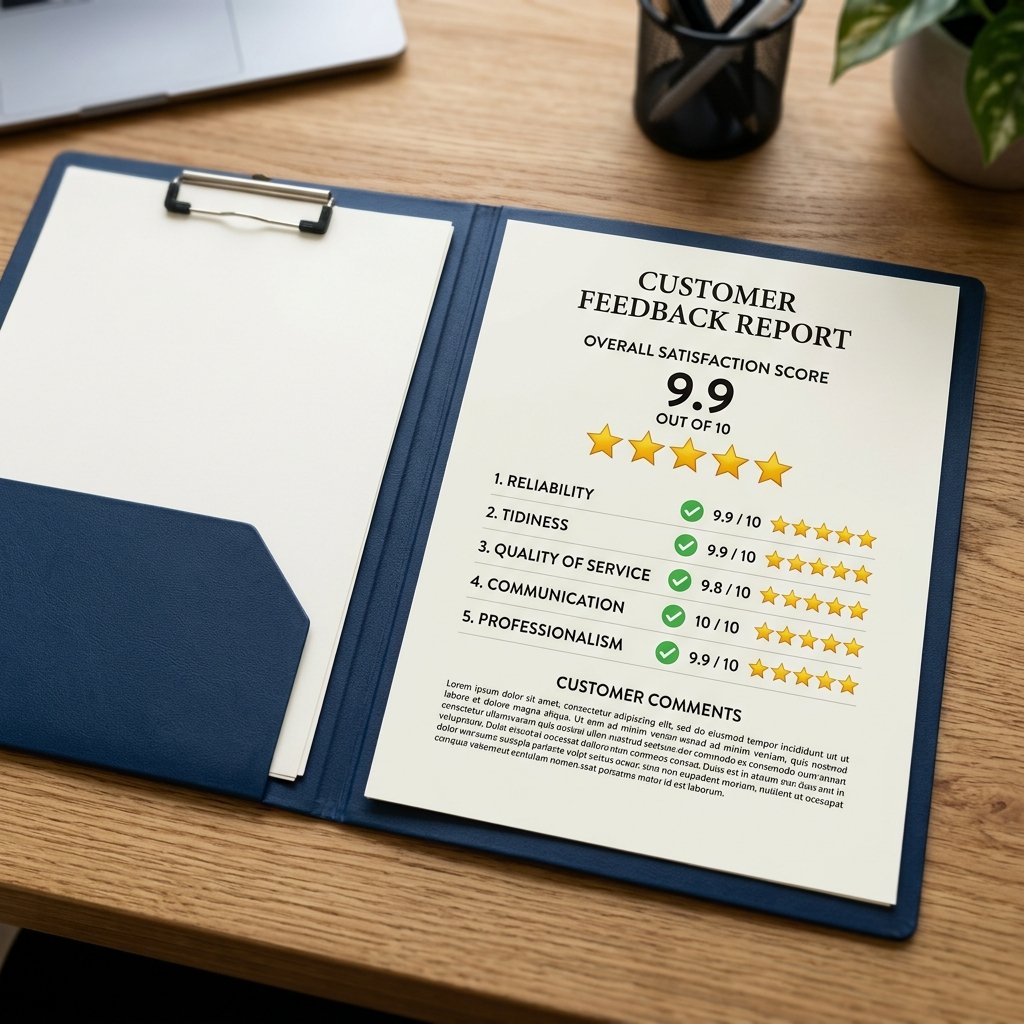
Read the most recent written reviews, then check the live profile for the current score and total.
A good engineer leaves you knowing what happened
At the end of a clearance, you should know where the obstruction was, what removed it and whether the engineer saw a remaining concern. Not every job needs a recorded survey. A first-time soft blockage in a sound, accessible pipe may need only clearance and a sensible prevention note. Repeated backing up, roots, displaced joints or a suspected collapse deserves more investigation.
The invoice should match the work. Keep any images, footage and report, especially if you are a landlord, planning building work or may make an insurance claim. Clear records also make a repeat visit faster because the next engineer can see the earlier route and finding instead of starting from nothing.
Questions about choosing a drainage contractor
How do I choose a good drainage company?
Check the company identity, recent reviews, insurance, relevant training and the work included in the price. A good contractor should explain the likely first step, say when the price could change and ask for approval before carrying out extra work.
Should a drainage engineer give a fixed price?
Many routine clearance jobs can have a fixed starting price. Repairs usually need a survey first because depth, access, pipe material and the surface above the drain affect the work. Ask whether you have received a quotation or an estimate and what could add to it.
What insurance should a drainage company have?
Ask for current public liability insurance and check that the activities covered match the work being proposed. Insurance does not prove workmanship, but it is a basic protection if accidental damage or injury occurs.
Are online drainage company reviews enough?
Reviews are useful when they are recent, detailed and spread across more than one type of job. Read the words as well as the score, then compare them with the contractor’s written scope, pricing and explanation of the fault.
Want a clear price before work starts?
Tell us what is affected, when the problem began and whether it has happened before. We will explain the likely first step and agree any extra work before carrying it out.
Call: 0121 296 7829