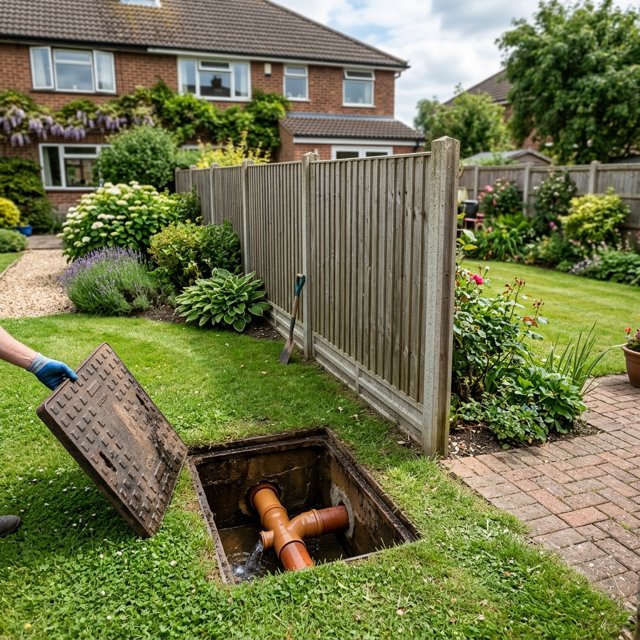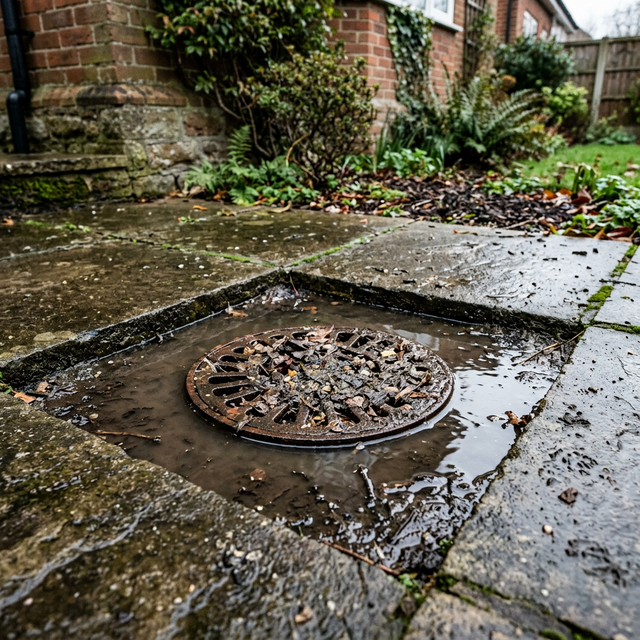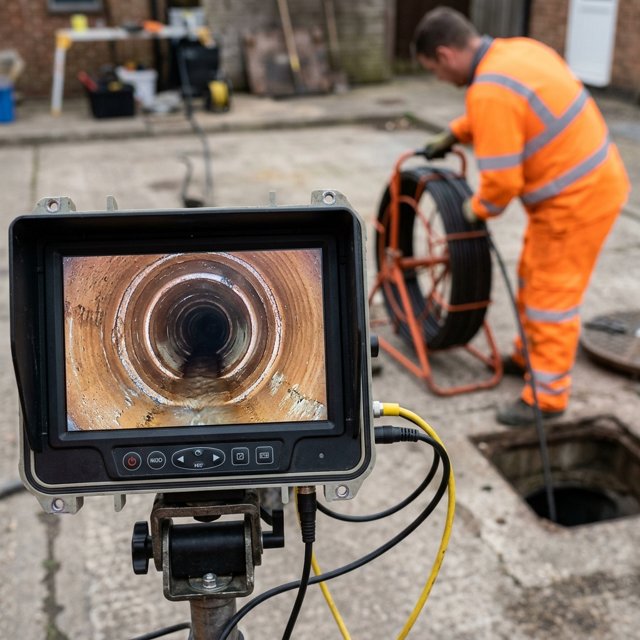
A drain that blocks shortly after being cleared deserves a second look, especially when the same fixtures are affected each time. A broken section can catch paper or admit soil, but roots, a displaced joint and a build-up of material can produce much the same symptoms. The useful question is where the flow is being interrupted and what the engineer can see there.
The most telling collapsed drain symptoms are often a combination of events. A low spot in paving is more relevant if it sits over a known pipe route and appeared around the time the drain started blocking. Either observation on its own leaves several explanations open. Unstable ground or escaping sewage calls for immediate help. Keep people away and describe the signs you have already seen.

What to note before the engineer arrives
Write down what was in use before the problem showed up. If flushing a toilet is followed by water rising in the shower, the fixtures may drain through a common restriction further along. If only the kitchen sink drains slowly, the pipework around that fixture deserves attention before anyone assumes there is a collapsed underground drain. Use what you have already observed and avoid pouring more water into a system that is backing up.
Recent history helps. Tell the engineer whether the last clearance gave you two hours of relief or two months, and which access point was used if you know. If the previous company supplied footage, find the section where the camera stopped as well as any images taken after clearance. A note that rods stopped at about six metres gives somewhere to investigate, but equipment can stop at a tight bend or stubborn debris as well as broken pipe. The location and the reason need to be established together.
| What you noticed | What it changes about the investigation |
|---|---|
| A quick return after clearance | Compare the earlier scope with the point that is catching material or restricting flow now. |
| Several fixtures reacting to one discharge | Follow the pipework they share before concentrating on one appliance. |
| A new dip or void near the pipe route | Keep people and vehicles off the suspect ground and have the location assessed. |
| Trouble only after heavy rain | Record which gullies or fixtures are affected. Surface water drainage, surcharge or another rain-related fault may need checking. |
| Similar trouble at neighbouring homes | A shared network problem becomes more plausible. Contact the sewerage provider where the public system may be involved. |
Why a blockage can look like a collapse
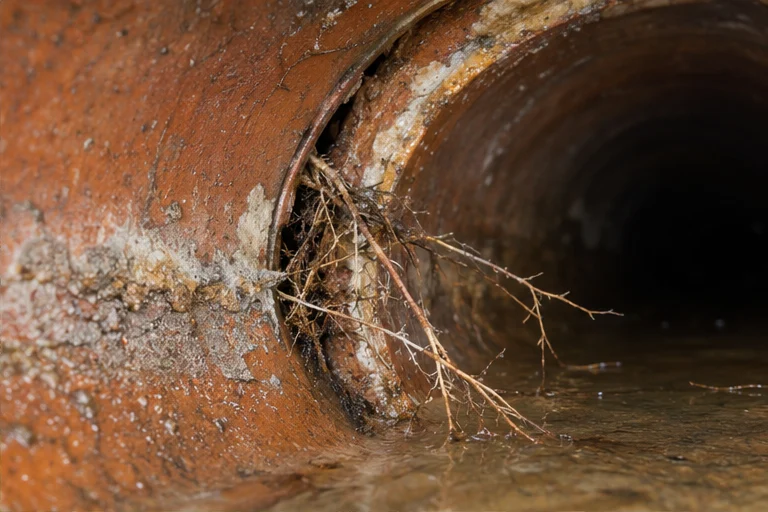
The pipe needs enough open space for water and solids to pass. A displaced joint can leave a lip that catches paper. Roots can narrow the opening progressively, and a dense blockage can hide the pipe wall behind it. All three might make the toilet clear slowly and bring the same symptoms back after a visit. What follows depends on whether the restriction is removable, whether the pipe still provides a continuous path and what the camera can verify after the immediate obstruction has been dealt with.
Rain, smells and damp are easy to connect to a drainage fault when they arrive at the same time. Outdoor smells can travel from elsewhere. Damp beside a wall might come from surface water, a leaking supply or a downpipe. The Severn Trent blocked-drains guidance describes common blockage signs and gives a route for reporting suspected public sewer problems. Establish where the trouble is before taking a repair proposal at face value.
What a CCTV inspection can establish
A camera can record the shape of the bore, the pipe material where visible, the condition at the joints and the point where the view or passage ends. If the picture shows a section crushed or broken inwards, ask for the footage around the break and the distance from an identifiable chamber. The length of the visible defect helps define the proposed job. If sediment or water hides the bottom of the pipe, the report should say how much of the pipe could be assessed.
There are practical decisions before the camera goes in. An engineer may need to clear material to see the pipe wall, but forcing equipment down a line that appears badly damaged can make the investigation harder. The appropriate method depends on the condition and access. From the customer’s side, useful questions are how the line was made passable, what remained hidden and whether the other end is accessible. It may take a second approach to establish the limits of the damage.
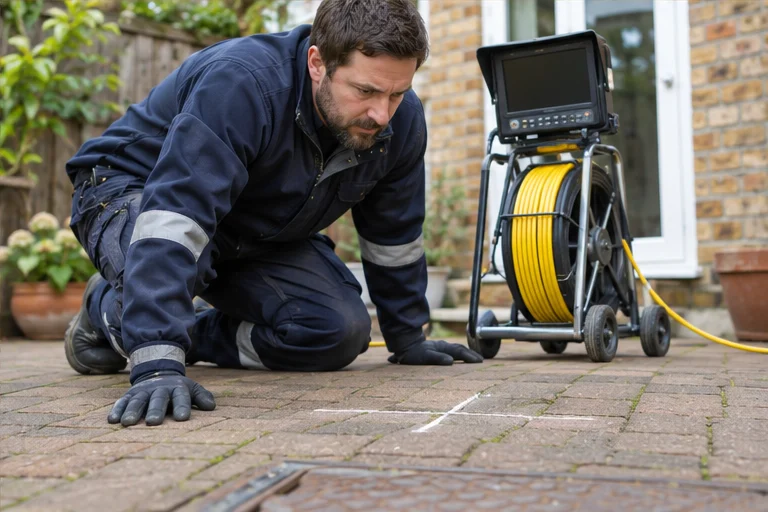
A recorded distance helps identify the fault along the pipe. Before a contractor breaks the surface, ask how the fault will be located above ground, how depth will be checked and what other buried services or access restrictions affect the work. In a shared line, who owns the pipe can decide who should instruct it. Our camera inspection service can discuss what needs to be established before you agree to a repair.
When lining is realistic and when a section needs replacing
A repair needs to preserve or restore a passage for drainage. A liner or patch can suit certain defects in a pipe that still has enough continuous bore to install it. It cannot open up ground that has fallen into a completely lost section of pipe simply by being inserted from a chamber. A local replacement may be needed where the ground or broken pipe prevents work from inside. The Drain Repair Book explains inspection and repair selection in the context of domestic drainage claims.
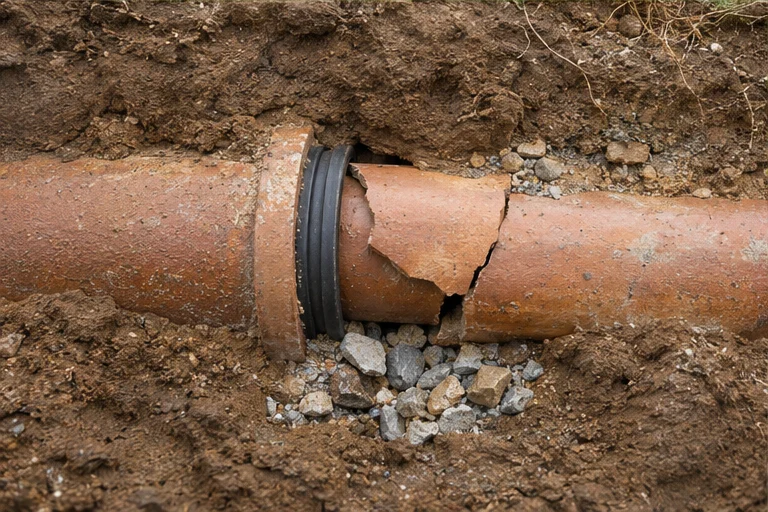
Suppose an inspection shows one broken section below a drive and a sound bore either side. The quote may be able to define one excavation, the pipe section to replace and how the surface will be reinstated. If several joints are affected across a longer run beneath an extension, access and the condition of every section matter. Ask the contractor to explain what remains after the proposed method and whether any downstream branch or connection would need additional work.
A like-for-like comparison of quotes should identify the same run and fault, what the work includes, what assumptions it makes about depth and access and what happens if the damage extends further than the view. If the proposed excavation sits in an access road or affects neighbouring properties, clarify who will arrange entry and discuss disruption before booking. Our drain repairs team can review the observed damage and discuss viable repair methods with you.
Common questions about possible drain collapse
Can a collapsed drain still work some of the time?
A partly obstructed line can pass small discharges and struggle when several fixtures empty together. Waste may build up then move on, leaving an apparent improvement for a while. That intermittent pattern is useful to report. It occurs with soft obstructions too, which is why the condition seen at the restriction matters more than how the fixtures behave on a single visit.
Does subsidence mean a drain has collapsed?
A depression in paving or a change in the building can have several causes. A damaged drain may be relevant, but you need evidence about the position and condition of the pipe and, where the building is affected, advice from an appropriate property professional. Let them know about any recent nearby works and when the surface or building began to change. If a void is suspected, keep people and vehicles away from the affected ground. Do not lift covers or dig to look for a pipe yourself.
Should I arrange a repair before speaking to my insurer?
If you intend to claim, ask your insurer how it wants the investigation and any urgent work recorded. Keep the original footage, report, quote and photographs. The insurer may appoint someone or ask for specific evidence before agreeing to work. Your first priority with an active overflow or dangerous area is to protect people and limit harm. Explain the situation and ask what immediate steps are appropriate while keeping records of the actions taken.