Most blocked drains don't happen overnight. There are usually warning signs days or even weeks before the water stops flowing altogether. Catching those signs early can save you from sewage flooding, expensive repairs, and a lot of stress. Here is what to look out for and what to do when you spot a problem.
Slow-draining water
This is the most common early warning. Your kitchen sink takes longer to empty than it used to, the shower tray fills up around your feet, or the bath drains sluggishly. It usually means something is narrowing the pipe, whether that is a build-up of fat and grease, hair, soap residue, or debris that has collected at a joint or bend underground.
If only one fixture is draining slowly, the problem is likely in the waste pipe directly below it. If multiple sinks, toilets, or showers are all draining slowly at the same time, the blockage is probably further down the line in your underground drainage system. That second scenario needs professional attention rather than a bottle of supermarket drain cleaner.
Bad smells from drains or outside
A blocked drain traps waste in the pipe instead of carrying it away to the sewer. As that waste sits and decays, you get a sulphur-like smell, sometimes described as rotten eggs. It might come from a sink plughole, a floor drain, a toilet that seems to flush oddly, or from outside near your inspection chamber.
If the smell is persistent rather than occasional, and it gets worse on warm days, the blockage has likely been building for a while. Our engineers frequently arrive at properties where the homeowner has been living with a faint smell for weeks before realising it was a drainage issue rather than a plumbing or ventilation problem.
Gurgling sounds from pipes
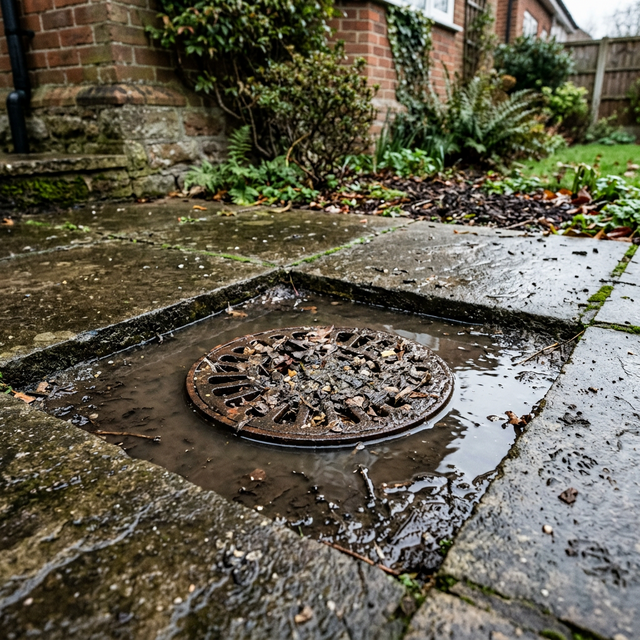
When a drain is partially blocked, water has to push past the obstruction. As it does, air gets displaced and creates a gurgling or bubbling noise that you can hear from nearby plugholes, toilets, or waste outlets. It often happens when you flush a toilet and hear a noise from a nearby sink, or when you run the washing machine and hear bubbling from a downstairs drain.
Gurgling is a reliable indicator that the blockage is in the shared underground pipework rather than in a single fixture's waste pipe. If you hear it from more than one location in the house, it is worth calling a drainage engineer sooner rather than later.
Water backing up or overflowing
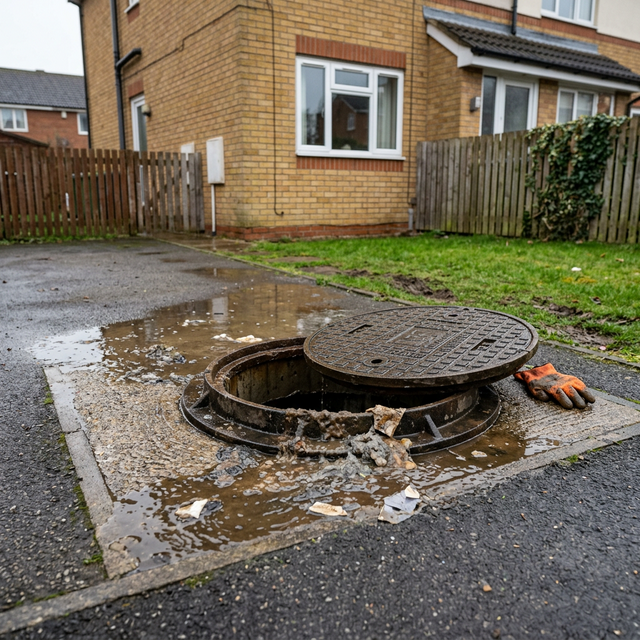
This is the stage most people call us at. Water comes back up through the shower drain, a toilet overflows, or an inspection chamber in the garden fills with standing waste. By this point, the drain is fully blocked and no water can pass through at all.
If foul water is rising in an outside manhole or gully, avoid the temptation to lift heavy manhole covers yourself. Cast iron and concrete covers are heavier than they look, and the contents underneath can pose a health risk. This is when you need a professional team with the right tools and protective equipment. Our 24/7 emergency drainage service handles exactly this type of situation, day or night.
Damp patches or unusual plant growth
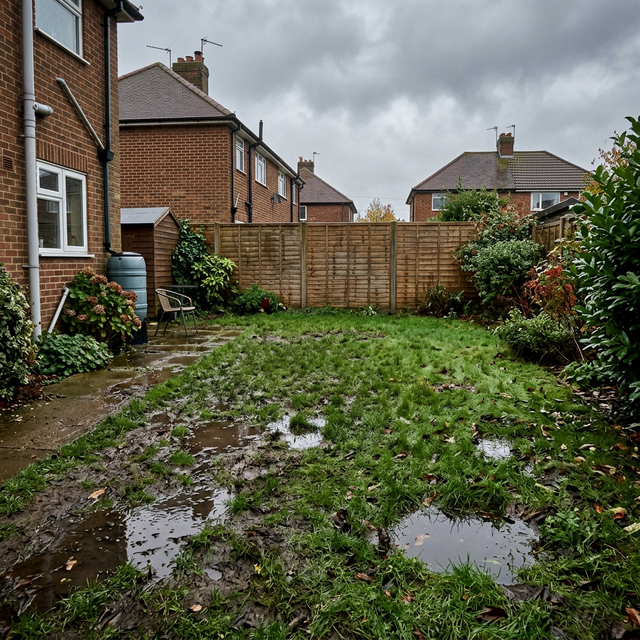
A cracked or collapsed drain leaks waste into the surrounding ground. Over time, you may notice damp areas in your garden that don't dry out, patches of grass that grow faster and greener than the rest of the lawn, or a soft, spongy feel underfoot in one area.
If you suspect an underground leak, a CCTV drain survey is the quickest way to confirm it without digging. Our cameras show exactly where the damage is, how far along the pipe it sits, and what type of drain repair is needed, whether that is relining, patch repair, or excavation.
What causes blocked drains?
Understanding why drains block helps you prevent it happening again. In our experience across the West Midlands, Warwickshire, and Worcestershire, these are the most common causes:
- Fat, oil, and grease (FOG) poured down kitchen sinks. It solidifies as it cools and coats the inside of the pipe until the diameter narrows enough to catch solid waste.
- Wet wipes, sanitary products, and nappies flushed down toilets. These do not break down the way toilet paper does, and they snag on joints or bends.
- Tree root ingress. Roots seek out moisture and can force their way through joints in clay pipes, growing inside the drain until they form a dense mat.
- Structural damage. Cracked pipes, displaced joints, or collapsed sections caused by ground movement, age, or poor original installation.
- Scale and mineral build-up in older pipes, especially cast iron ones, which reduces flow capacity over time.
What to do when you spot the signs
If you have noticed any of the symptoms above, here is a practical plan:
- Stop using water where possible. If a drain is backing up, every flush or tap run adds more water to the blockage and increases the risk of overflow.
- Check your outside drains. Lift any accessible inspection chamber covers carefully. If the chamber is full of standing water, the blockage is downstream. If it is empty, the blockage is between the chamber and the fixtures inside.
- Avoid chemical drain cleaners. They rarely clear a proper blockage, and caustic chemicals can damage older pipes. They also make the drain unsafe for an engineer to work on afterwards.
- Call a drainage engineer. A trained professional can clear the blockage with high-pressure water jetting and then inspect the pipe with CCTV to check for underlying damage.
How we handle blocked drains
When you call Cofton Drainage, here is what happens. One of our engineers arrives on site, typically within one to two hours for emergencies. We start by rodding or jetting the drain to clear the blockage and restore flow. Once the water is moving again, we insert our CCTV drain camera into the pipe to check for the root cause, whether that is a displaced joint, root growth, a buildup of fat, or structural damage.
That camera check is included as standard with every drain unblock we carry out. There is no extra charge for it. If the survey reveals further work is needed, we provide a fixed-price quote on site so you know exactly what you are looking at before deciding how to proceed.
We cover the whole of the West Midlands, Warwickshire, and Worcestershire, including Birmingham, Solihull, Coventry, Bromsgrove, Redditch, and the surrounding towns. No call-out fee, no hidden charges, and our prices start from just £80 for a standard drain unblocking service.
Spotted the Signs of a Blocked Drain?
Don't wait for it to get worse. Call our team now for fast, professional drain unblocking across the West Midlands.
Call: 0121 296 7829