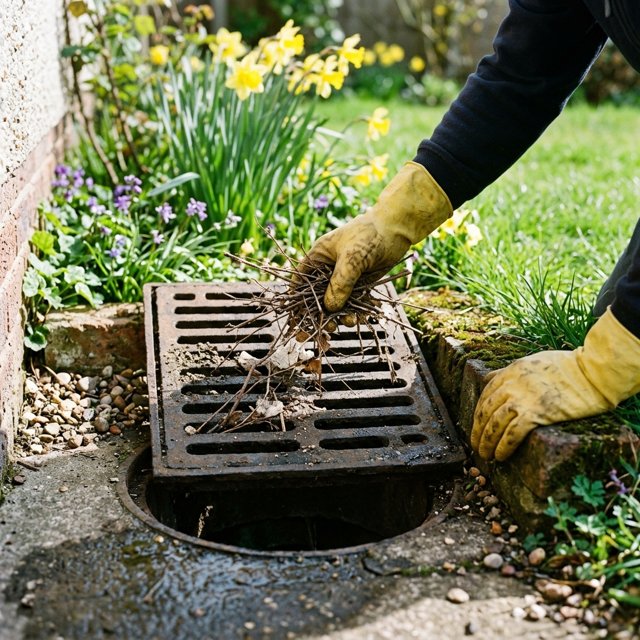
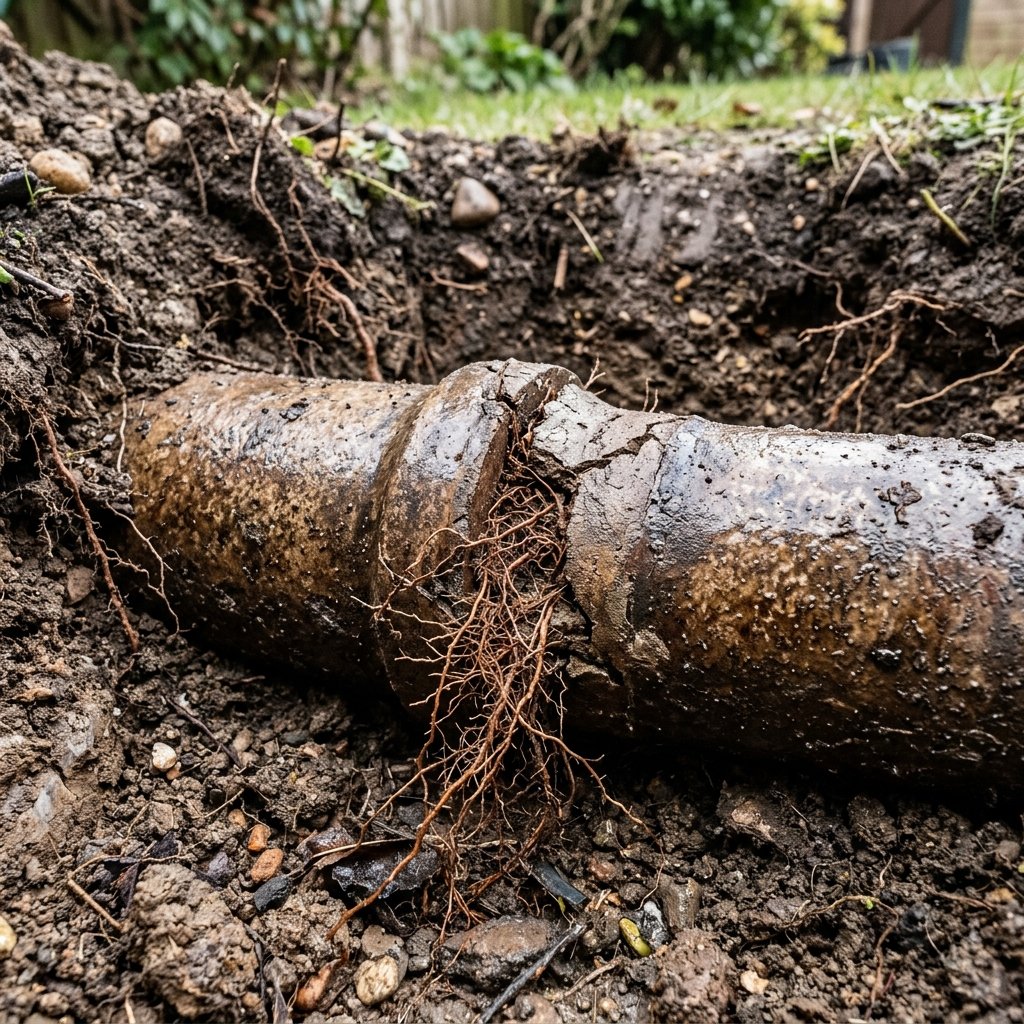
Tree roots in drain pipes cause more structural damage than almost any other problem we deal with. A single root tendril can enter a pipe joint thinner than a human hair, then grow thick enough to fill the entire bore within one growing season. Across Birmingham and the wider West Midlands, mature gardens and tree-lined streets mean this is a problem we see several times a week.
How Tree Roots Get Into Your Drains
Roots grow towards moisture. Underground drain pipes carry warm, nutrient-rich water and release small amounts of vapour through every joint and crack. To a tree's root system, a leaking pipe joint is a beacon. Fine feeder roots can detect moisture gradients in the soil from several metres away and will change direction to reach the source.
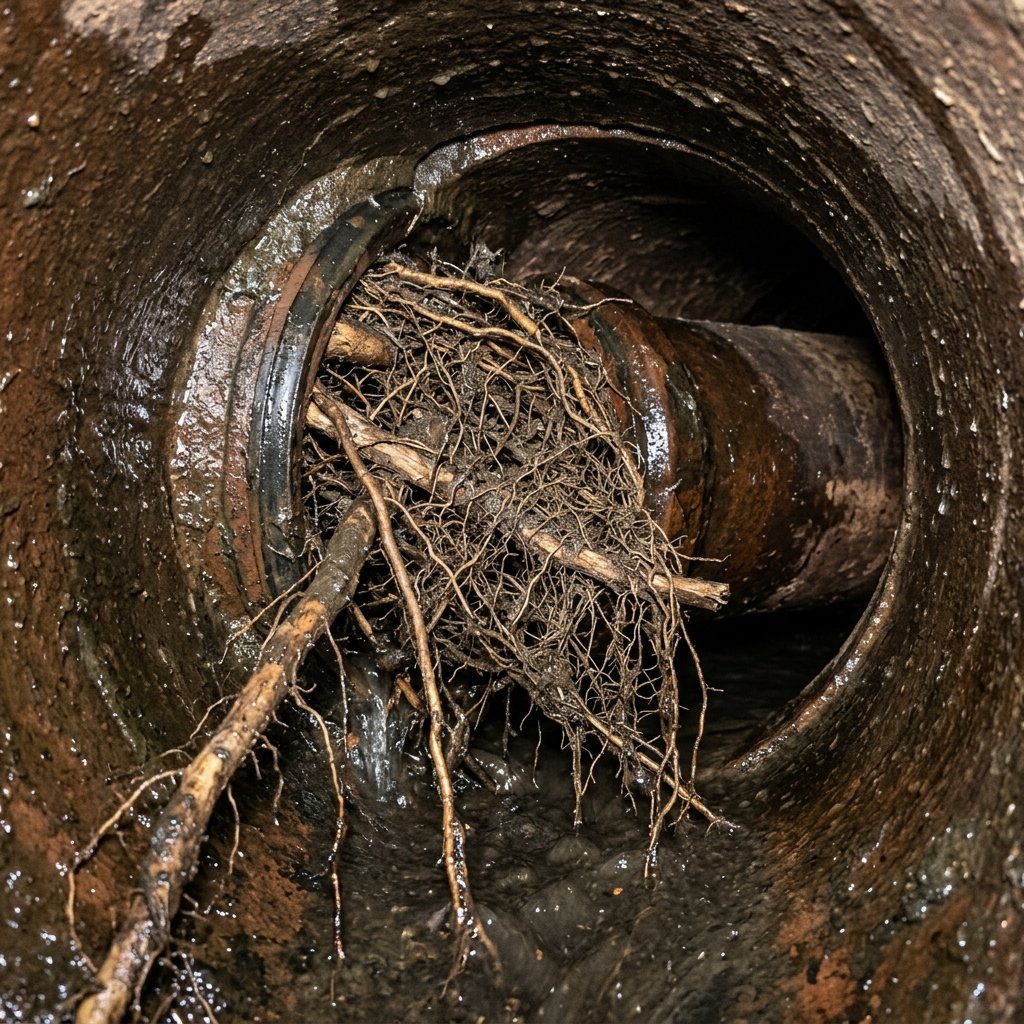
Once a feeder root reaches a pipe joint, it only needs a gap of less than a millimetre to push through. Salt-glazed clay pipes laid with mortar joints are by far the most vulnerable. The mortar degrades over decades, shrinking and cracking as it ages, which opens up gaps that roots exploit. Once inside, the root tip encounters a constant supply of water and organic matter. It thickens rapidly, and secondary roots branch off to form a dense mass that fills the pipe like a plug.
Modern PVC drainage with solvent-welded or rubber ring push-fit joints is far more resistant. The joints are tighter, the material does not degrade in the same way, and there are fewer entry points. That said, if a PVC pipe is physically damaged by ground movement or poor installation, roots will find and exploit that weakness too.
Which Trees Cause the Most Root Damage to Pipes
Not all trees pose the same risk. Species with aggressive, wide-spreading root systems cause the majority of tree root damage to pipes we deal with. The worst offenders are:
- Willow is the single worst species for drain damage. Willows are moisture-seeking by nature, and their roots spread laterally up to 40 metres from the trunk. Even a small ornamental willow planted near a drain run will find its way in.
- Poplar has an equally aggressive root system and is commonly found on older residential boundaries across the West Midlands. Council-planted Lombardy poplars along roads are a frequent source of root ingress into public and private drains alike.
- Oak and ash have deep, far-reaching root systems. They tend to cause problems over longer timescales, but in mature specimens the roots can exert enough force to displace pipe sections entirely, not just infiltrate the joints.
- Sycamore and horse chestnut both produce dense surface root networks. Properties backing onto parkland or green spaces where these species are common often see root ingress from beyond the property boundary.
As a general rule, if a tree is planted within a distance equal to its expected mature height, you should treat the drain run beneath it as being at risk.
Warning Signs of Tree Roots Blocking Drains
Root ingress rarely causes a sudden, complete blockage. Instead, the symptoms build gradually as the root mass grows. The earliest sign is usually a slow drain. Sinks, baths, and toilets take longer to empty than they used to, and the problem is worst during summer when root growth is most active. You may notice it improves slightly in winter when growth slows, then worsens again the following spring.
Gurgling sounds from waste pipes are another indicator. As roots partially block the bore, air gets trapped and displaced unevenly. Recurring blockages that keep coming back within weeks or months of being cleared almost always point to a structural issue, with root ingress being the most common cause. If you smell sewage in the garden near a known drain run, roots may have breached the pipe wall enough for waste to leak into the surrounding soil.
How We Detect Roots in Drain Pipes
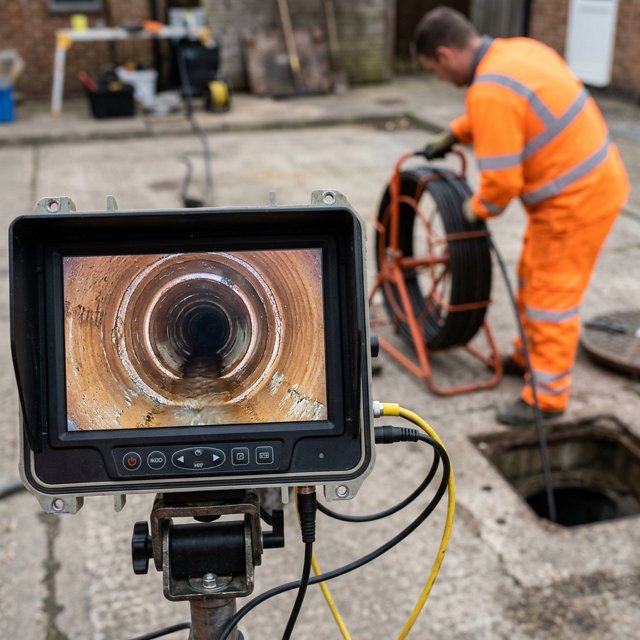
A CCTV drain survey is the only reliable way to confirm root ingress and assess its severity. We feed a camera through the pipe from the nearest manhole access point and record footage of the entire run. On screen, root intrusion is unmistakable: you see fine tendrils hanging from the pipe crown at joints, or in more advanced cases, a thick root mass filling the bore like a bird's nest.
The survey also tells us the pipe material, joint type, and exactly where the ingress points are. This matters because it determines the right repair approach. A single root entry at one joint needs a different solution to a 10-metre run of clay pipe with ingress at every joint along its length.
Three Ways to Remove Tree Roots From Drains
There are three approaches to clearing roots from sewers and drain pipes. Each has its place, and we often use them in combination depending on what the CCTV survey reveals.
1. Chemical Root Killer Treatment
Copper sulphate-based root killers can be flushed into the drain to poison root growth inside the pipe. The chemical kills the roots it contacts without harming the tree itself, since it only affects the small percentage of the root system inside the pipe. This is a temporary measure. It slows regrowth but does nothing to seal the entry point, so fresh roots will return, typically within 6 to 12 months. We sometimes recommend this as a holding measure for tenants or homeowners who need time before committing to a permanent repair.
2. High-Pressure Rotary Root Cutting
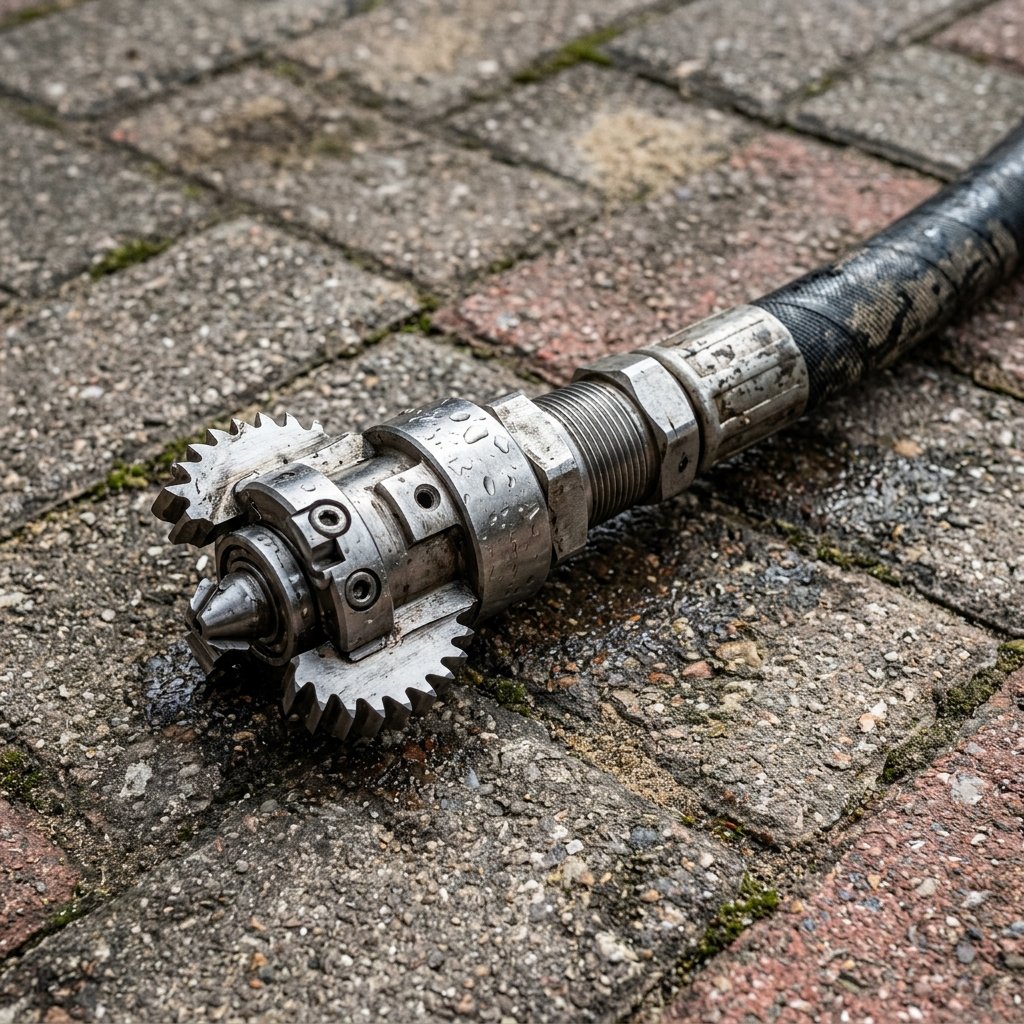
This is how we clear the immediate blockage. A steel rotary cutting nozzle is attached to the end of a high-pressure jetting hose and fed into the pipe. The nozzle spins at high speed while water jets at 3,000 to 4,000 PSI blast the cut material downstream. The cutter physically shears through the root mass, restoring the full bore of the pipe.
Rotary root cutting is highly effective at restoring flow, and we can clear even dense, established root masses in a single visit. The limitation is the same as chemical treatment: the joints remain open, and roots will regrow. For many properties, we schedule annual root cutting as a maintenance plan, particularly where tree removal is not possible and the homeowner does not want to proceed with relining.
3. No-Dig Structural Relining
This is the permanent fix. After clearing the roots with rotary cutting and jetting, we install a resin-impregnated liner inside the damaged pipe section. The liner is inflated against the pipe wall using air pressure and left to cure, forming a smooth, jointless pipe-within-a-pipe. Once hardened, it seals every joint and crack along the lined section, removing every entry point that roots previously exploited.
No-dig root repair means no excavation, no disruption to driveways, patios, or garden landscaping, and no reinstatement costs. The entire process, from root cutting to finished lining, is completed in a single day for a typical domestic drain run. The cured liner is rated for a 50-year design life and is resistant to root penetration, chemical erosion, and ground movement. For a more detailed look at how this compares with traditional digging, read our guide to drain relining vs excavation.
Where We See the Most Clay Pipe Root Ingress
The combination of older housing stock and mature trees makes some areas consistently worse for root damage than others. Olton's tree-lined suburban streets with mature gardens sitting over ageing clay pipe runs make it one of the areas where we see the most root ingress. The 1930s semis that dominate the area were built with salt-glazed clay drainage, and the trees planted at the same time now have root systems that have had 90 years to find every weak joint.
Tidbury Green's semi-rural setting with established hedgerows and large gardens means root systems extend extensively beneath properties. The longer drain runs typical of rural and semi-rural plots give roots more joints to target, and the clay soils in that area retain moisture that draws roots towards pipe trenches.
In the Black Country, steep gardens and older clay connections can complicate root work around Sedgley and Quarry Bank. The first root mass may not be the only entry point, especially where a run changes level or passes beneath a retaining wall. We clear enough of the pipe to inspect the joints beyond it before deciding whether a patch, liner or local excavation is justified.
Larger plots and established planting are relevant when investigating root-affected drains in Pelsall. Around Rowley Regis, changing ground levels can make the route and depth just as important as the tree species. A sonde trace alongside the camera footage helps locate the damaged joint without opening the wrong part of a garden or drive.
The pipe and ground conditions vary from one district to the next. Our Wolverhampton drainage guide for older clay and mixed-age sewers explains why repeated clearance is not enough when a joint remains open. For rural plots and mature gardens farther south, the Bromsgrove drainage guide to clay soil, roots, and pipe movement separates what soil conditions suggest from what a camera can actually prove.
Preventing Tree Root Damage When Planting
If you are planting new trees, the single most effective step is choosing the right species and position. Avoid willows, poplars, and other moisture-seeking species anywhere near a drain run. As a minimum, plant at a distance equal to the tree's expected mature height. For a species like silver birch, which reaches around 15 metres, that means keeping it at least 15 metres from the nearest drain.
If space is limited, consider species with compact, less aggressive root systems. Ornamental cherries, crab apples, and most fruit trees are lower risk. Raised planters with root barrier membranes are another option where trees need to be close to drainage infrastructure.
For existing trees that you want to keep, the best protection is to reline any vulnerable clay pipe sections before roots find them. Preventative relining is significantly cheaper than emergency root clearing followed by relining after damage has already occurred.
Dealing With Tree Roots in Your Drains?
We carry out CCTV surveys, rotary root cutting, and no-dig relining across Birmingham and the wider West Midlands. If you have recurring blockages near mature trees, call us for a same-day diagnosis.
Call: 0121 296 7829