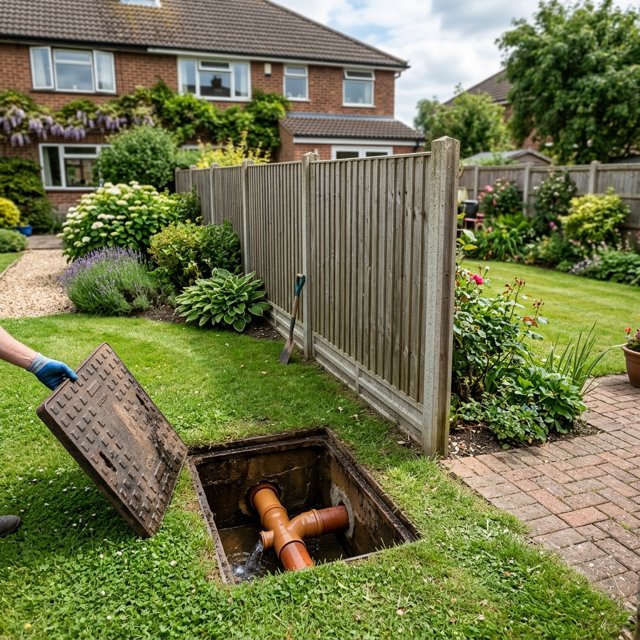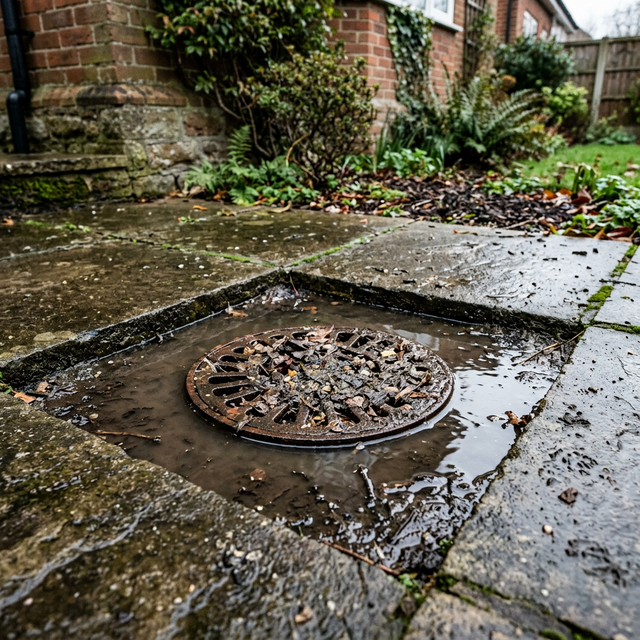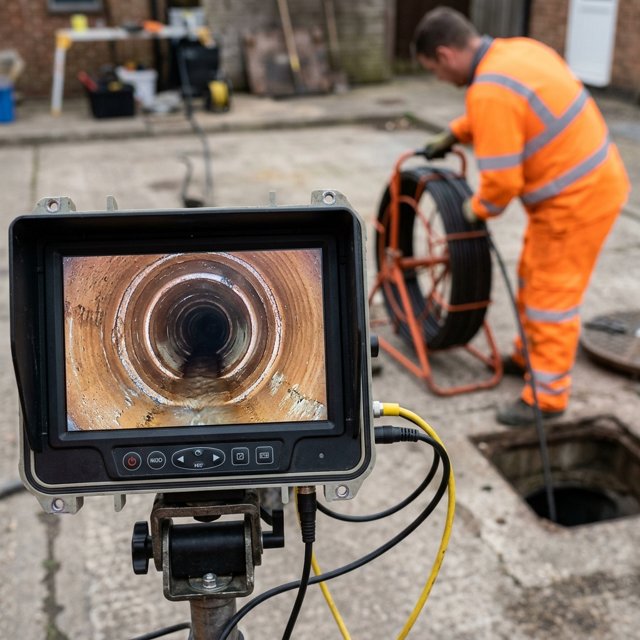
If your CCTV drain survey report describes a displaced joint at 4.7 metres, find out where the camera started before you picture a hole in the patio. The surveyor may have fed the camera in from the far end of the run, or the length recorded may follow a pipe that bends under the garden. The plan, observation log and footage become much more useful when you read them together.
The reason you commissioned the survey determines where to start. You might need to know where a repeat blockage starts, whether a drain under an extension can still be reached or what a repair allowance should cover before you exchange contracts. The same set of photographs can be adequate for one of those questions and leave another unanswered.
Check which pipes the survey covered
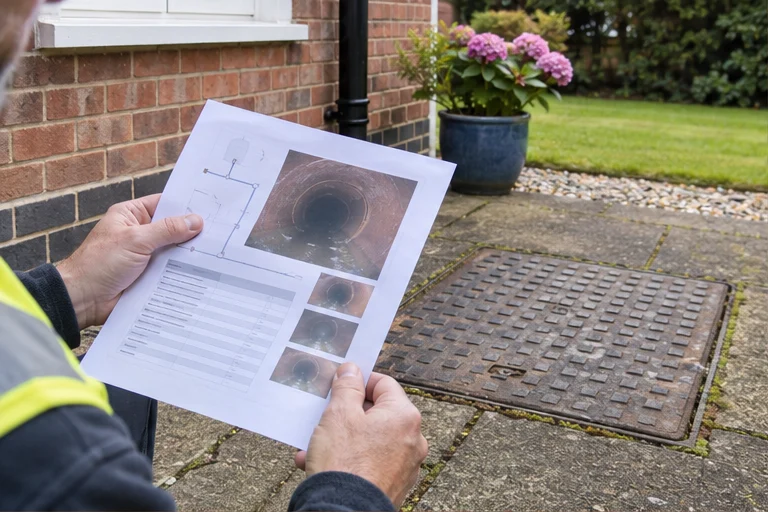
The site plan should give you a way to find the chambers or access points named in the report. Keep it beside the run sheets. If the summary says the drains were in sound condition, check whether it refers to the main foul run between two chambers or includes the branches serving the kitchen and bathroom. A rainwater system may have been outside the brief altogether. You need this distinction before using the report to make a decision about the whole property.
An accessible chamber can give the surveyor more than one route. A camera might travel along the main outlet and fail to enter a side connection at a sharp angle. Where you see a branch on the plan, check whether it has its own run record. A sketch can show how routes appear to connect without establishing the exact position, depth or ownership of each pipe. If a planned footing will sit close to the line, ask how the route was located and how much weight you can put on the drawing. The survey walkthrough explains how access and the scope are agreed on site.
For a home purchase, compare the instructions to the drainage decision you need to make. A clear main run is helpful evidence, but an uninspected branch serving the proposed new bathroom may still affect your plans. For a recurring blockage, there is a different test. Look for coverage of the route from the fixtures affected towards the point where they discharge. If the survey covered another line, the report can be accurate and still leave the fault open.
Follow a distance from the run sheet to the footage
A distance has meaning within a run. As a worked example, imagine the log says “Chamber 2 towards Chamber 1, displaced joint at 4.7 m”. The camera was inserted at Chamber 2. Starting at Chamber 1 because it comes first on the plan would send you looking along the wrong part of the pipe. If the camera was run back the other way on a second pass, the same joint can have a different recorded distance. Look at the chamber references, direction and images before counting two observations as two faults.
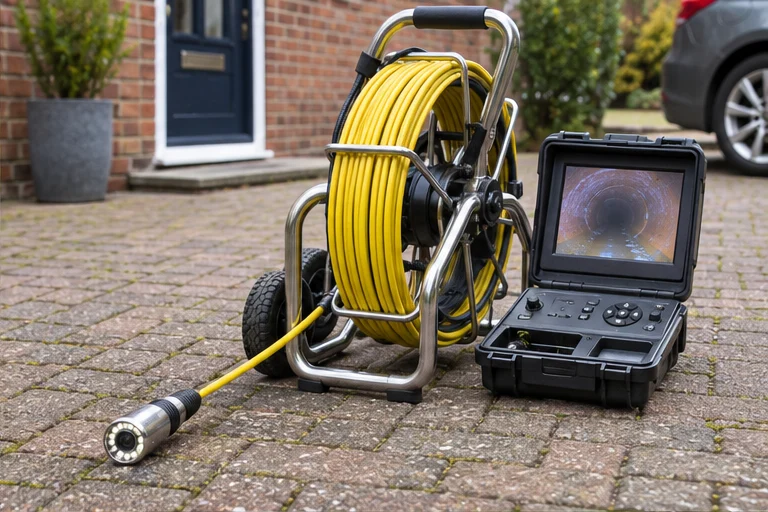
The Wessex Water CCTV inspection guide includes an example of how a sewer inspection record is laid out. A domestic report may look different, but the same links between the start point, direction and findings help you follow it. For the fictional run above, you might make a note like this:
| Record | What to locate |
|---|---|
| Chamber 2 towards Chamber 1 | The entry point on the plan and the direction the camera travelled. |
| Displaced joint at 4.7 m | The observation and the matching footage. The distance follows the run. |
| Camera ended at 6 m | The place where the view ends and any stretch of pipe that remains uninspected. |
You can check a still against the video by looking for the same joint, opening or change in pipe material just before the feature. A brief reflection or splash can be hard to interpret in a single frame. If several observations sit within a short stretch, ask the surveyor which ones affect the repair decision. Where ground work is proposed, confirm how the contractor will verify the position and depth before disturbing the surface. A camera with a locating transmitter may help where the conditions and equipment allow. If a plan is marked approximate, keep that qualification when you pass it on to a builder.
Separate the observation from the proposed repair
A camera shows what the surveyor could see inside the pipe. On one run you might see a displaced joint with a visible lip. On another, there might be a similar displacement with fine roots entering the opening and debris sitting upstream. Those findings have different implications even if both stills look like a dark line on the screen. The log should say what was observed, and the recommendations should explain why a repair, clearance or further check follows.
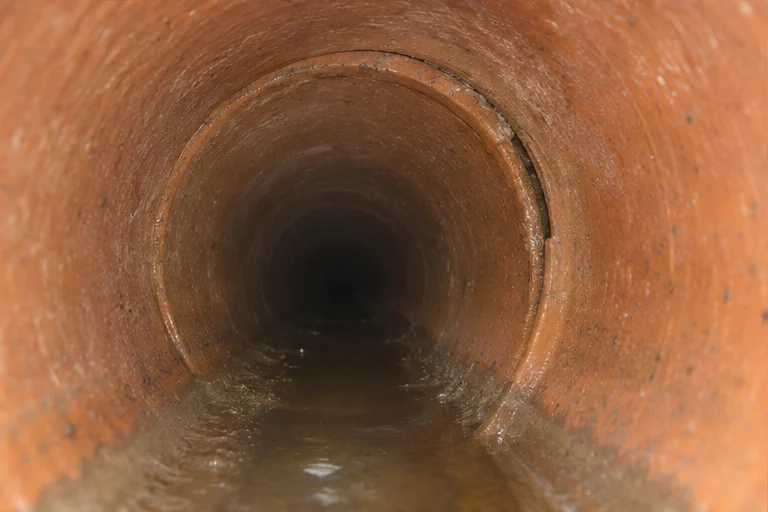
If the report uses condition grades, ask for its grading key and a plain-English reading of the features that drove the result. A report may distinguish structural condition from service problems such as deposits or an obstruction. A pipe can be damaged and still pass water on the day, or water can be backing up in a pipe whose visible walls are sound. The Drain Repair Book describes how inspection and flow evidence inform the choice of repair. A grade alone cannot tell you whether a contractor has access to fit a liner or whether an isolated section needs to be replaced.
It helps to ask the author to mark the precise observation that a quote addresses. If the quote says “repair damaged drain”, look for a run reference and length, an explanation of how the work will restore function and any allowance for reinstating paving. A recommendation to cut roots gives you another question. Will the cut leave a joint that still needs a repair to limit re-entry, and what does the clear follow-up image show? If a recommendation is provisional until cleaning, price that next inspection separately so you can tell where the uncertainty ends.
Read the limits before acting on a clean result
Look for “survey abandoned”, “unable to pass” or a run length shorter than the drawing suggests. A camera can stop at debris, a bend, standing water or a change in pipe condition. Ask where it stopped and whether an inspection from the other end would help. A partial run still has value if the surveyor specifies the visible length, the reason for stopping and which conclusion remains open.
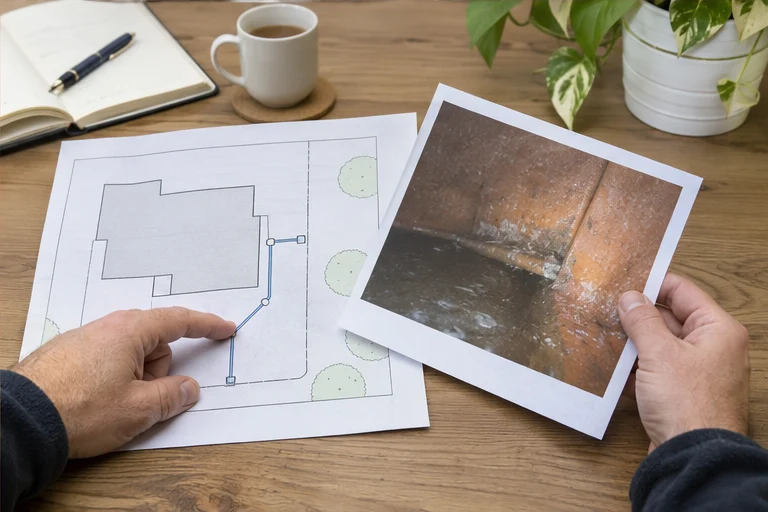
Suppose the camera reached six metres along a run to the rear boundary before disappearing into turbid water. The first six metres can have a documented inspection while the end of the run remains uncertain. Asking for an exact diagnosis of the hidden part from the still at six metres goes further than the footage supports. If the report recommends clearing the obstruction and filming again, ask whether the return will include the missed connections as well as the main line. If the camera cannot reach them from either end, ask what alternative inspection is proportionate to the decision.
Some limitations arise from the question being asked. CCTV can show a wet joint, but a visual record by itself does not measure leakage or prove where water outside the pipe came from. A drawing or recorded connection also does not settle responsibility for the run. The property boundary and whether other properties share the pipe may affect who should inspect or carry out work. For a building project, refer to the Severn Trent build-over process and ask which drawings and reports it requires for your application.
What to send when you ask for a second opinion
Keep the dated report, run sheets, plan, clips and repair quotation together. Give the person reviewing them the chamber reference and distance of the main concern, along with the practical decision you need to make. If the fault comes and goes, include when it happened and which fixtures were affected. That can be more useful than a long unlabelled video forwarded on its own.
Our CCTV drain survey team can discuss which runs you need inspected and what an additional visit would need to establish. An existing report is worth sharing first, especially if the surveyor already documented a useful access point or a section that could not be reached.
Questions about interpreting a drain survey
Can I rely on a report produced for the previous owner?
The address and date establish which property and point in time the report describes. Ask what happened to the drainage or the property since the inspection. Work on an extension, a fresh blockage or a repair can make an old record less representative. Compare its run list against the area that matters to your purchase. If you are relying on the document for a transaction, ask your solicitor or surveyor whether you can rely on the original report and if they need further evidence. Even an older inspection may save time by showing access or the former layout.
What if I only received a video?
Ask the surveyor for the matching run details and limitations. Footage can show an offset or a blockage clearly, but the next person needs to know the entry point, direction and where the inspection ended to use it. If ordering a separate report, explain why it is needed before paying for another visit. A builder working near a shared sewer may need drawings or documentation in a different format from the evidence a drainage engineer needs to find a problem joint. Our survey cost guide explains how a recorded survey differs from a basic camera check.
Does a finding automatically mean I should repair the pipe?
Ask how the finding relates to the problem. A minor feature in a free-flowing run may prompt a different response from a similar feature at the point where paper repeatedly catches. Look for the proposed reason, the evidence and the consequence of waiting. A recommendation prompted by an incomplete run can change once the rest of the pipe is visible. If there is flooding, an unsafe surface or wastewater entering the property, seek timely assistance and keep people away from the affected area while the fault is assessed.