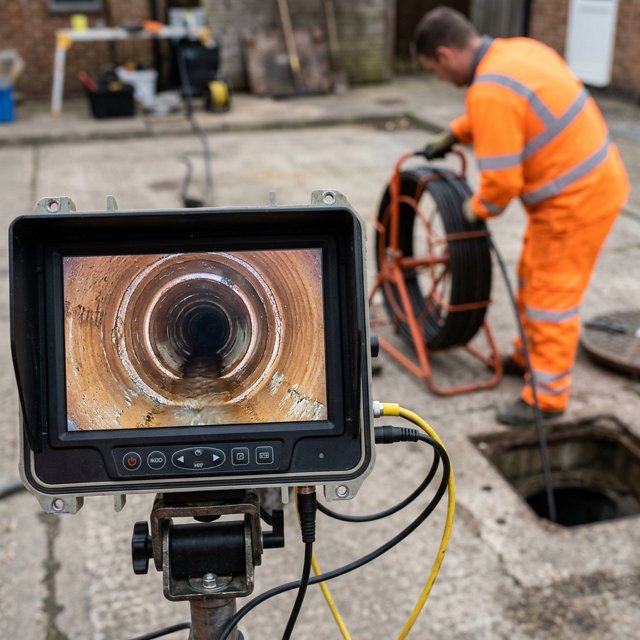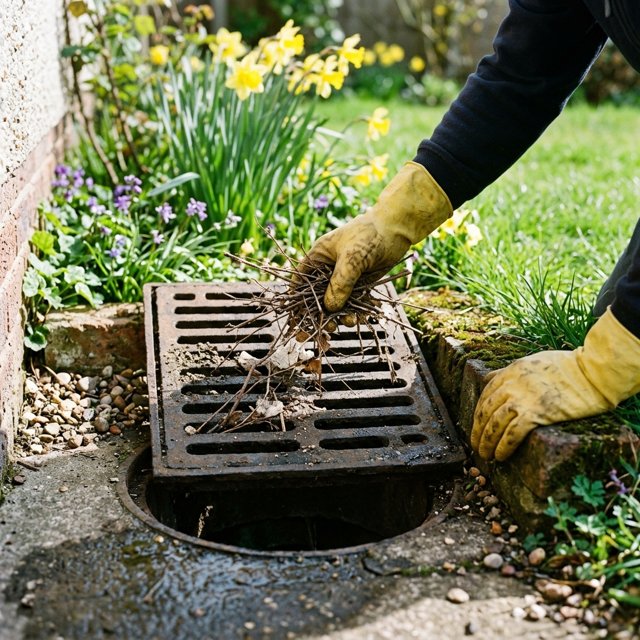
Drain insurance can be useful, but only if it covers the pipe, fault and type of work you are worried about. The phrase may describe three different products: cover already included in buildings insurance, a home emergency add-on or a separate plumbing and drainage policy. They do not all pay for the same thing. One may send an engineer to restore flow while another may consider accidental damage to an underground pipe.
The decision is less about whether drains ever block and more about what financial risk you want to transfer. Compare the annual premium, excess, claim limit, exclusions and repair rules with the price of buying drainage help when you need it. This guide explains the questions to ask. It is general information, not advice on a particular insurance policy.

Check the policy schedule and full wording before assuming that blockages, investigations or permanent repairs are covered.
First work out which drain belongs to you
Insurance for private drains is poor value if the problem you fear sits in a pipe maintained by the sewerage company. In England, the drain inside your property boundary that serves only your home is normally your responsibility. The water company is usually responsible for public sewers and for the lateral drain once it runs beyond the boundary. Shared arrangements and private pumping systems can be different, so the route matters.
Ofwat’s guidance on public and private sewers explains the usual boundary. If several neighbours are affected or a downstream shared chamber is full, contact the sewerage company before paying a private contractor. If only your fixtures and the first private chamber are affected, the obstruction is more likely to be on your side, although it still needs locating.
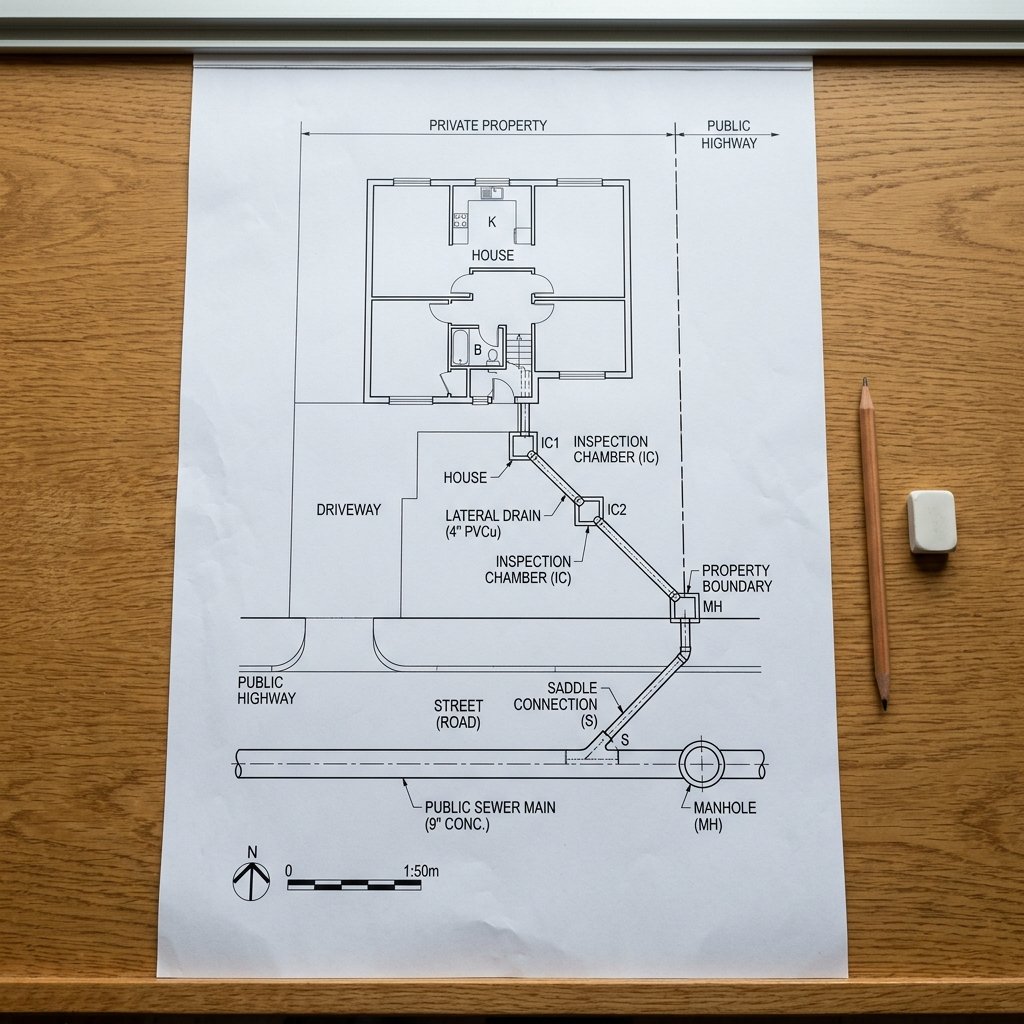
Responsibility usually changes at the property boundary, but the pipe route and local sewer records must still be checked.
Buildings insurance and home emergency cover do different jobs
Buildings insurance protects the structure of the home against the insured events set out in the policy. Some policies include underground services and may cover damage to water, gas, electricity or drainage pipes for which the policyholder is responsible. Some include clearing a sewer blockage on the property. Others offer those features as optional cover or apply a separate excess.
Home emergency cover is usually designed to make a sudden situation safe or usable again. A policy might arrange attendance for a blocked drain or the only usable toilet, pay the call-out and cover work up to a limit. It does not automatically pay for everything caused by the emergency. The Financial Ombudsman’s home emergency guidance notes that consequential damage is commonly outside emergency cover and that policies can exclude external or shared drains.
That distinction creates a common gap. The emergency contractor restores flow, but a camera then shows a cracked joint or deformed pipe. The emergency policy may have completed its job once the immediate blockage has gone. Whether the permanent repair is covered depends on the buildings policy, the cause of damage, exclusions and approval process.
The exclusions decide whether the policy has value
Do not compare policies from their front-page promise alone. Read the definitions and exclusions, then write down how each one treats the following points:
- Blockage versus damage: does it only clear the pipe, or can it pay for repairing the cause?
- Wear and tear: are old, corroded, scaled, blistered or gradually deteriorating pipes excluded?
- Roots and collapse: does the wording cover removal, structural repair, both or neither?
- Pre-existing problems: how does the policy treat earlier symptoms or repeat blockages?
- Shared and external drains: which parts of the network fall outside the definition of the home?
- Access and reinstatement: is excavation, leak tracing or making good a floor, drive or garden included?
- Claim limits: is there a limit for each visit, each claim or the whole policy year?
- Contractor choice: must you use the insurer’s helpline and approved network?
- Waiting periods: can you claim immediately after buying the cover?
- Property use: are landlords, empty homes, businesses or unusual drainage systems excluded?
MoneyHelper’s guide to features in a buildings insurance policy treats underground services and sewer-pipe blockage as items worth checking, while also warning that limits and exclusions can apply. Use that as a checklist, then rely on the wording issued by your own insurer.
Compare the total annual cost with realistic call-out prices
Add the annual premium to the excess you would pay for one claim. If a drainage add-on costs £90 a year with a £50 excess, using it once makes the immediate cost £140 before considering any exclusions or effect on renewal. If you keep it for five years and claim once, the total paid is different again. A low monthly figure can hide that longer comparison.
Then compare local pay-as-you-go prices for the service you are likely to need. Cofton currently publishes manual clearance from £100 including VAT and high-pressure jetting from £150 where required, with the price agreed before extra work. More difficult access, specialist equipment, a written survey or permanent drain repairs cost more. Our drain unblocking price guide sets out those differences.
Do not treat one contractor’s prices as a universal benchmark. The useful comparison is between your policy’s total cost and the likely cost of suitable work in your area. Someone with an emergency fund may prefer to pay for an occasional clearance directly. Someone who would struggle with an unexpected bill may value predictable cover even if it costs more over time.
A simple drain cover calculation
For each policy, write down five figures:
- annual premium, including any introductory discount ending at renewal;
- excess for a drainage claim;
- maximum paid per claim and per year;
- the amount you would still pay for excluded investigation or repair;
- a realistic direct price for the same emergency attendance.
Run the comparison over several years, not one month. Cover is buying certainty, so a year without a claim is not proof that it failed. The question is whether the certainty is worth the terms and total price to you.
When separate drain insurance may be worthwhile
Cover may suit a household that has little room for an unexpected bill, depends on one toilet, wants one emergency number or cannot easily arrange a contractor at short notice. It may also help where the policy includes a useful level of attendance and repair cover that is genuinely missing from the main buildings policy.
Read the repeated-fault wording carefully if the drains have blocked before. A policy is not normally a maintenance plan for an existing defect. If roots, a low section or a damaged joint is already known, buying new cover may not transfer that cost. Repairing the cause and keeping the survey evidence may be the better use of the premium.
When paying directly may make more sense
Direct payment may suit a property with accessible drains, no history of structural problems and savings set aside for home repairs. It gives you control over the contractor and can avoid an excess or claims process. It also lets you commission a camera investigation when recurring symptoms justify it, rather than when an emergency policy authorises it.
The trade-off is that you carry the full cost of a rare expensive repair. A collapsed drain beneath a finished floor or deep drive is not comparable with a routine blockage. Buildings insurance may still respond if the cause meets its terms, even without a separate emergency add-on. That is why checking existing cover comes before buying another policy.
Compare claim limits, waiting periods, excesses and repair exclusions before deciding whether separate drain cover offers useful value.
What to do when a drain problem happens
- Stop adding water. Avoid flushing toilets, running taps, showers, washing machines or dishwashers into the affected line.
- Check the extent safely. Note which fixtures and chambers are affected, whether neighbours have the same problem and whether water is entering the home.
- Check responsibility. A shared downstream problem may belong with the water company rather than a private contractor or insurer.
- Call the insurer before spending. Use the emergency number and ask what approval, contractor and evidence the policy requires.
- Protect evidence. Photograph the overflow and damage without entering a chamber or touching sewage. Keep invoices, reports and camera footage.
- Separate emergency work from permanent repair. Ask what has been cleared, what defect remains and who must authorise the next stage.
If sewage is entering the building or creating an electrical or health risk, make the area safe and explain the urgency when you call. Do not delay essential action solely to collect perfect evidence. Record what you can safely and keep a note of whom you contacted and when.
A CCTV report can separate a blockage from a claim
A recorded survey can show roots, a fracture, displaced joint, deformation, collapse or standing water. It should locate the defect from a known access point and describe the visible condition without guessing at an unproven cause. That distinction matters to an insurer deciding whether the event is sudden damage, gradual deterioration, poor installation or ordinary blockage.
Ask the insurer whether it wants to appoint the surveyor or approve the cost first. If you commission the work yourself, request footage, still images, a plan or distance reference and a written repair quotation. Our CCTV drain survey service can provide a recorded report where a claim, property decision or recurring fault needs evidence.
Our view: buy the wording, not the fear
Drain insurance is worth considering when the cover fills a real gap, the limits would meet a likely cost and the exclusions do not remove the risk you want covered. It is less attractive when it duplicates a buildings policy, has a high excess, only funds a basic attendance or excludes the known condition of the drains.
Before renewing, ask the provider to confirm unclear points in writing. Compare that answer with the cost of holding your own emergency fund. If you already have recurring symptoms, investigate them now rather than assuming a future policy will pay. A known fault rarely becomes cheaper by waiting for the next overflow.
Questions about drain insurance
Does home insurance cover blocked drains?
Some buildings policies include underground services or the cost of clearing a blockage on your property, but wording and exclusions vary. Wear and tear, roots, collapse, pre-existing faults or pipes outside the boundary may be treated differently. Read your own schedule and policy wording.
What does home emergency drain cover pay for?
It commonly pays for attendance and work needed to stop a sudden emergency, up to a claim limit. It may not pay for the damage caused by the incident, a permanent structural repair, shared drains, repeated faults or problems that existed before the policy began.
Is a lateral drain my responsibility?
In England, the water company is usually responsible for the lateral drain beyond your property boundary and for public sewers. The drain inside your boundary that serves only your property is normally your responsibility. Unusual private arrangements can differ.
Can I choose my own drainage contractor for an insurance claim?
That depends on the policy and whether the situation is safe. Some insurers require you to use their helpline and approved contractor before spending money. Call the insurer first unless delaying would create an immediate safety or damage risk, and keep evidence of the problem and work.
Is pay-as-you-go drain unblocking cheaper than insurance?
It can be for a household with accessible, well-maintained drains and enough savings for an occasional call-out. Cover may offer more certainty for someone with no emergency fund or a higher perceived risk. Compare annual premiums, excesses and limits with realistic local prices.
What evidence helps with a drain insurance claim?
Keep photographs of any overflow or damage, the engineer’s invoice, CCTV footage or stills, a written description of the defect and a repair quotation. Ask the insurer what evidence and approval it needs before permanent work begins.
Need evidence before deciding on a repair?
We can clear the line, record the visible defect and provide a repair quotation. We also cover Droitwich Spa, Evesham and the wider region.
Call: 0121 296 7829