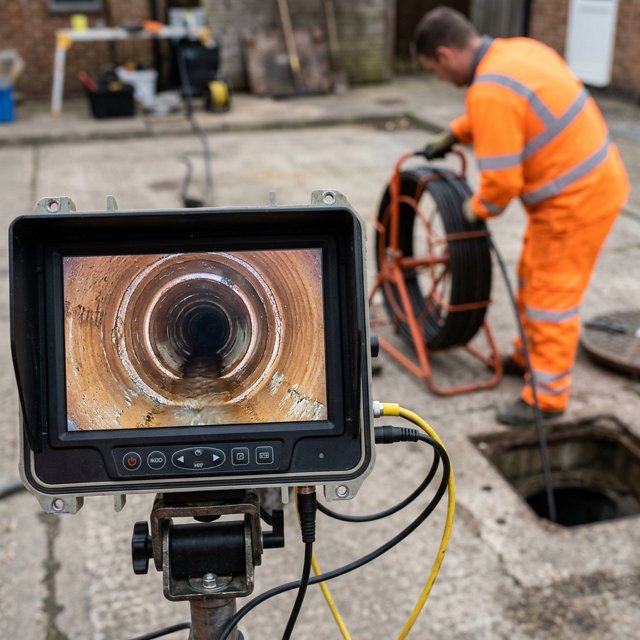
A spring drain check starts with the visible gullies, downpipe outlets and exposed waste pipes, then follows how sinks and toilets behave during ordinary use. Leaves and silt can remain after winter even when the surface looks tidy. These five checks help you recognise a restriction without assuming that every wet patch means a broken drain.
At Cofton DJS, we use the symptoms and the property's layout to decide where an investigation should begin. Noting what happens during rain and when household fixtures discharge gives us a starting point for that conversation. These observations can be made from ground level, without lifting manhole covers or entering a chamber. If sewage is already backing up, skip the checks and arrange help.
1. Check gully grates and surface channels for winter debris
Starting outside, look at the grate below each downpipe or external waste outlet and any channel across the driveway or patio. Wet leaves can cover the openings; grit and moss may collect underneath. Where water bypasses the grate, clearing loose surface material can restore the inlet without any work inside the pipe.
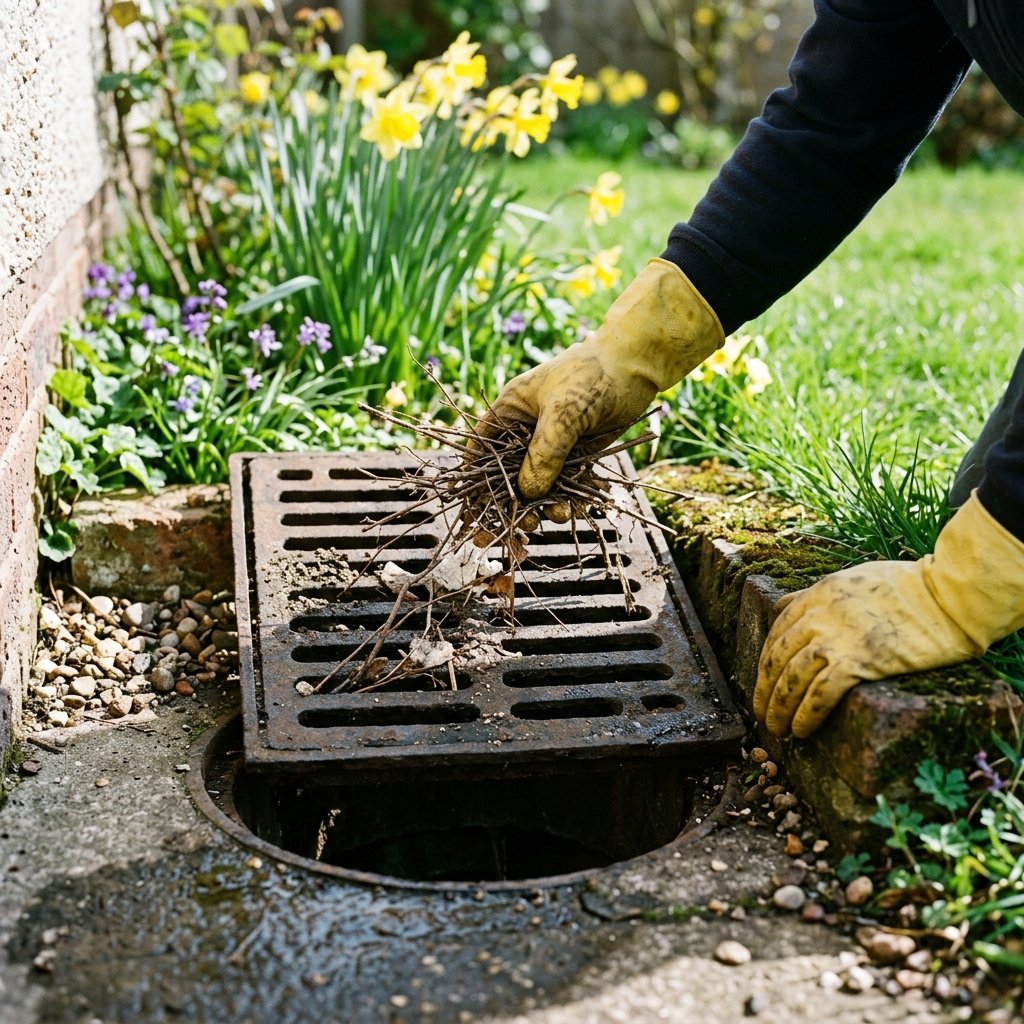
When loose leaves and twigs are safely within reach, you can remove them wearing gloves without attempting to unblock the pipe underneath. A light removable grate or silt basket can also be cleaned if you know how it fits and can put it back securely. Heavy, damaged or unfamiliar covers need the right equipment. Collected grit and silt should go into a container for appropriate disposal, because rinsing them down the outlet may leave the next restriction farther along the route.
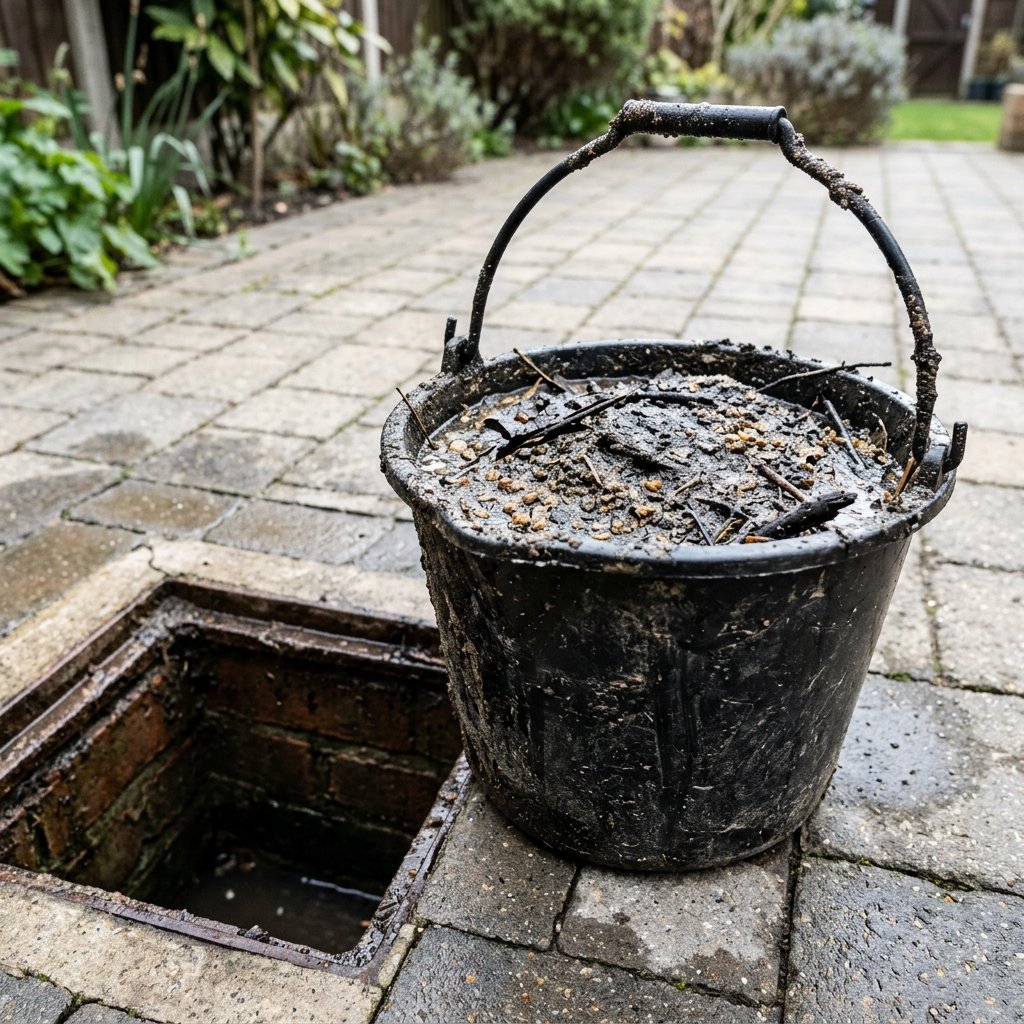
If the cleared grate still cannot take the water arriving at it, the problem may be beneath the surface. Our outside-drain checklist explains what to note before arranging a visit. A gully that is already rising should not be tested by adding another bucket of water.
2. Watch where rainwater goes from gutters and downpipes
Once the inlets are clear, an ordinary spell of rain can tell you more than examining dry pipework. You may see water spilling from the gutter while the ground-level outlet remains clear, or find that the downpipe delivers normally until water starts rising around its base. Those observations give us different places to start:
- Overflow at roof level: The gutter or its outlet may need attention from a contractor with suitable access equipment. A blocked underground drain is not the only possible explanation.
- Water backing up at ground level: The gully, downpipe outlet or connected drainage route may need investigation, even when the gutter above is clear.
A leak at a downpipe joint is useful to photograph while it is happening, since a dry stain alone may not show whether the joint leaks or water is backing up inside the pipe.
Before recommending work below ground, we also need to know where that downpipe goes. It may discharge to a surface-water sewer, a combined sewer or a soakaway, so reconnecting it to the nearest visible drain can create a different problem. You can observe the flow from a safe position; high gutters and roof access belong with someone equipped for that work.
3. Look for leaks at exposed waste pipes and joints
On accessible kitchen or bathroom waste pipes, a drip that appears when the fixture empties can help locate a loose connection or split. That may need a local plumbing repair, and the winter pipe-protection guide explains why exposed sections deserve attention. Establish which pipe is leaking before booking a drain survey, particularly if it carries the clean-water supply. The Met Office's frozen and burst pipe guidance describes how leaks can appear as frozen supply pipes thaw. A burst on that system needs the water isolated at the stop tap, where safe, and a qualified plumber; clearing an underground drain would leave the supply leak unresolved.
4. Notice changes when sinks, showers and toilets discharge
During normal household use, notice whether a fixture empties more slowly than before or another starts gurgling when the toilet flushes. One slow sink may have a problem in its trap or branch. Several affected fixtures can point towards a shared section of the route, although the symptoms alone do not tell us where the restriction sits.
If the water level starts rising, stop using the affected fixture and explain what happened when arranging drain unblocking.
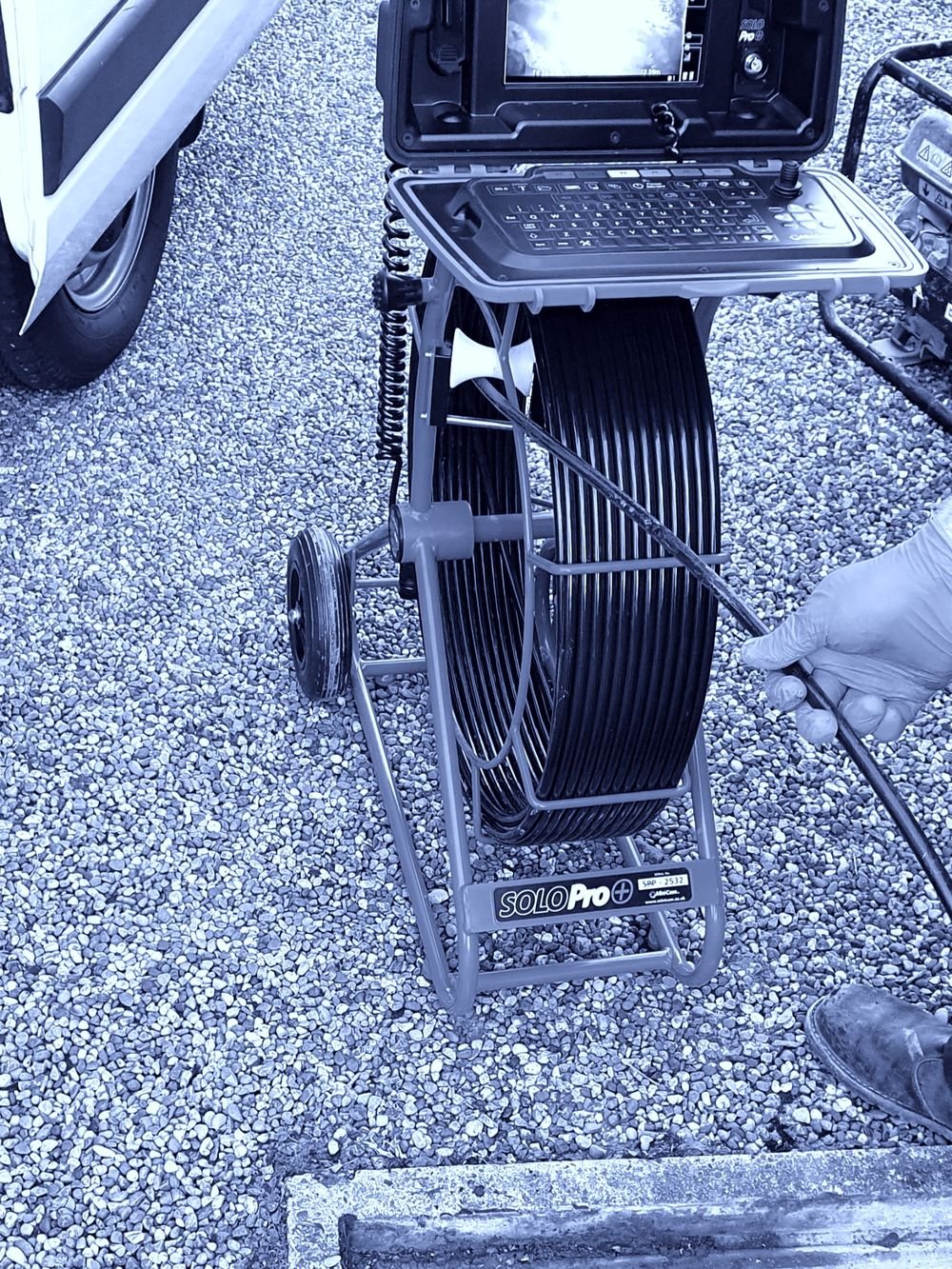
For a returning blockage, we would want to understand what the earlier clearance achieved before recommending the same work again. A CCTV drain survey can show whether material has caught on roots or a displaced joint in an accessible run. Cleaning removes the obstruction, but a damaged section may remain and collect more waste. The camera evidence helps us explain whether there is a fault to repair, where it sits and how the proposed work would address it.
Where dirty water or an obstruction prevents the camera reaching a section, the report needs to identify that limit. Further clearance or different access may be needed before we can describe the pipe beyond it. A clear view of one length should not be taken to mean the whole route has been checked.
5. Compare wet ground and paving with the weather
The same walk-round can reveal changes in the ground beside the building, including an unusual wet patch, a new dip in paving or water reaching an air brick or doorway. Photographs taken from a safe distance can help show how the affected area changes between visits. A damaged or unstable cover should be kept out of use until it can be assessed; it is not an invitation to lift it and look underneath.
A soggy lawn after weeks of rain can have a different cause from wastewater escaping beside a chamber. The RHS guidance on waterlogged lawns identifies heavy and compacted soil as common causes. Our Bromsgrove clay-soil guide discusses that distinction locally. Wet ground persisting in dry weather, a sewage smell or changes near the building deserve investigation, but they do not establish which pipe, if any, is damaged.
Deciding what needs attention now
Once you have noted the symptoms, the immediate question is whether normal use can continue safely. Sewage entering the property or wastewater backing up needs urgent drainage help. Stop using affected fixtures and keep people and pets away from contaminated water.
Where neighbouring homes are affected too, the water company may need to investigate the shared network. Severn Trent Water's blocked-drain guidance explains which problems to report to it. For a private recurring restriction, we can quote for clearance and the inspection needed to understand it. Repair recommendations should follow that evidence, with the work and cost explained before authorisation.
Questions about a spring drainage inspection
Does every house need a CCTV drain survey each spring?
We would not recommend an annual camera survey simply because winter has ended. For a house with no recurring symptoms or known defects, the visible checks described here are a useful starting point. An established fault, repeated blockage or maintenance arrangement may justify a different inspection schedule. If you already have a survey report, the outstanding recommendations are more useful than choosing another visit by the calendar alone.
Should there be water visible inside an outside gully?
Many outside gullies include a trap that retains water to separate the drain from the air above it. Seeing water below the grate can therefore be normal, and it is not a reason to empty the fitting or dismantle it. The distinction is between water held in the trap and a level that rises towards the surface when the connected fixture discharges.
If you do not know the fitting, a photograph can help an engineer identify it. Tell us whether the level changes during rain or ordinary household use, and whether water escapes onto the paving. A camera investigation may become appropriate if the outlet remains restricted after the gully has been cleared, but we would establish the layout before deciding that the underground pipe is at fault.
What information helps when booking a spring drainage visit?
When you contact Cofton DJS, the most useful account explains what changed and when you first noticed it. For example, a gully overflowing only when the washing machine empties gives us a different starting point from a downpipe overflowing during rain. Photographs taken from a safe position can show the affected area, while an earlier invoice or survey may identify which run was previously cleared or repaired. There is no need to lift a chamber cover to collect information for us.
For a rented property, the resident and managing agent can agree who will arrange access and receive the findings before the appointment. A brief account of earlier work helps us avoid treating a returning fault as an unrelated first blockage. We also need to know if access is through a locked garden, a neighbouring property or a shared courtyard. Where several homes are affected, tell us at booking so the investigation can take that wider pattern into account.
We can then agree the scope and price, including whether you want a clearance visit, an initial camera check or a written survey. If a repair is recommended, the evidence and quotation should identify that further work separately. This gives whoever is approving the job enough information to decide what to authorise.
Talk to Cofton DJS about a drainage problem
We arrange drainage visits across Birmingham, the West Midlands, Warwickshire and Worcestershire. Let us know what you have noticed and whether the problem has returned after previous work, so we can discuss the right visit for your property.
Call: 0121 296 7829