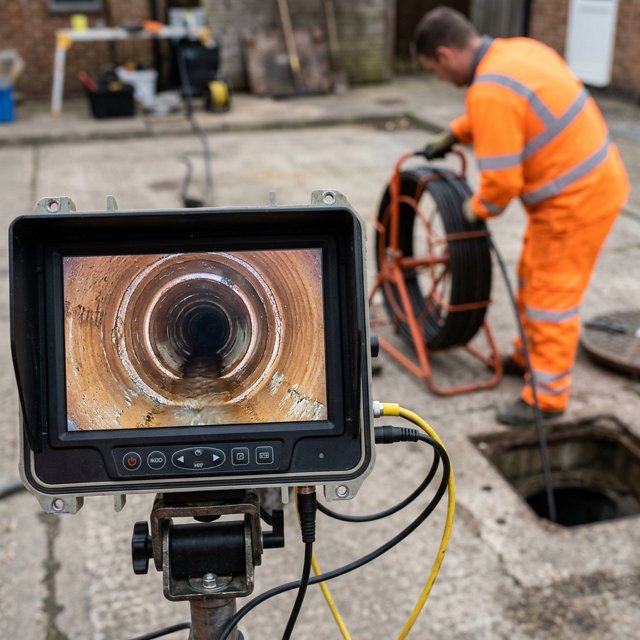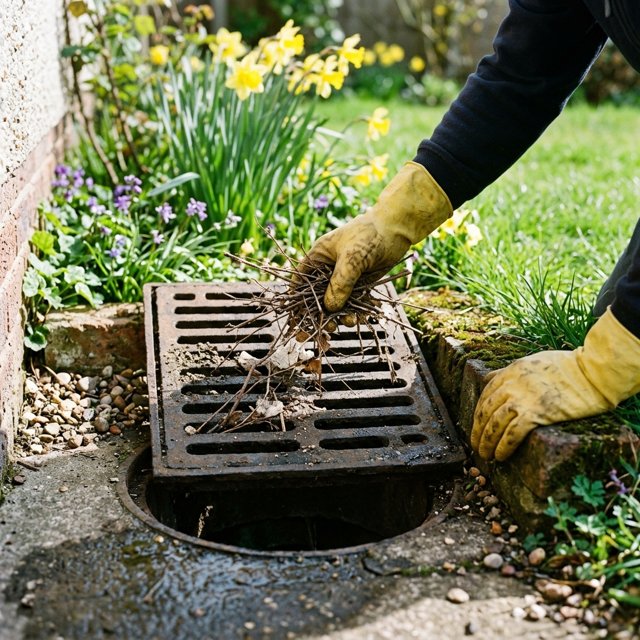
An overflowing inspection chamber needs immediate clearance, but the job is not finished when the water level falls. This Birmingham case study follows the full sequence: contain the foul-water problem, jet the blockage, inspect the cleaned pipe, explain the displaced joints, and complete two different repairs where each was suitable.
Our local coverage now includes dedicated guidance for drain unblocking in Erdington, drainage problems in Great Barr, and blocked drains in Castle Bromwich. Each page explains the local housing, likely access, and checks we carry out without assuming the fault from the postcode.
Our drain unblocking work ranges from rodding a reachable soft obstruction to high-pressure water jetting longer runs. Once flow is restored, a CCTV drain camera can check whether waste alone caused the blockage or whether the pipe contains a defect that needs repair.
Four causes that can remain after clearance
- Displaced or open clay joints create a lip that catches solids and may admit soil or roots.
- Root growth occupies the bore and traps paper, but cutting it does not seal the entry point.
- Scale, fat, and grease narrow the usable diameter and need suitable cleaning rather than a structural repair.
- Wipes and other unsuitable items collect at bends or existing defects because they do not break down like toilet paper.
These causes look different on camera and should not receive the same recommendation. A clean pipe with one local open joint may suit a patch. A crushed section cannot be restored by jetting. Deposits need removal before the wall can be judged fairly.
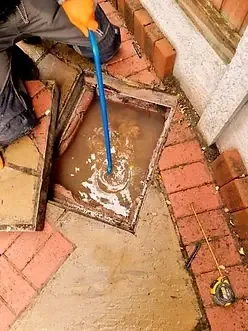
The initial foul-water overflow
The client reported an inspection chamber overflowing with foul waste. We asked them to stop flushing toilets and using appliances connected to the affected run. Reducing incoming water limits contamination while access and the direction of flow are checked.
Jetting first, then a clean-pipe inspection
We used high-pressure water jetting to break up the obstruction and wash loose waste towards controlled access. The water level falling showed that flow had returned, but it did not prove the pipe was sound. We continued cleaning until the camera could see the wall and joints.
The camera then recorded displaced joints in the run. We showed the customer the position and explained how the exposed joint edges could catch more waste. A quotation followed the evidence rather than the other way around.
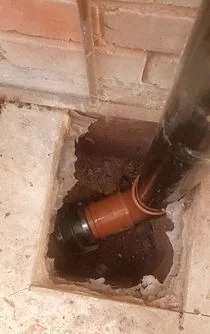
The quotation separated the work by defect. One badly displaced section needed excavation and realignment. Another stable damaged section could be repaired internally with a resin liner. Using both methods avoided digging where the existing pipe still had enough shape to support a liner.
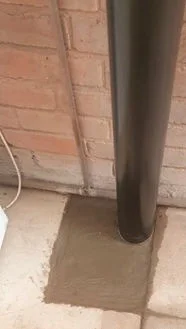
The client accepted the quotation. We photographed the excavation in stages, recorded the installed connection, and kept the liner evidence with the job record. This matters because the repaired pipe and bedding disappear once the ground is reinstated.
After both repairs, the line was flow tested and viewed again where access allowed. Reinstatement followed only after the repaired route carried the controlled test. Our guide comparing drain relining with excavation explains the limits of each method in more detail.
The client's review
The client later left this review on our Facebook Business Page:
"Excellent service and highly recommended! I first met the team in the summer to unblock a manhole in our garden. Enquiry was picked up promptly and they came the next day. Camera check was also performed at the same time and other issues in the line were discovered and have now been resolved. Twice now I've needed Cofton drainage and both times they have turned up the next day. Everyone I met was polite and informative and happy to show me before and after pictures of the work undertaken."
The useful result was not the review alone. The chamber stopped overflowing, the recorded defects received suitable repairs, and the customer could see the condition before and after the work.
If you have a recurring blockage, note which fixtures are affected, whether a chamber is full, and how soon the problem returned after the last clearance. These details help our Birmingham drainage engineers locate the likely branch before work starts.
Drain unblocking and repair questions
Why inspect a drain after unblocking?
Cleaning restores flow but can leave a displaced joint, crack, roots, or low section behind. CCTV of the cleaned pipe shows whether another blockage is likely.
What can high-pressure jetting remove?
The right nozzle can remove soft blockages, silt, grease, scale, and loose debris. Jetting cannot realign a joint or repair a broken pipe.
Can one job need excavation and relining?
Yes. A badly displaced local section may need excavation while a separate stable cracked run can accept a liner. Each method should address a recorded defect.
What should a repair quote include?
It should identify the defect and location, proposed method, access and reinstatement, final testing, evidence supplied, price, and any limitations.
Need Drain Unblocking?
Contact your local 5-star drain unblocking team in Birmingham and throughout the West Midlands and Warwickshire. Fast response, professional service.
Call: 0121 296 7829