Winter drain problems rarely begin with one dramatic freeze. Leaves and silt collect through autumn, rainfall tests weak connections, and exposed waste pipes lose heat quickly. A cold spell then turns a slow or poorly drained section into an urgent blockage. A short inspection before winter gives you time to clear simple risks and find damage before the weather makes access harder.
The ten-minute winter walk-round
Do this from ground level before the first hard frost. You are looking for obvious restrictions and access problems, not trying to service the system yourself.
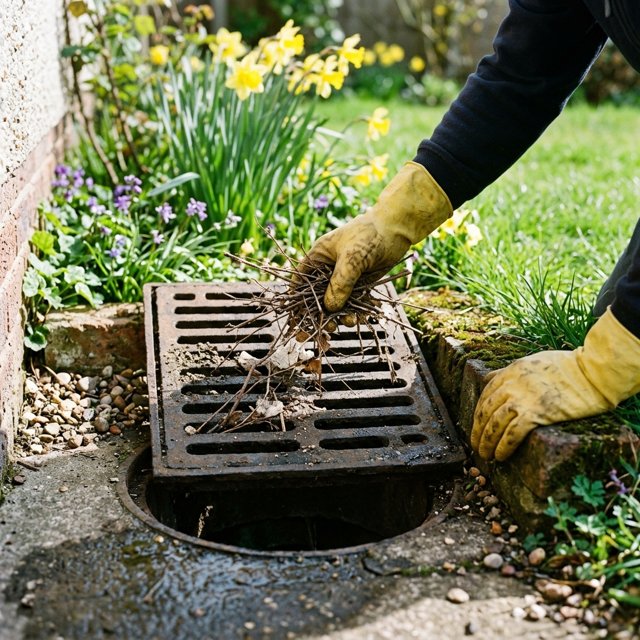
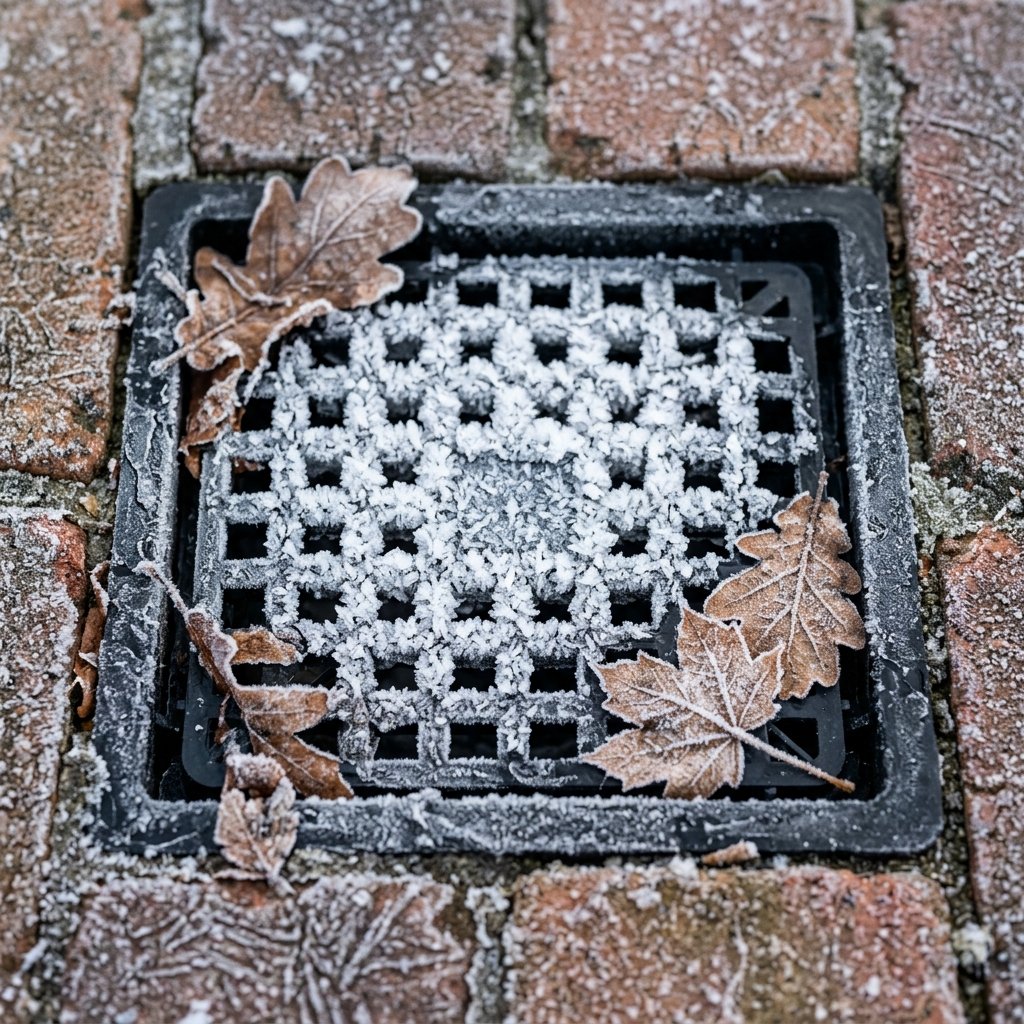
- Follow each visible downpipe to its gully and clear loose leaves from the grate.
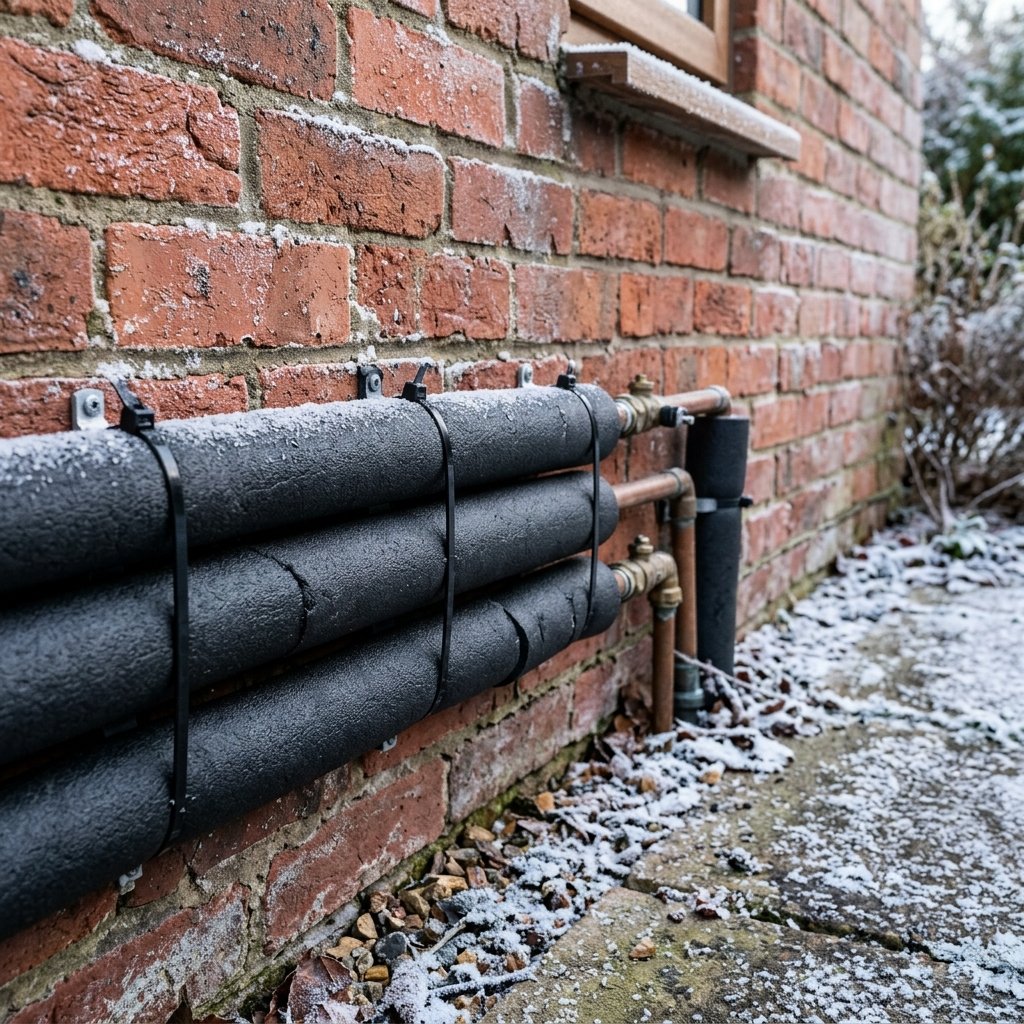
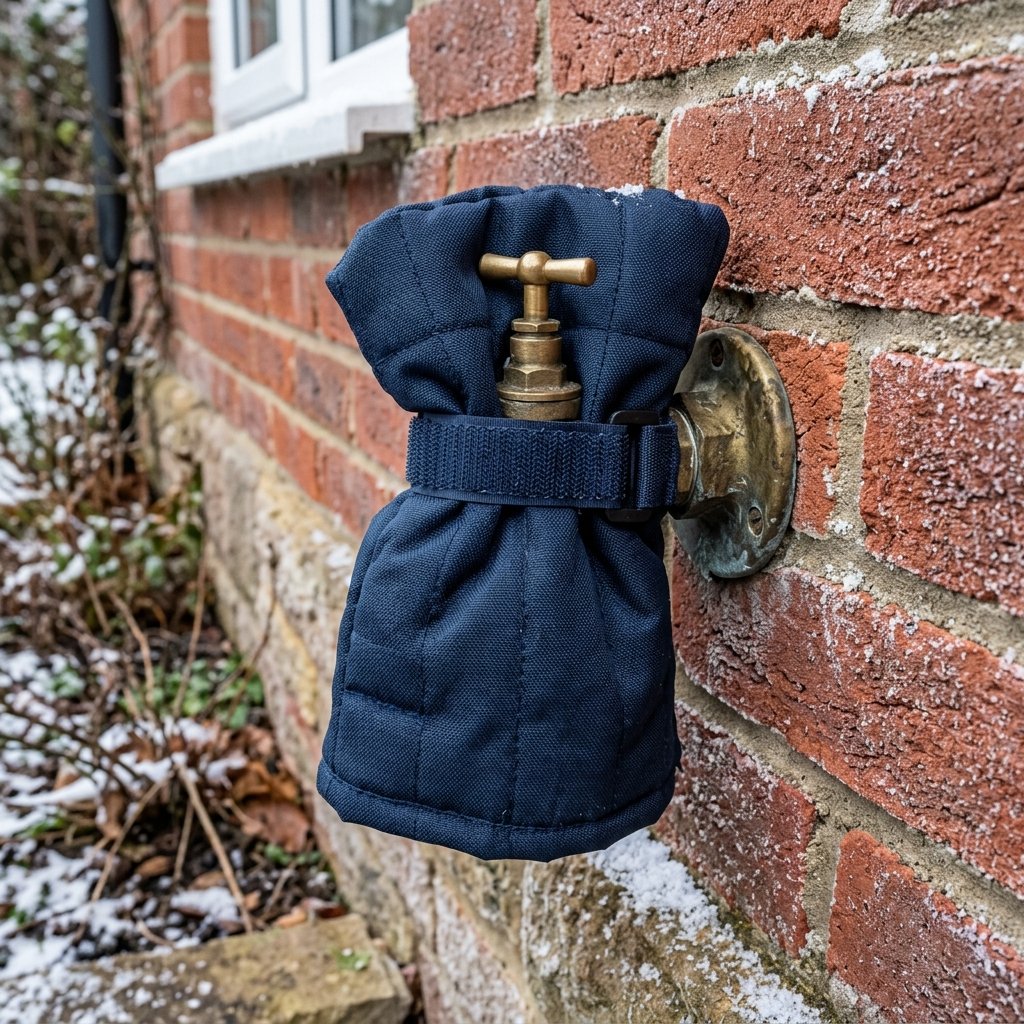
- Check that outside taps and exposed clean-water pipes have intact insulation.
- Find the internal stop tap and confirm it turns without forcing it.
- Move pots, bins, and stored materials away from inspection covers.
- Listen after a toilet flush. Gurgling elsewhere in the house is an early warning, not normal winter behaviour.
If one item cannot be checked safely, leave it. A cracked cover, high gutter, or deep chamber is a job for someone with the right access equipment.
Start with gutters, gullies, and visible access
Clear leaves from accessible gully grates and remove loose debris that can be lifted safely by hand while wearing gloves. Check roof gutters from a safe position and make sure downpipes are not overflowing at joints. Rainwater that cannot enter its intended route runs across paving, saturates soil beside the house, and can freeze into a slip hazard.
Keep inspection covers visible rather than burying them beneath pots, gravel, or stored materials. An engineer can diagnose a blockage faster when the upstream and downstream chambers are available. Do not lift a large or damaged cover yourself. It may be heavy, unstable, or positioned above contaminated wastewater.
Protect exposed water pipes and taps
Water supply pipes are not the same as foul drains, but both can cause winter call-outs. Exposed supply pipework and outside taps should be insulated with suitable lagging or a tap cover. Severn Trent Water's winter pipe guidance explains that water expands as it freezes, increasing pressure and raising the risk of a leak or burst when temperatures rise.
Check that the stop tap works and that everyone in the property knows where it is. If a supply pipe bursts, turning the water off quickly limits damage. Internal plumbing and the private supply pipe beyond the external stop tap are normally the property owner's responsibility. Public pipework should be reported to the water company.
Which drainage parts are most likely to freeze?
Deep underground foul drains usually stay warmer than exposed pipework. The vulnerable points are shallow gully traps, external kitchen waste pipes, poorly insulated outbuildings, and sections where water remains because the pipe has too little fall. A sound pipe that drains fully is less likely to hold enough water to freeze solid.
Repeated freezing at the same point deserves investigation after the pipe thaws. The problem may be missing insulation, but it can also be a sag, partial blockage, or restricted outlet that leaves water standing. Insulating a badly laid waste pipe will not correct its fall.
Prepare an empty or little-used property
Holiday lets, vacant homes, workshops, and outside kitchens can be more vulnerable because nobody notices the first slow flow or leak. Before leaving, clear exposed gullies, confirm the stop tap can be reached, and check the heating and water arrangements recommended for the property. Do not improvise by draining a sealed heating system or boiler unless the manufacturer or a qualified heating engineer instructs you to do so.
Ask a trusted person to inspect after a severe freeze or thaw. They should look for unexpected water use, loss of pressure, damp ceilings, overflowing gullies, and alarms from boilers or pumps. A water meter moving while every outlet is off may indicate a supply leak, although shared supplies and appliances that fill automatically must be ruled out. Record the meter reading and contact the water company or an approved plumber if the clean-water side is involved.
How to deal with a suspected frozen waste pipe
- Stop running water into the affected fixture. More water may overflow inside before the frozen section clears.
- Check other fixtures. One sink points to a local branch, while several affected fixtures suggest a downstream restriction.
- Look for visible damage. A split pipe, loose joint, or leak needs repair rather than warming.
- Use gentle warmth only where accessible. A warm towel or low, controlled heat is safer than boiling water or a naked flame.
- Check the flow after thawing. Run a small amount first and watch every visible joint for leakage.
Never use a blowtorch or naked flame. Do not pour aggressive chemicals into a frozen or unknown blockage. The product may remain trapped in the pipe and expose anyone who later opens or jets the line. Our guide to chemical cleaner in outside drains explains why physical inspection is safer when the cause is uncertain.
If the frozen section belongs to the clean-water supply rather than a waste pipe, follow the Met Office frozen and burst pipe guidance. Turn off the internal stop tap, relieve pressure, and use gradual warmth. A burst supply pipe needs a qualified plumber; a blocked foul drain needs drainage equipment and contamination controls.
Watch for warning signs before the first hard frost
- Slow flow. A sink, shower, or gully that drains slowly already has reduced capacity.
- Gurgling. Air is being pulled through water because the route is restricted or poorly vented.
- Repeat smells. A trap may be dry, dirty, or affected by a downstream restriction.
- Standing water in a chamber. This can mark a blockage, low section, or public sewer surcharge.
- Wet ground in dry weather. A leaking water supply or damaged drain may be present.
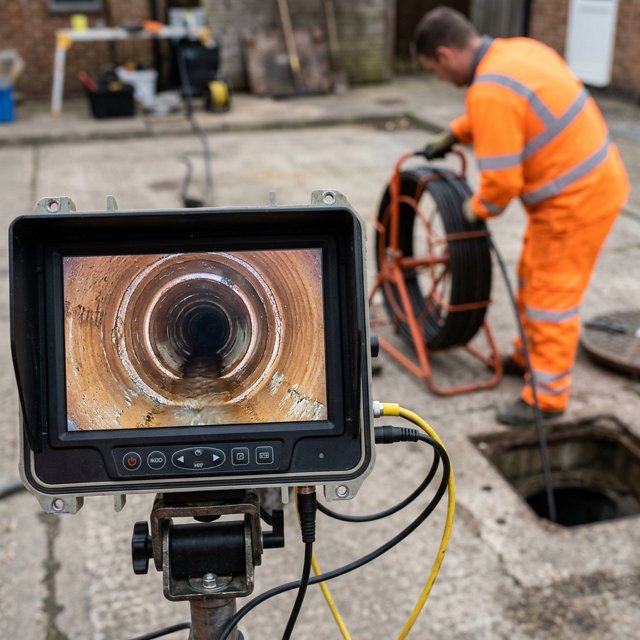
Clear a simple surface obstruction while conditions are safe. If water remains high after the grate is clean, stop adding more. A deeper restriction needs rodding, jetting, or camera inspection. Repeated symptoms should be investigated rather than treated as normal winter behaviour.
Separate a frozen supply pipe from a blocked drain
No water from a cold tap suggests a supply or internal plumbing problem. Water leaving the tap but refusing to drain points to the waste side. A toilet that fills normally but rises after flushing has a drainage restriction, not a frozen incoming main. These distinctions determine whether you need the water company, a WaterSafe-approved plumber, or a drainage engineer.
Do not repeatedly flush or fill sinks to test a suspected blockage. Use a small controlled volume and watch the nearest safe access point. If foul water appears, stop the test, isolate the area, and tell the engineer exactly which action caused the level to rise. Clear observations shorten diagnosis and reduce the risk of contamination spreading indoors.
What to do during a foul-water emergency
Stop flushing toilets, using washing machines, and emptying baths or sinks into the affected system. Keep children and pets away from wastewater. Do not handle contaminated water without suitable protection, and do not open electrical equipment in a wet area. If the property has more than one toilet and only one branch is affected, use the unaffected facilities sparingly until the route is confirmed.
Our 24-hour emergency drainage service covers Birmingham, the wider West Midlands, Warwickshire, and Worcestershire. Tell us which fixtures are affected, whether an outside chamber is rising, and whether neighbouring properties have the same problem. Those details help us bring the right equipment and judge whether Severn Trent Water should be involved.
A practical winter drainage checklist
- Clear accessible leaves and silt from gully grates.
- Check gutters and downpipes during ordinary rain.
- Insulate exposed water pipes and outdoor taps.
- Locate and test the internal stop tap.
- Keep drainage access covers clear and visible.
- Investigate slow flow, gurgling, or repeat smells before freezing weather.
- Save the numbers for your water company and drainage engineer.
We provide planned and emergency help throughout the West Midlands and Warwickshire. Preventive cleaning cannot stop every structural fault, but it removes easy obstructions and makes unusual drainage behaviour easier to recognise.
When winter is over, our spring drain check helps you follow up on retained debris, leaking waste pipes and drainage behaviour that has changed during the colder months.
Winter drainage questions
Can an underground drain freeze?
Deep foul drains are less exposed than shallow traps and outside waste pipes. Freezing is more likely where water stands in an uninsulated, blocked, or badly laid section during prolonged cold weather.
Should I use boiling water?
No. Sudden heat can damage cold fittings and cause burns. Use gentle warmth only on accessible pipework, stop if damage is visible, and never use a naked flame.
What should I clear before winter?
Remove leaves and silt from accessible grates, check gutters and downpipes, and keep inspection covers visible. Do not enter a chamber or lift a heavy cover unsafely.
Why does my outside drain smell?
The trap may be dry, dirty, or affected by a downstream restriction. Running water can restore a dry seal, but rising water or repeat smells need investigation.
When is it an emergency?
Foul water entering the property, several blocked fixtures, an overflowing toilet that will not fall, or wastewater near electrical equipment requires urgent action. Stop using water and keep people away from contamination.
What about an unused sink or shower?
Its trap still needs a water seal to stop sewer smells. Run a small amount of water from time to time. For an empty, unheated property, ask a plumber or insurer about draining down the clean-water supply. Do not pour car antifreeze into a household waste pipe.
Winter Drain Problem?
We can clear the blockage, inspect the pipe, and explain whether cold weather exposed a deeper fault.
Call: 0121 296 7829