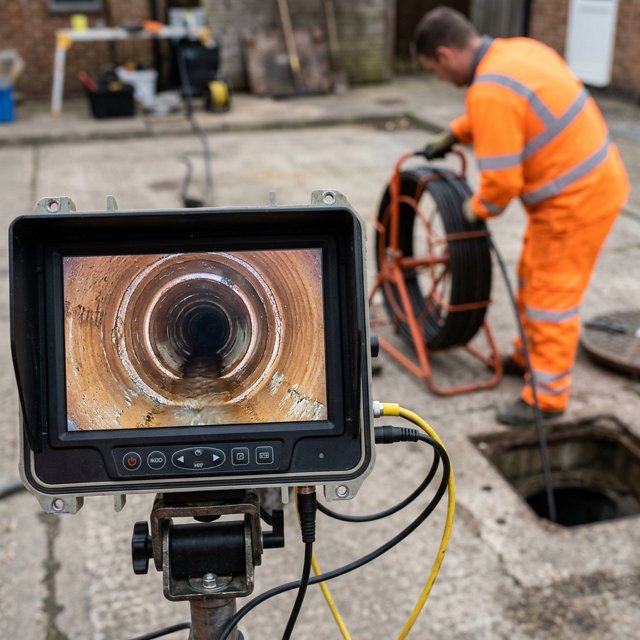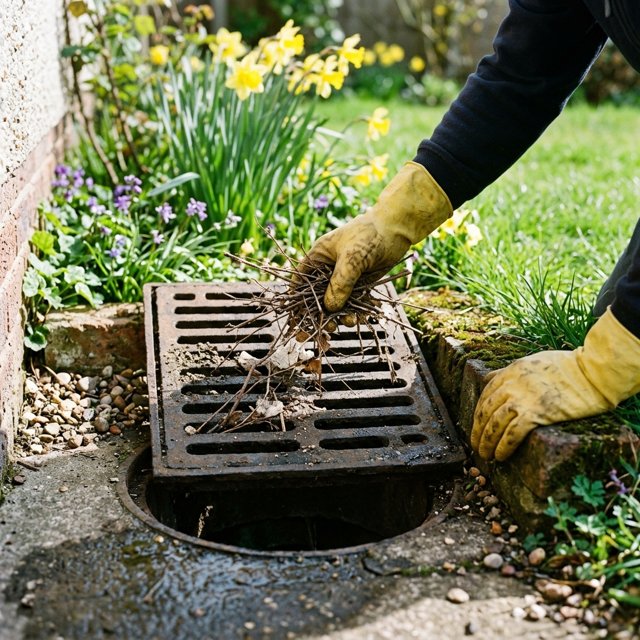
Coventry expanded and rebuilt rapidly after the Second World War. Council records describe new estates in Canley, Tile Hill, Willenhall in Coventry, Binley, and other outer areas during the 1950s and 1960s. The drainage beneath those homes was not all installed in one material, and not every old pipe is failing. But a system that has worked for decades can now show repeat blockages, roots, open joints, deformation, or a loss of fall. The useful question is not simply how old the drain is. It is what the pipe looks like today.
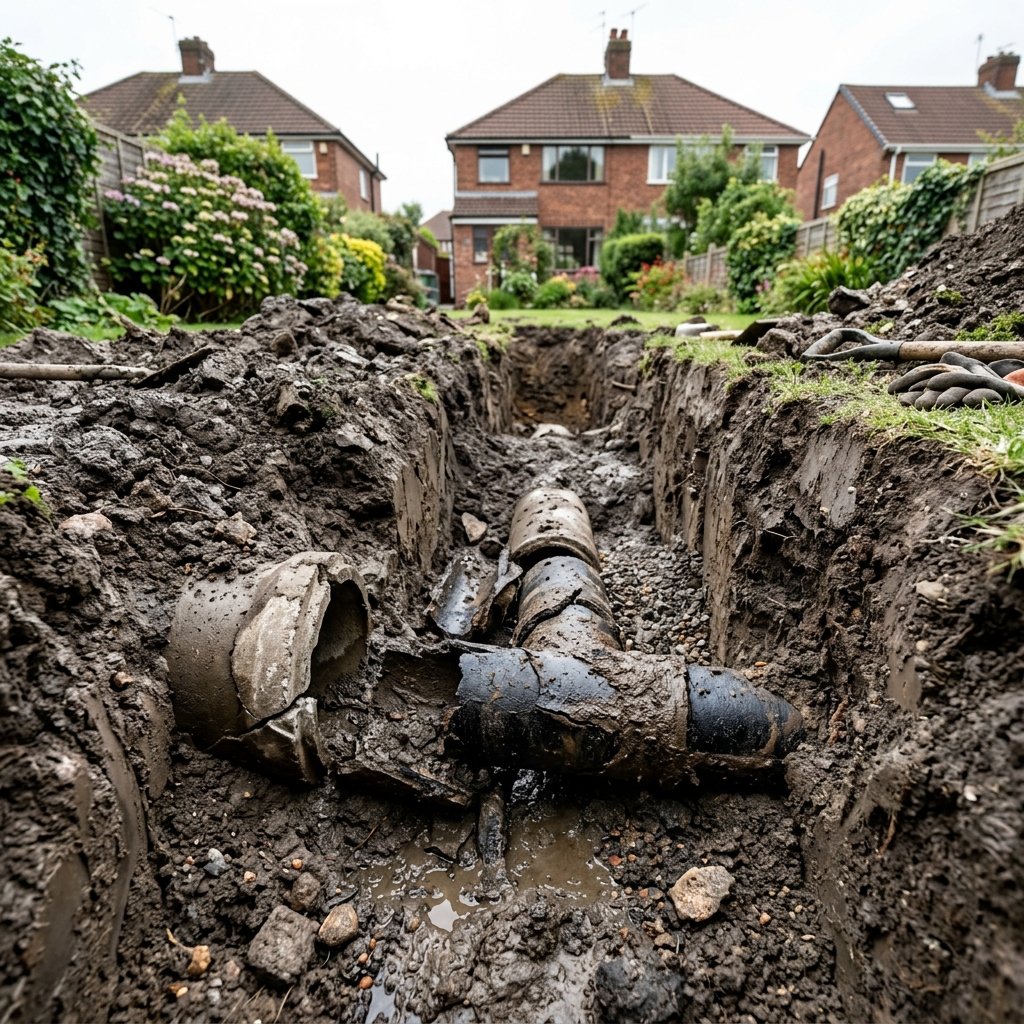
How Coventry's post-war growth shaped its drains
Fast housebuilding created large neighbourhoods over a relatively short period. Depending on the estate, phase, and later alterations, a property may have clay, concrete, pitch-fibre, cast iron connections, or newer plastic replacements. Extensions and replacement kitchens can add another generation of pipework to the same run.
This mixed history matters because each material fails differently. Clay sections tend to crack or open at joints. Concrete can crack, lose joint seals, or admit roots. Pitch-fibre may blister and flatten. Plastic is less affected by age but can still suffer from poor bedding, bad falls, damaged fittings, or movement at a connection.
Local access and alteration history also vary. The Coundon drainage page considers extension connections beneath inter-war homes; Wyken separates outside traps from altered household branches. On longer or differently connected plots in Keresley, the outlet arrangement needs establishing first. These distinctions help plan a useful investigation without assigning one pipe material to every Coventry neighbourhood.
Pitch-fibre in 1950s and 1960s drainage
Pitch-fibre was used in post-war British drainage because it was light and quick to install. After years underground, some sections become oval or develop internal blisters. Waste catches on the narrowed wall, the drain blocks, and clearing it treats the symptom rather than the shape of the pipe.
A house date cannot confirm pitch-fibre. A street may have been repaired in phases, and two neighbouring properties may not share the same private pipe material. Our pitch-fibre drain guide shows the signs a camera operator looks for and when reshaping and lining may be possible.
Clay joints, concrete sections, and tree roots
Older clay drainage is built from short rigid lengths. A slight movement at one joint can leave a lip that catches solids or an opening that admits roots. Concrete sections can develop similar entry points at their joints. Tree-lined streets and mature gardens increase the chance that roots will find an existing defect, but roots do not normally break into a sound, sealed pipe from nowhere.
Cutting roots clears the bore. The camera inspection that follows should find the entry point. If that opening is left untreated, new growth can return. A local patch or longer liner may seal it; a badly displaced or crushed section may have to be excavated.
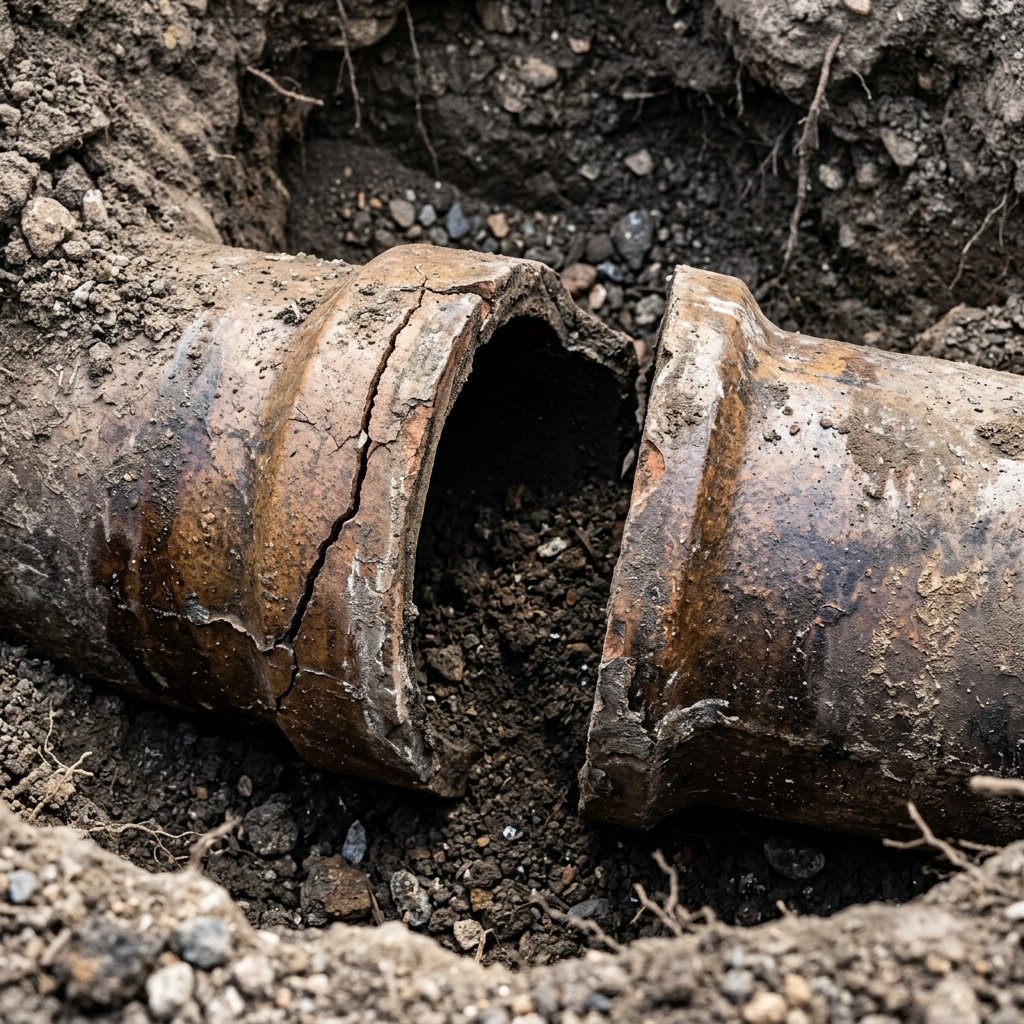
Five warning signs that need more than unblocking
- The same drain blocks again within weeks or months. A snag point, root entry, or low section may still be present.
- Rods stop at the same distance. That can indicate a bend, but it may also mark deformation, displacement, or collapse.
- Several fixtures gurgle together. The restriction is likely to sit on a shared private run or farther downstream.
- Waste or soil appears in an inspection chamber. Soil may be entering through a damaged section.
- The ground stays wet or begins to sink. Escaping water can wash material away around a broken drain.
These signs do not diagnose the exact fault. The line should first be cleared, then inspected by CCTV so the full bore is visible. Our Coventry drain unblocking service covers clearance, camera checks, and repair advice across CV1 to CV6 and nearby postcodes.
What a useful survey should tell you
Camera footage becomes much more useful when every finding is tied to a distance and access point. "Old pipe in poor condition" is not a repair specification. You should be able to see whether the problem is one displaced joint at 6.4 metres, a three-metre stretch of deformed pitch-fibre, or standing water through a longer low section.
- Route and direction. Which chamber was used, which way the camera travelled, and where the line appears to go.
- Material and dimensions. What the visible pipe is made from, its diameter, and whether that changes along the run.
- Defect location. The measured distance to roots, cracks, open joints, deformation, or a blockage.
- Flow condition. Whether water sits in the pipe after use, indicating a possible sag or poor fall.
- Repair reasoning. Why cleaning, patching, lining, excavation, or monitoring is appropriate for that specific finding.
Ask to watch the relevant section of footage. A good explanation should make sense on screen. If a full replacement is proposed for one local defect, ask why a patch or targeted repair would not work. Equally, a cheap patch is poor value if the camera shows a long pipe that has lost its shape.
Relining or excavation?
Relining creates a smooth resin sleeve inside an existing pipe. It can seal cracks, bridge minor joint faults, block root entry points, and repair some pitch-fibre once the original bore has been restored. It is particularly useful beneath driveways, gardens, and structures where digging would cause avoidable disruption. Our comparison of drain relining and excavation explains when each repair method fits the recorded defect.
Excavation is the right choice when the pipe has collapsed, a low section must be re-laid to the correct fall, or two sections have moved too far apart. The aim should be the smallest repair that fixes the proven defect, not a blanket replacement based only on the build decade.
Extensions, shared drains, and responsibility
An extension can cover an old route or add new connections. Before building close to a public sewer, drainage records and water-company requirements should be checked. Our guide to build-over agreements explains why a survey and accurate route plan matter before work begins.
Responsibility also changes when a drain serves more than one property. Private drainage serving only your home is normally yours to maintain. Shared lateral drains and public sewers are generally dealt with by Severn Trent Water. A camera trace can show where the blockage sits and which connections join the line.
Coventry and nearby areas
We work across Coventry, from older clay drainage in Earlsdon to mixed post-war pipework in Walsgrave, as well as the surrounding Warwickshire area. Similar issues appear while providing drain unblocking in Nuneaton and drainage services in Bedworth. The building date gives useful context, but the repair decision always comes from access, cleaning, and recorded pipe condition.
Practical questions about Coventry's older drains
Why do 1960s drains keep blocking?
Possible causes include pitch-fibre deformation, open clay joints, roots, worn seals, poor falls, and damaged connections. The important clue is whether waste catches at the same measured point after cleaning. A CCTV inspection carried out while the pipe wall is visible can separate a structural snag from a fresh build-up.
Were pitch-fibre drains used in Coventry?
They were used in post-war British housing and may be present in Coventry. Estates were built in phases, and later repairs often introduced clay or plastic into the same run. That means neither a postcode nor a 1960s build date confirms the material without camera footage or an exposed section.
Can old Coventry drains be relined?
Many cracks, root entry points, open joints, and some deformed sections can be lined. The drain must first be cleaned, measured, and checked for enough structure to support the liner. A full collapse, severe sag, or major displacement may need excavation because lining would simply follow the bad shape.
Who deals with a shared blocked drain?
Severn Trent Water generally manages shared lateral drains and public sewers. A drain serving only one property is normally private. The most helpful evidence is the blockage location and the point where another property's pipe joins, rather than an assumption based on which garden contains the chamber.
Do all old drains need replacing?
No. A sound drain does not need replacing because of its age. One cracked joint may suit a patch, a longer damaged run may be relined, and only a crushed or badly laid section may need excavation. The least disruptive option is good value only when it fixes the fault shown on camera.
What should the CCTV report include?
Look for the access point, direction of travel, visible pipe material, defect type, and measured distance to every finding. The video should be clear enough for you to recognise the fault being described. Any repair quote should refer to those details, not just say that the system is old.
Does Your Coventry Drain Keep Blocking?
We can clear the line, record the condition by camera, and show you why the problem is returning. You will receive a clear repair recommendation based on the defect found.
Call: 0121 296 7829