In March 2022, a Birmingham customer asked us to investigate a recurring blockage affecting the first-floor bathroom. The drain had been cleared before, but the same symptoms returned because the condition of the pipe had not been checked after flow was restored. This case study shows how cleaning, CCTV evidence, and a targeted repair solved the underlying fault.
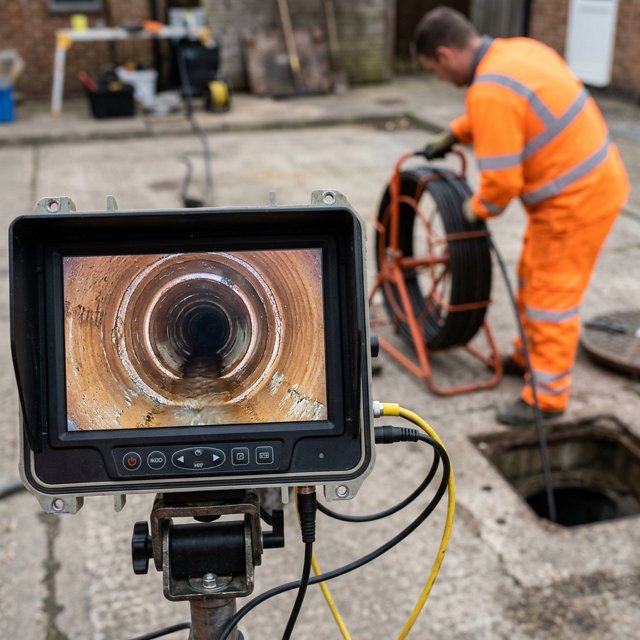
We first needed to clear the blocked drain so water could pass and the camera could see the pipe wall. The follow-up CCTV drain inspection was not an optional extra. It was the stage that could separate a one-off obstruction from a defect likely to catch waste again.
Why repeat blockages are a warning sign
A first blockage may be soft waste that clears with rodding or high-pressure jetting. A repeat at the same fixtures or chamber needs more evidence. A displaced joint, root entry point, crack, scale deposit, or low section can reduce the bore and give paper or solids somewhere to catch.
The timing also helps locate the fault. If one bathroom is affected while the rest of the property drains normally, the restriction may be on that branch. If several ground-floor fixtures rise together, the problem is more likely to sit after their connections meet. Opening safe access points and testing one fixture at a time prevents unnecessary work on an unrelated pipe.
What our camera found
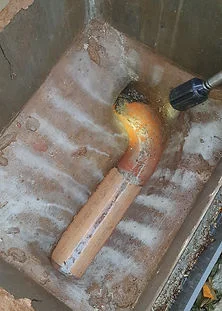
After cleaning, the camera showed a displaced joint beyond a radial bend and an open joint where the bend connected to the internal soil stack. The lip at the displacement provided a repeat snag for waste. The open connection also created a route for foul water to escape into the surrounding ground. We showed the customer the relevant footage and explained why another clearance alone would not close either defect.
The repair
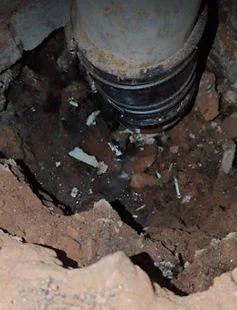
The drain repair required a targeted internal excavation and a correctly connected 90-degree bend to support the soil stack serving the upstairs facilities. Excavation was appropriate because the connection needed realignment and physical replacement. An internal liner would have followed the existing shape rather than correcting the joint arrangement.
We flow tested the new connection before reinstating the floor. A final camera pass recorded the repaired bend and showed water travelling through the section without catching or remaining at the joint. This sequence matters: the first footage supports the diagnosis, photographs record work that will be covered, and the final check proves the new route can carry a controlled test.
What this case teaches homeowners
- Ask where the blockage was found. A measured location is more useful than a general statement that the drain was blocked.
- View the cleaned pipe. Dirty water and deposits can hide the joint that caused the repeat problem.
- Match the repair to the defect. Stable cracks may suit lining, while a badly aligned connection may need excavation.
- Keep the evidence. Before-and-after footage and photographs help explain the work to an insurer, buyer, or future engineer.
The customer was pleased with the investigation and repair and left the following review on our Google profile.
"Great bunch of guys, got to work straight away, diagnosed the problem and replaced the radial bend with a resin sleeve and done a very good job, and would definitely recommend."
A review is useful social proof, but the diagnosis must still stand on its own. In this case the displaced and open joints were visible, the repair method addressed their position, and the completed section was checked before reinstatement.
For another evidence-led example, read our guide to tree-root damage in drains. It explains why removing the immediate obstruction and sealing the entry point are separate stages.
If the same Birmingham drain has blocked more than once, tell us which fixtures are affected, how quickly the symptoms returned, and whether an outside chamber rises. That information helps us plan the safest access and bring the right equipment.
Our Birmingham drain unblocking team covers homes and businesses across the city and surrounding West Midlands.
Recurring blocked drain questions
Why does the same drain keep blocking?
Waste may be catching on a displaced joint, crack, roots, scale, or standing water in a low section. CCTV after cleaning shows whether a repeat snag remains.
Should CCTV be done before or after cleaning?
A first look can locate an obstruction, but the useful condition survey follows cleaning. The camera must see the wall and joints before a repair is selected.
Can a displaced joint be relined?
A minor stable defect may accept a patch or liner. A badly separated, collapsed, or incorrectly aligned section may need excavation. The pipe shape and recorded defect decide the method.
What proof should I receive after repair?
Ask for a flow test, final camera check where access allows, and photographs of work that will be covered. The evidence should identify what changed and where.
Need Drain Unblocking or Repairs?
Contact us today for professional drain unblocking with free CCTV camera checks across Birmingham and the wider West Midlands.
Call: 0121 296 7829