Autumn does not create every drain fault, but it exposes systems that were already close to capacity. Wet leaves cover gullies, silt moves into traps, and heavier rain sends more water through surface and combined drainage. A pipe that managed ordinary household flow in summer may overflow once rainfall meets a partial blockage, root mass, or low section.
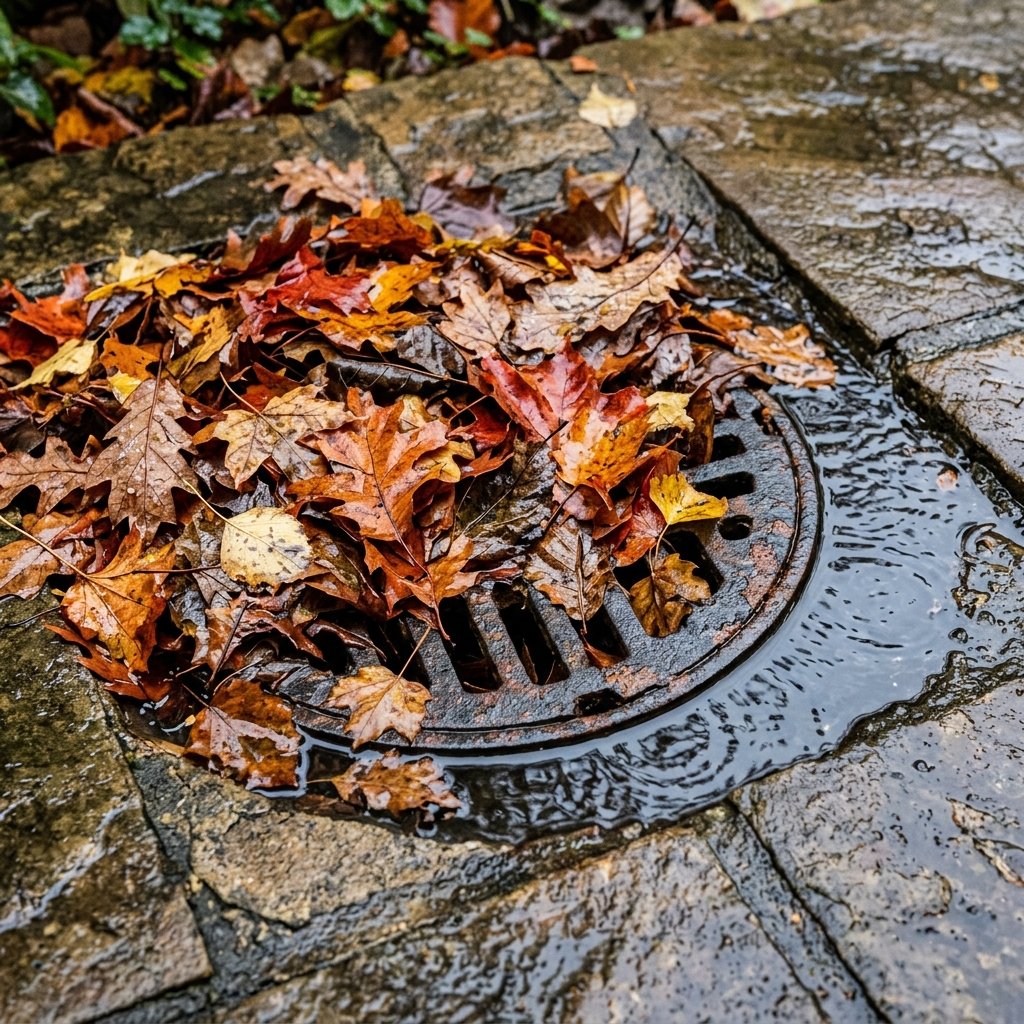
An autumn blockage usually builds in three acts
The first dry leaf fall looks harmless. Whole leaves sit on the grate and can be swept away. After a few wet days, they soften, tear, and mix with moss and roof grit. That material drops into the gully trap. The first heavy storm then pushes a sudden load of water against whatever has collected there.
If the system is clean, the water falls away and the episode ends. If the pipe already contains grease, roots, silt, or a displaced joint, the storm packs the new debris against it. This is why a drain can appear to fail overnight even though the restriction has been forming for months. The date of the overflow tells you when capacity ran out, not necessarily when the fault began.
Wet leaves form more than a surface cover
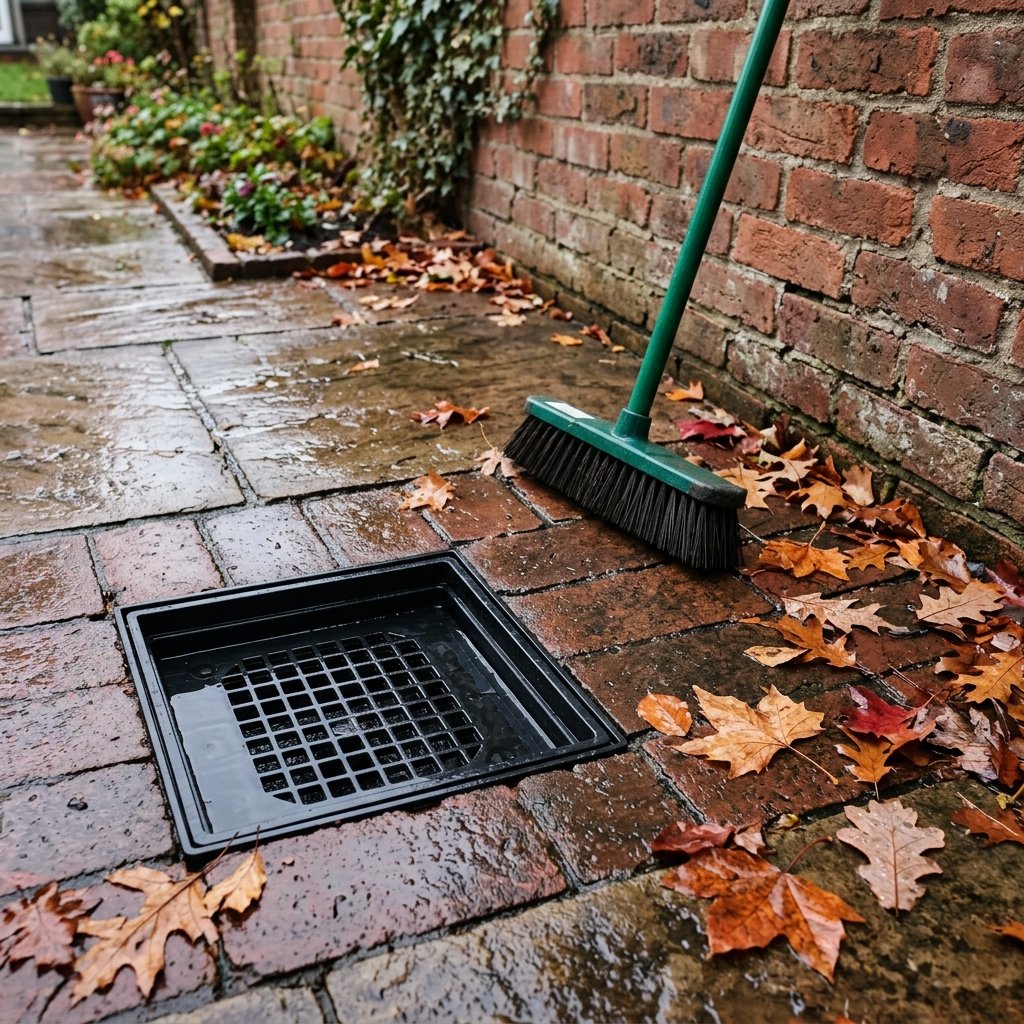
A layer of leaves across a grate stops water at the surface. Once soaked, the leaves soften and break into smaller pieces that enter the gully. They mix with grit, moss, roof sediment, and organic material already in the trap. That compacted mixture can restrict the outlet even after the visible leaves are swept away.
Leaf material also catches on defects farther downstream. Roots, an open joint, grease, or a displaced pipe edge gives it somewhere to collect. The result appears seasonal, but the real cause may be a reduced bore that needs cleaning and inspection.
Public guidance on autumn leaves and localised flooding makes the same practical distinction: leaves on gullies reduce surface-water capacity, while authorities and water companies manage different parts of the wider network. Clearing a safe surface obstruction can help, but it does not authorise work inside a road gully or public sewer.
Gutters and downpipes feed the same problem
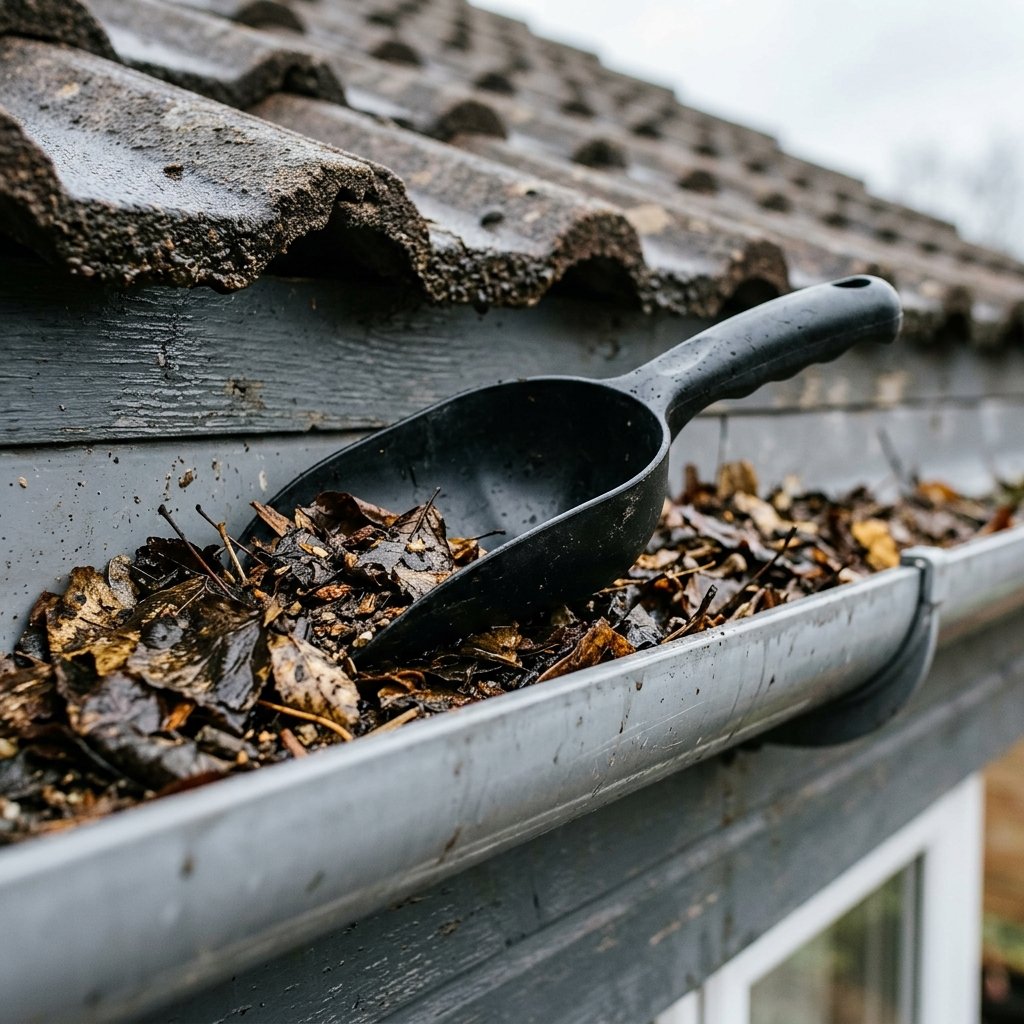
Roof gutters collect leaves before gullies do. A blocked gutter overflows down the wall or sends decayed debris into the downpipe when the restriction moves. Check from a safe position during ordinary rain. Water should run towards the outlet without spilling over the edge or leaking at a joint.
A downpipe may discharge to a surface-water sewer, a combined sewer, or a soakaway. Do not assume it joins the foul drain. If the ground remains wet or the gully fills during rain, tracing the route helps identify whether the limitation is the pipe, the trap, the soakaway, or the wider network.
Leaf guards help only when they are maintained
A removable guard can stop whole leaves entering an open gully, but it also creates a smaller surface where wet material can mat together. Check it during the main leaf fall and after windy weather. A guard left covered may cause water to bypass the gully and run towards a door, air brick, garage, or basement light well.
Choose a guard that can be lifted safely and does not obstruct the intended inlet. Do not fasten a makeshift mesh where it creates a trip hazard or prevents a shared access cover opening. Channel-drain grates also need lifting and the silt basket or trough beneath them clearing; sweeping only the top leaves the heavier sediment in place.
Heavy rain reveals restrictions that dry weather hides
During dry weather, a narrowed pipe may still carry the water from one sink or toilet. Rain adds a much larger volume over a short period where surface water shares the route. The chamber level rises, air is displaced through traps, and water may return through the lowest gully or inspection point.
Observe which parts of the system respond. One blocked gully points towards its trap or branch. Several rising chambers suggest a downstream restriction. If neighbours are affected at the same time, the shared lateral or public sewer may be involved. Severn Trent Water should handle adopted public sewers, while private drains serving one property are normally the owner's responsibility.
Private drain, road gully, or public sewer?
A gully inside the property boundary may be private, but its outlet can join a shared or public system. A road gully is normally a highway drainage asset and should be reported to the council. Severn Trent Water manages adopted public sewers and generally shared lateral drains. Take photographs and note whether foul or clear rainwater is present before making the report.
Avoid paying for private excavation until the affected section is reasonably located. If several neighbours report the same rise during rain, ask the water company for a reference number. If only one private chamber stays full after the storm, a local restriction may remain. A drainage engineer can test the private run while leaving public equipment untouched.
What you can clear safely
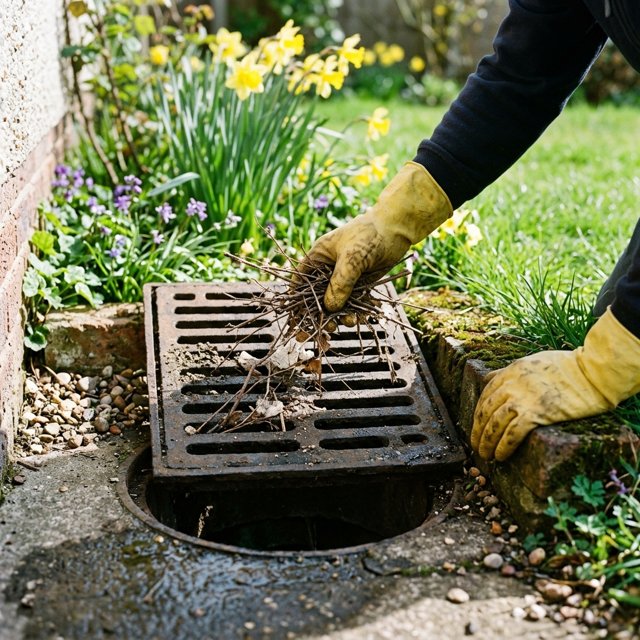
- Sweep the grate. Wear gloves and remove loose leaves before they break down.
- Lift accessible surface debris. Remove visible twigs and silt without reaching into a deep chamber.
- Run a small water test. Watch whether the clean grate drains or the level remains high.
- Check the nearest safe access point. A full chamber indicates the blockage is probably downstream.
- Stop if the water rises. Adding more water can spread contamination or force waste back towards the property.
Do not climb onto a wet roof or unstable ladder to clear gutters. Do not lift a heavy, cracked, or traffic-rated chamber cover without the right tools. Avoid chemical cleaner where the line may be full of rainwater. It becomes diluted, can remain trapped, and does not remove roots, silt, or a displaced pipe.
When high-pressure jetting is useful
Jetting uses water flow and the correct nozzle to break up soft deposits, move silt, and wash material towards controlled access. Nozzle choice matters. A penetrating nozzle tackles a local obstruction, while a flushing nozzle moves loose material through a larger run. The engineer must know where the line discharges so debris is not pushed into a worse position.
Our high-pressure drain jetting service covers Birmingham and the wider West Midlands, Warwickshire, and Worcestershire. Jetting is a cleaning method, not a structural repair. If roots, broken pipe, or repeated blockages are present, the cleaned line should be checked by camera.
Why CCTV comes after cleaning
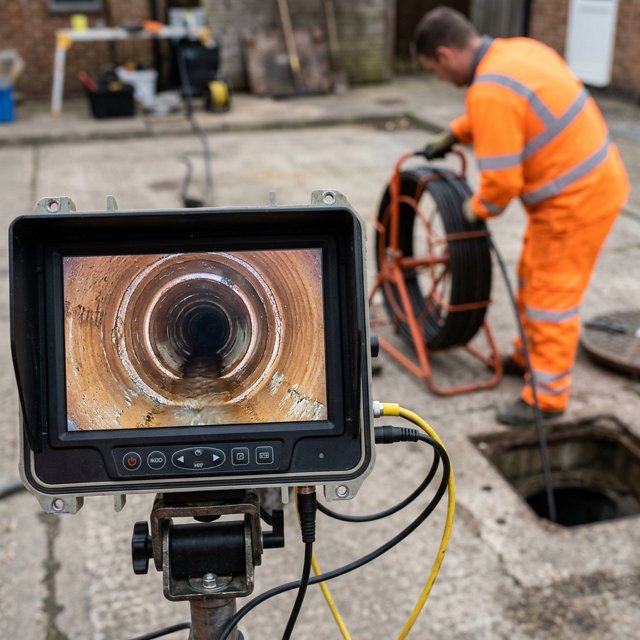
A camera cannot assess a wall hidden by dirty water, grease, or leaf material. Cleaning first gives the operator a view of the joints, pipe shape, and any point where water remains. The survey then records whether autumn debris caused a one-off obstruction or collected around an existing defect.
- Roots. Find the joint or crack where they entered.
- Open or displaced joints. Measure the position and check whether solids catch.
- Low sections. Record standing water after the flow test finishes.
- Scale and grease. Confirm whether enough remains to reduce the bore.
- Collapse or deformation. Establish whether the camera can pass and the pipe can support a liner.
A report is most useful when it states the access point, direction, and measured distance to every finding. Our CCTV drain surveys can provide that evidence for repeat or unexplained autumn blockages.
A simple autumn maintenance routine
- Check exposed gullies after the main leaf fall and before forecast heavy rain.
- Sweep patios and paths so loose material does not wash towards the grate.
- Inspect gutters safely or arrange professional cleaning where access is difficult.
- Keep inspection covers visible and clear of stored items.
- Record which fixtures gurgle or slow down and whether the timing follows rainfall.
- Arrange an inspection if the same route blocks again after it has been cleaned.
We clear private drainage across Worcestershire and provide drain unblocking in Warwick and surrounding areas. Rural plots, town-centre terraces, and modern estates handle rainfall differently, so the right check starts with how that property's pipes and gullies connect.
The two autumn questions that change the diagnosis
Can leaves block an underground drain?
Yes, but they usually start the blockage at the grate, gully trap, or downpipe connection. Wet leaves collapse into a fibrous mat and carry grit with them. If that material reaches a clean pipe with a proper fall it may pass. If it meets grease, roots, a lip at a joint, or a low section, it stays and the next downpour adds another layer.
Why does the drain overflow only in rain?
Dry-weather flow can slip through a partly restricted pipe. A cloudburst cannot. Note which chamber or gully rises first, whether the water is foul or relatively clear, and whether nearby homes are affected at the same time. A shared rise points towards the public or shared network; one stubborn private chamber points back towards the property. Those details decide who should investigate and where the first test belongs.
Autumn Drain Not Clearing?
We can remove the obstruction, flush the line, and inspect any defect that caused the material to collect.
Call: 0121 296 7829