Nobody flushes a wipe because they want a blocked drain. Packaging can be confusing, and children or young people may not realise that a wet wipe and toilet tissue behave very differently once flushed. Both are soft, white, and used in the bathroom. Only one is designed to break apart quickly in water.
The compacted mass below is what our team removed during a recent drain clearance. The wipes involved were described to us as biodegradable, which made the mistake easy to understand. They had not broken up inside the pipe. Instead, they had folded and bound together until the drain stopped working and needed professional clearance.
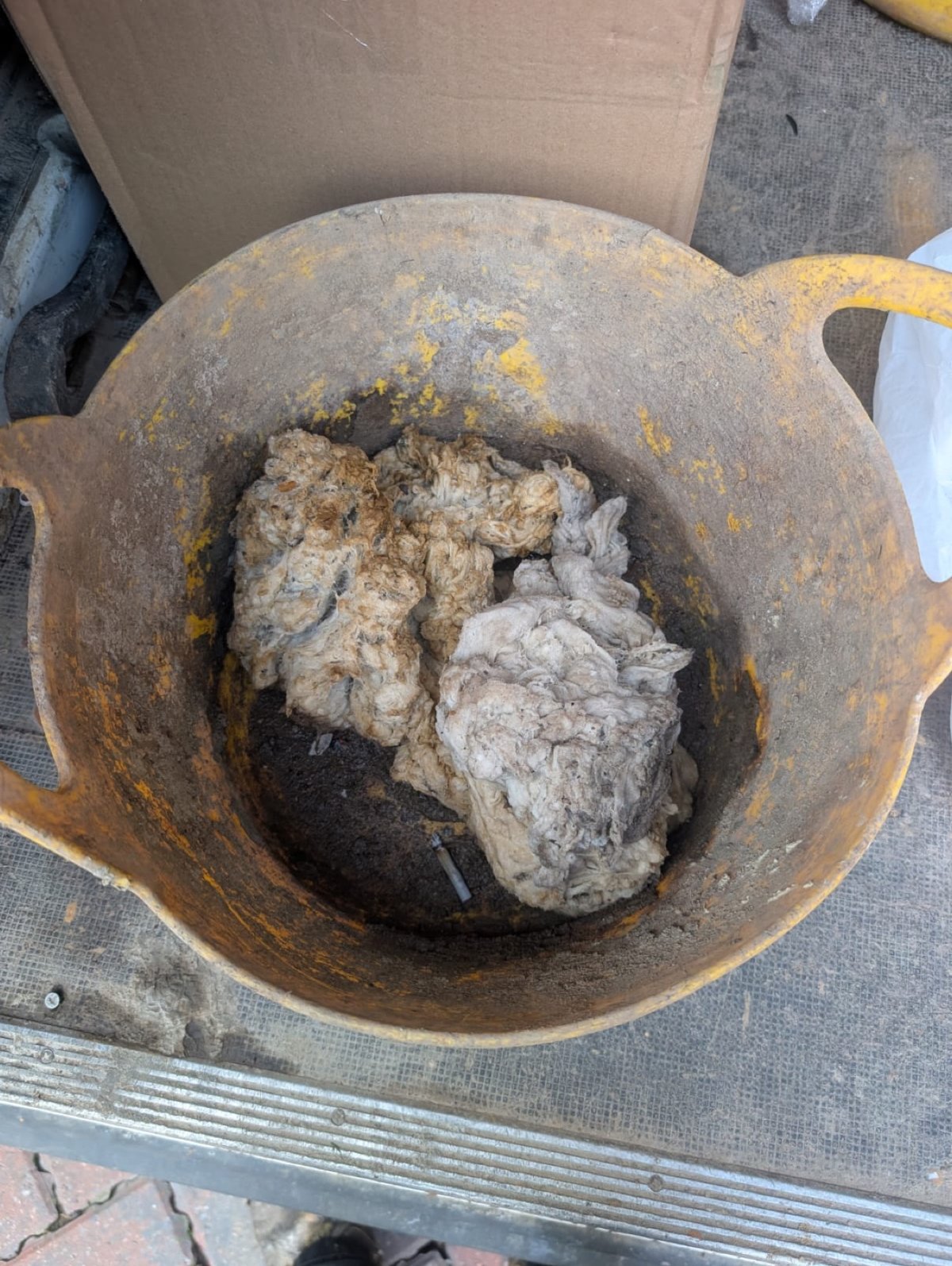
What came out of this blocked drain?
From the surface, the material looks like a few dirty cloths. Pull it apart and the problem becomes clearer. Individual wipes have folded, twisted, and locked together. The resulting mass is far larger and stronger than anything a household drain is designed to carry. Once it stops moving, toilet paper and other waste collect behind it.
The photograph records what was removed, but it cannot show the full pipe condition. A wipe may be the immediate cause of a blockage while a rough joint, root entry, or displaced connection provides the place where it first catches. That distinction matters when the same drain blocks again. Clearing the material restores flow; inspecting the clean pipe helps establish whether a permanent snag remains.
Do biodegradable wet wipes block drains?
Yes, biodegradable wet wipes can block drains. “Biodegradable” describes a material's ability to break down under certain conditions over time. It does not promise that the wipe will fall apart during the short journey from a toilet, through a private drain, and into the sewer. A domestic pipe needs waste to disperse quickly, not at some later point after the material has already caught on a joint.
The difference is easy to see when you compare a wipe with ordinary toilet paper in water. Toilet paper loses its structure quickly when it is soaked and moved. A wipe is made to stay useful while wet, so it remains much tougher. That strength is convenient when cleaning, but troublesome once the wipe enters a narrow pipe with bends, junctions, and imperfect surfaces.
England's ban on the sale and supply of single-use wet wipes containing plastic comes into force on 19 May 2027. Plastic-free and biodegradable are separate questions from flushability, however. Removing plastic from a product does not make the toilet the right bin for it.
Why do wet wipes block drains?
Wet wipes blocking drains usually starts with one simple snag. The first wipe catches at a bend, an open clay joint, a patch of scale, fine tree roots, or a section of pipe that has lost its fall. A second wipe catches on the first. The bundle then traps paper, sanitary waste, fat, and other solids until very little room remains for water to pass.
The blockage may form some distance from the toilet. That is why flushing can appear harmless for weeks or months. Each wipe disappears from the bowl, but disappearing from view is not the same as travelling safely through the whole drainage system. The first warning may be a slow flush, a gurgle from another fixture, or water rising in an outside inspection chamber.
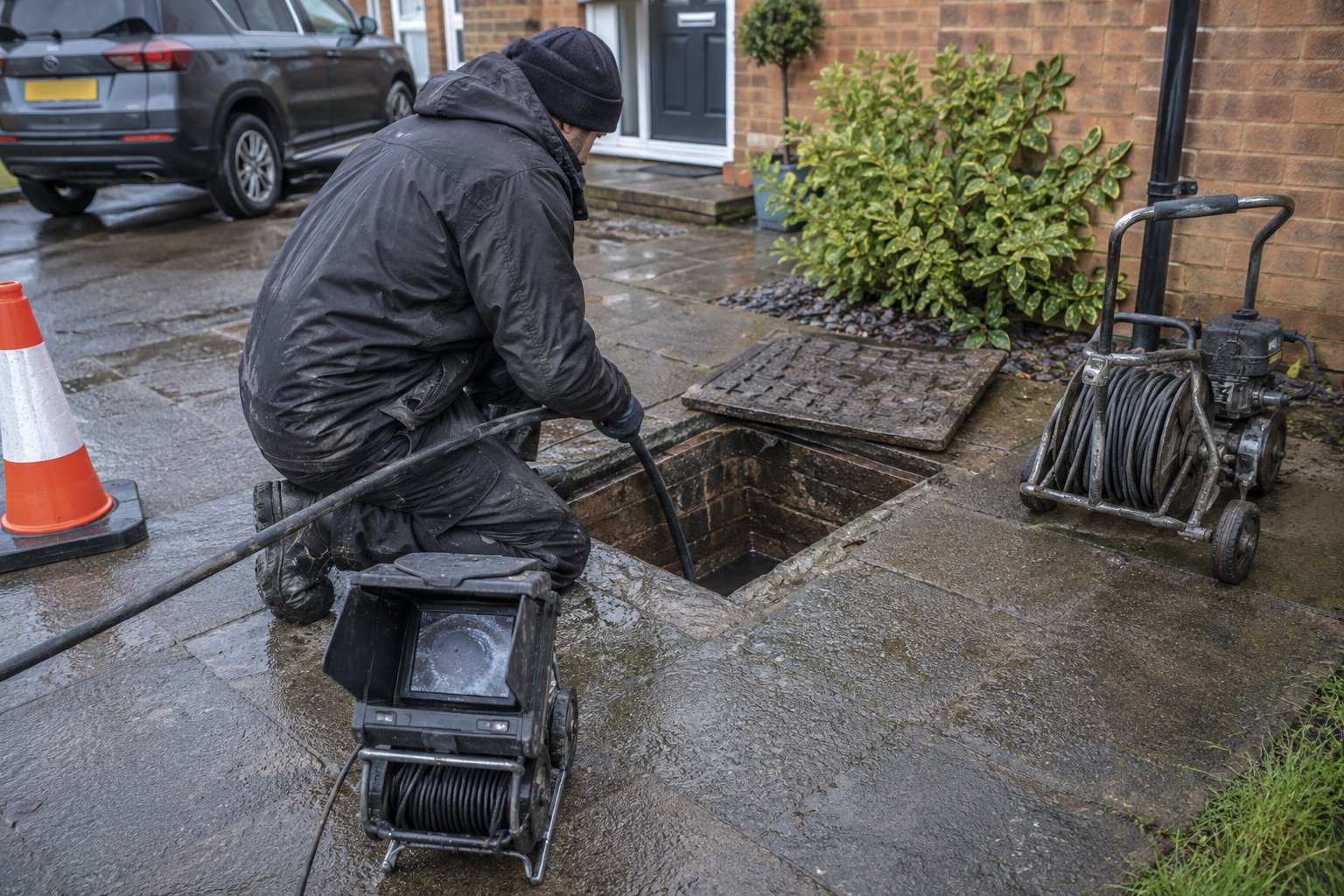
Inspecting the drain after clearance helps confirm whether a damaged joint, root entry or rough pipe surface remains.
Wet wipes blocking a toilet: the warning signs
Wet wipes blocking a toilet do not always cause an immediate overflow. The restriction can build gradually, particularly when it sits beyond the pan connector or further along a shared underground run. Watch for a toilet that needs two flushes, water rising unusually high before it falls, or bubbling from a nearby bath, shower, or basin.
- The bowl drains slowly after flushing. A partial obstruction may still pass water while holding back paper and solids.
- Another fixture gurgles. Air is being pushed around a restriction after two waste pipes join.
- There is a persistent drain smell. Waste may be sitting in the pipe rather than moving freely.
- An outside chamber is high or overflowing. The blockage is likely to be downstream of the connected fixtures.
- The same toilet blocks repeatedly. A fixed defect may be catching material in the same place.
Our guide to the wider signs of a blocked drain helps distinguish a local toilet problem from a restriction further underground. If the only toilet in the property cannot be used, our blocked toilet service covers urgent call-outs across Birmingham and the wider West Midlands, Warwickshire, and Worcestershire.
Do flushable wipes block drains?
Flushable wipes can block drains because a packaging claim does not change the conditions inside a real pipe. Domestic drainage is not a smooth laboratory tube. Older runs may have open joints, scale, roots, sharp changes of direction, poor falls, or connections altered during building work. A wipe that passes one test can still meet one of those snags at a property.
UK water-company advice is much simpler than the wording on packets: bin wipes rather than flushing them. Thames Water's blockage guidance, for example, states that wipes can block pipes even when they are labelled flushable. The safest rule at home or work is to flush only pee, poo, and toilet paper.
What not to flush down the toilet
If you are unsure what not to flush down the toilet, start with one rule: the toilet is not a waste bin. Only human waste and toilet paper belong in it. Put these common blockage risks in the bin instead:
- Wet wipes of every kind, including baby, cosmetic, cleaning, moist toilet, biodegradable, and flushable wipes.
- Sanitary towels, tampons, and applicators, which absorb water and can lodge across a pipe.
- Nappies and incontinence products, which swell far beyond the size that a toilet outlet can carry.
- Cotton buds, dental floss, and hair, which catch and bind other material together.
- Kitchen roll, tissues, and blue roll, which are made to retain strength when wet and do not behave like toilet paper.
- Cooking fat, oil, and food scraps, which can cool and collect in the same drain serving the kitchen and bathroom. Our guide to fat, oil, and grease blockages explains how that build-up develops.
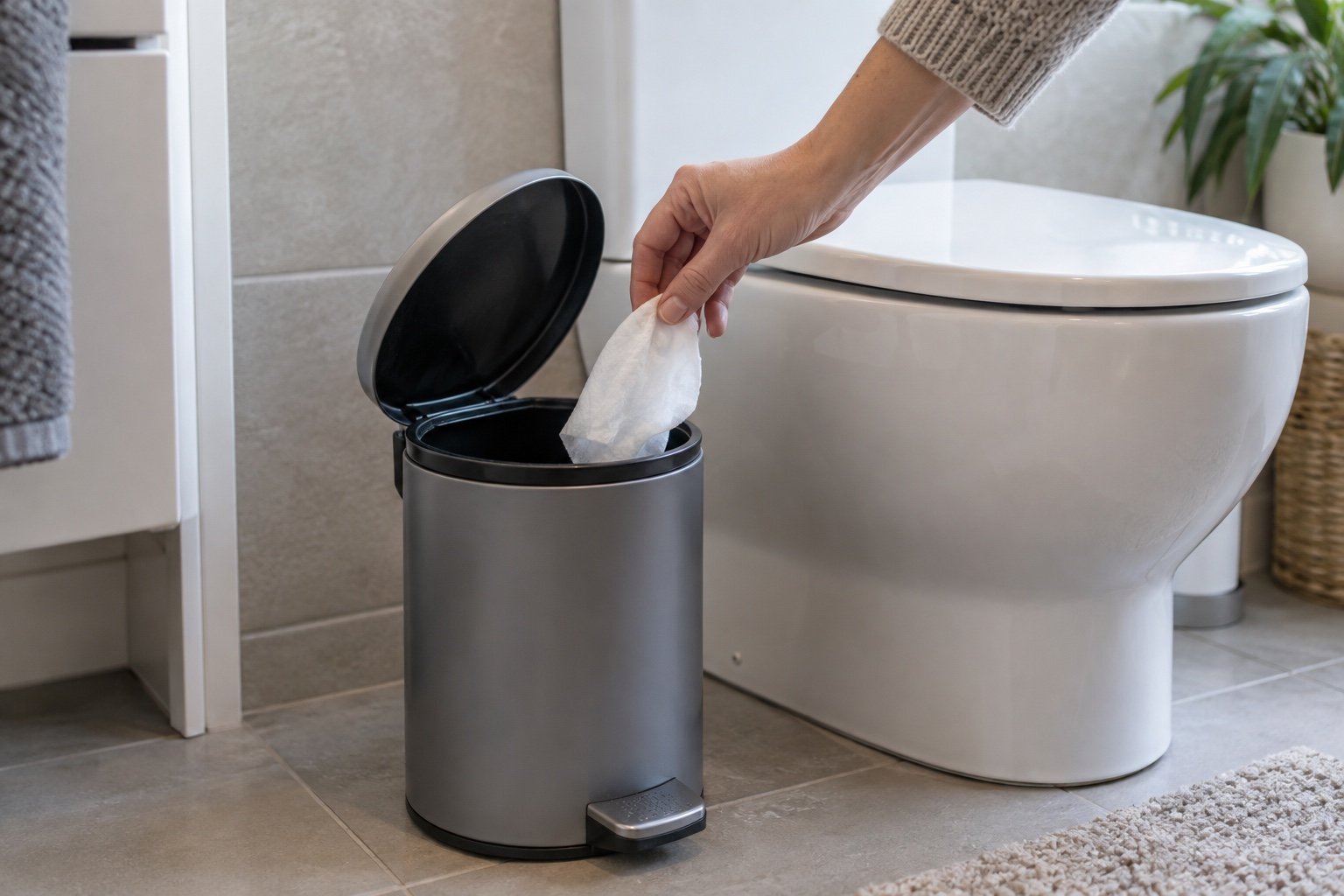
Keep a small bathroom bin beside the toilet so wipes are easy to dispose of safely.
What to do if a toilet is blocked by wet wipes
Stop flushing first. Repeated flushing adds water behind the obstruction and raises the risk of sewage reaching the floor. Ask other people in the property to avoid connected toilets, sinks, baths, showers, washing machines, and dishwashers until you know whether the main drain is still carrying flow.
A plunger may move a soft blockage close to the toilet. Do not force rods through the pan, mix chemical cleaners, or dismantle fittings unless you know exactly what you are doing. Chemicals cannot dissolve a compacted bundle of wipes, and they leave corrosive liquid in the pipe for whoever has to open or jet it later.
If an accessible outside chamber is already full, the problem is further along the underground run. Our blocked outside drain checklist covers safe observations without asking you to enter a chamber. Check whether neighbouring properties are affected too. A shared lateral or public sewer may be the water company's responsibility, while the private pipe serving only your property is normally yours. Read our blocked drain responsibility guide before approving private work if the route is unclear.
How a wet-wipe drain blockage is cleared
The right method depends on where the mass sits and how tightly it has compacted. Rodding can remove or break through a local soft obstruction. A larger or more distant bundle may need high-pressure water jetting with a nozzle suited to the pipe. The engineer should control the waste at the access point rather than simply push a dense bundle towards another restriction.
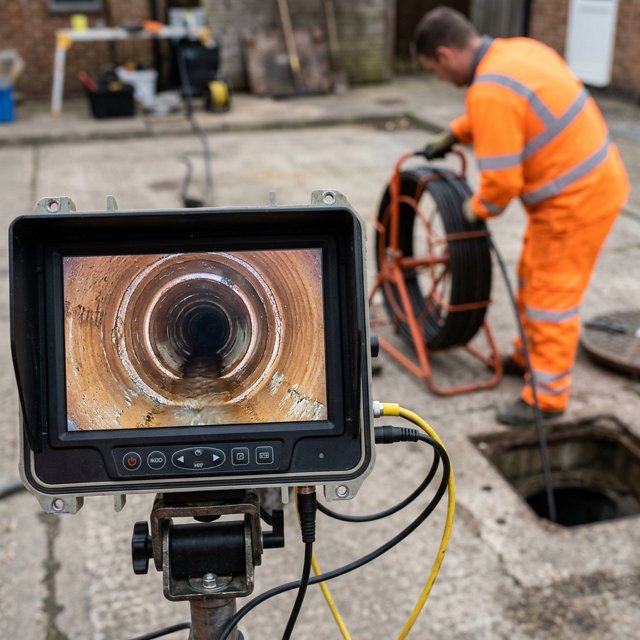
Once the drain flows, a camera check can look for the point where the wipes collected. Recorded evidence may show an open joint, roots, scale, deformation, or a low section holding water. If the pipe is clean and sound, sensible disposal may be all that needs to change. If a defect remains, a CCTV drain survey gives you a basis for deciding whether cleaning, patch repair, relining, or targeted excavation is justified.
The cost to clear a blocked drain depends on access, the equipment required, and whether further investigation is requested. Our drain unblocking cost guide explains Cofton's current starting prices and the difference between rodding, jetting, and a written survey. We agree the price before additional work begins.
Why children and young people make this mistake
To a child, the difference between a wipe and toilet paper is far from obvious. Wipes are often stored beside the toilet, used for the same purpose, and look like a thicker kind of tissue. If one disappears when flushed, there is no visible sign that it may have caught further along the pipe. Children and young people are usually following what seems logical, not knowingly causing damage.
A calm explanation works better than blame. Show them the packet and give them one rule they can remember: toilet paper goes down the toilet; every wipe goes in the bin. The same approach helps visiting children, teenagers, and anyone who has never been shown how the two materials behave differently.
- Put a small bin within easy reach. The right choice should be as convenient as flushing.
- Store wipes away from the toilet roll. Keeping them separate makes the distinction clearer.
- Use a short, friendly sign. “Toilet paper only. Please bin all wipes” is enough for a family bathroom, workplace, holiday let, or shared property.
- Explain what happens out of sight. A wipe can vanish from the bowl but remain whole inside the drain.
- Do not wait for a second blockage. Once everyone understands the rule, keep it consistent.
A bin beside the toilet can prevent the problem
A small lined bin can prevent a large and avoidable drainage bill. This matters in busy family homes, workplaces, rented properties, care settings, and houses in multiple occupation, where several people may use the same facilities and assume somebody else knows the disposal rules.
Keep the message direct and free from blame: wipes go in the bin, whatever the front of the packet says. Landlords and facilities managers can place a short notice where it will be seen and make sure bins are emptied regularly. That is more useful than trying to work out who flushed what after a blocked toilet has taken a shared bathroom out of use.
Wet-wipe blockage questions
Do wet wipes block drains?
Yes. Wet wipes can stay intact long enough to catch on a rough joint, root, bend, or existing deposit. More wipes and waste then collect behind the first snag until the pipe or toilet can no longer discharge properly.
Are biodegradable wet wipes flushable?
Biodegradable does not automatically mean suitable for flushing. A material may break down under particular conditions but still remain intact while travelling through a toilet and underground drain. The safest approach is to put every used wipe in a bin.
Do flushable wipes block drains?
They can. UK water companies advise people to bin wipes, including products described as flushable, because they do not behave like toilet paper in drainage and sewer systems.
What should I do if wet wipes are blocking my toilet?
Stop flushing and avoid adding chemical drain cleaner. If a plunger does not clear a simple local obstruction, or other fixtures and outside chambers are affected, call a drainage engineer to locate and remove the blockage safely.
How can I prevent another wet-wipe drain blockage?
Keep a small lined bin beside every toilet and ask everyone using the property to flush only pee, poo, and toilet paper. If the drain has blocked more than once, a CCTV check after cleaning can identify a fixed snag that is catching wipes and paper.
How can I stop children flushing wet wipes?
Keep the rule simple: toilet paper can be flushed, but every wipe goes in the bin. Put a small bin within easy reach, store wipes away from the toilet paper, and explain the difference calmly so children know what to do next time.
Wipes already causing trouble?
We provide fixed-price drain unblocking across Birmingham and the wider region, with no call-out fee. Stop using the affected fixtures and call us before the blockage becomes an overflow.
Call: 0121 296 7829