Wolverhampton's drainage reflects more than a century of growth. Victorian and Edwardian streets sit beside inter-war housing, post-war estates, industrial conversions, and newer developments. Beneath them may be clay, concrete, cast iron connections, pitch-fibre sections, or modern plastic. The age of a house helps us ask the right questions, but only access, cleaning, and camera evidence show why a drain is blocked today.
From old clay runs to modern estate drainage
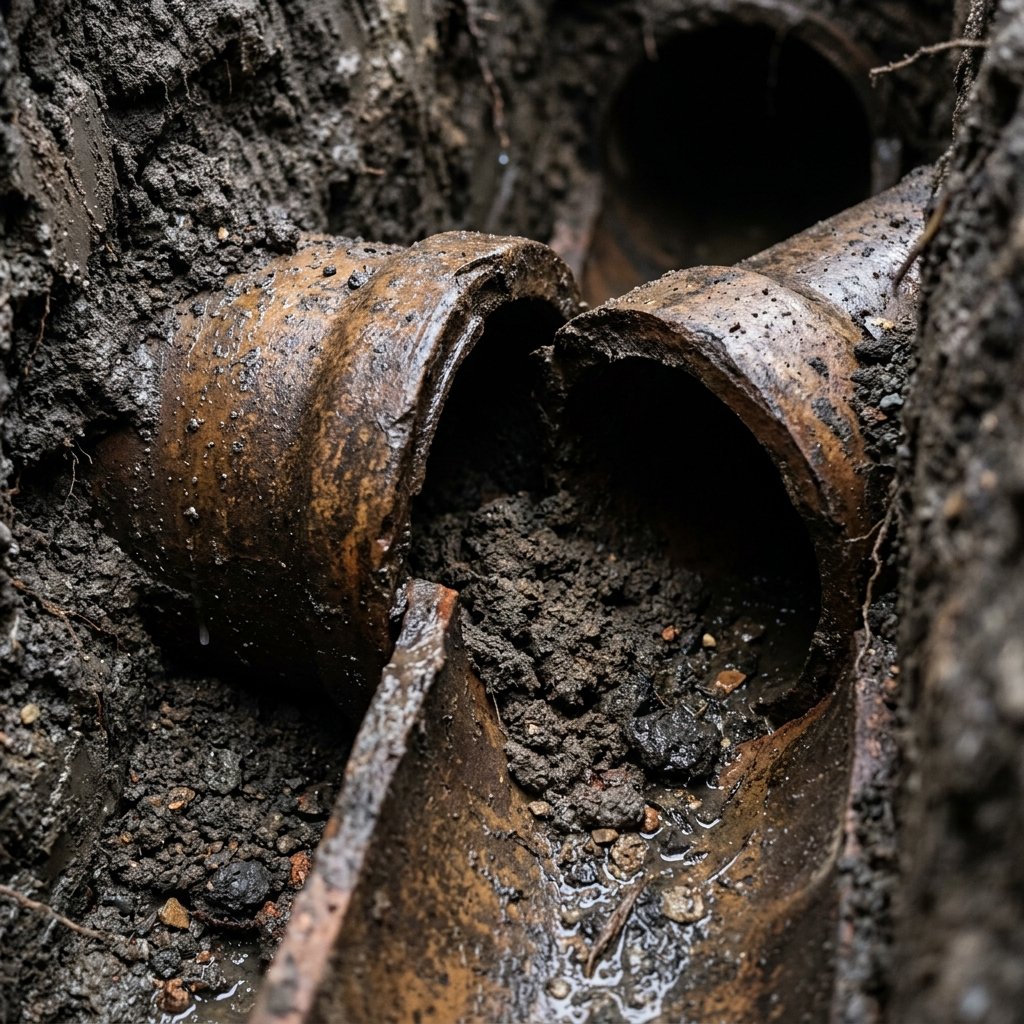
Older properties often use short salt-glazed clay sections joined with rigid sockets. A small movement at one joint creates a lip that catches paper and solids. The same opening may admit fine roots from a garden or street tree. Clearing restores flow, but a blockage can return if the socket remains open.
Post-war development introduced concrete, pitch-fibre, and later plastic into the local mix. Some homes now contain several generations of drainage because kitchens, bathrooms, garages, and extensions were added at different times. Adaptors between materials deserve close inspection. A poor connection can snag waste even when the pipe on either side is sound.
Combined sewers and heavy rain
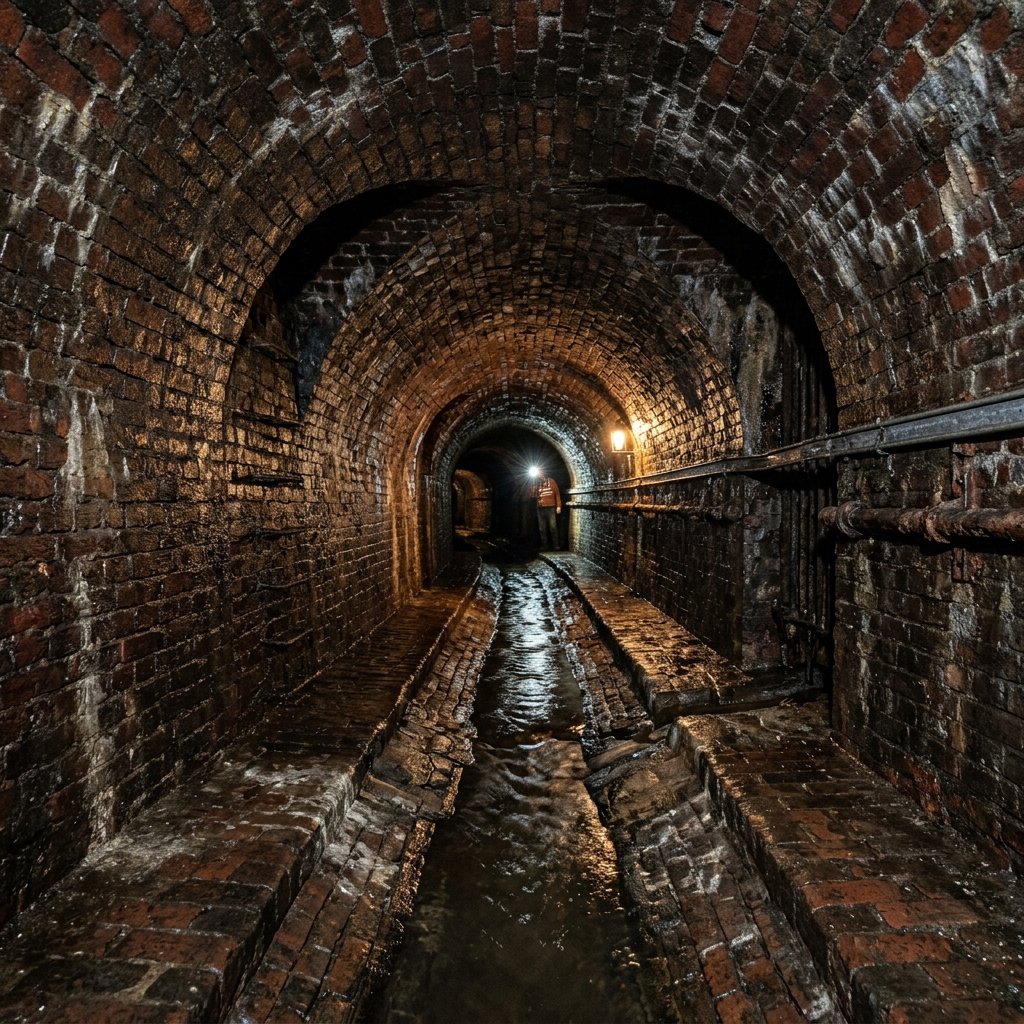
Parts of the Black Country have older combined systems that carry foul water and rainfall in the same public network. During severe weather, public sewers can become overwhelmed. Wolverhampton Council's guidance on local flooding responsibilities separates public sewers, private drains, road gullies, and watercourses because each has a different owner.
A private blockage behaves differently from a public surcharge. If one property's chamber stays full after nearby levels fall, the restriction may be on its private run. If several properties rise together or foul water returns from the street direction during rain, Severn Trent Water may need to investigate the shared or public network. We trace connections before recommending private work.
Work out who to call before paying for private clearance
Responsibility follows the pipe, not the symptom. A homeowner is normally responsible for a drain serving only their property within its boundary. Severn Trent Water generally deals with public sewers and shared lateral drains. Wolverhampton Council deals with highway gullies and some surface-water duties, while a watercourse may have a separate riparian owner. The first useful task is therefore to identify which connection is high.
- Only one fixture is slow. Check its local trap and branch before assuming the underground drain is blocked.
- Every fixture in one property is affected. Open safe private access points and test from the lowest fixture without adding a large volume of water.
- A shared chamber or neighbouring property is also high. Record the time and call Severn Trent Water before authorising a private excavation.
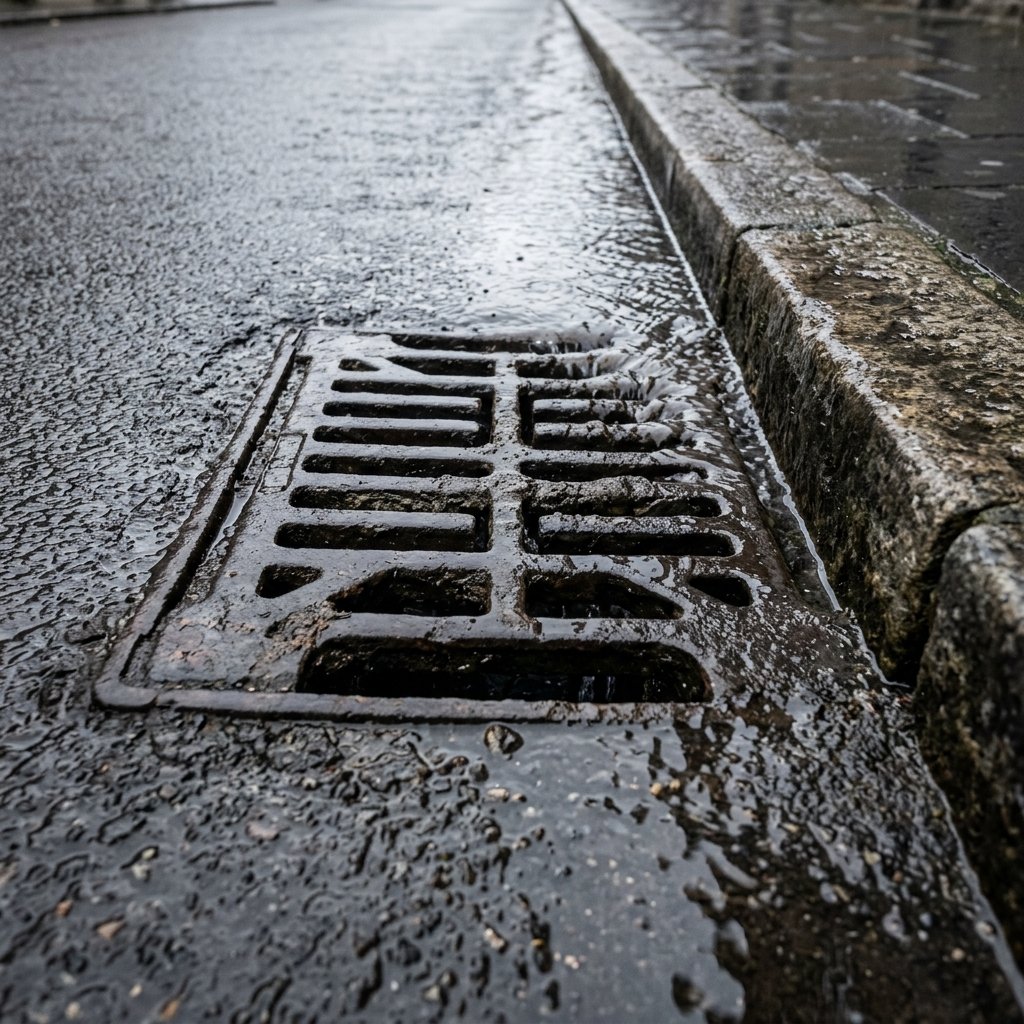
- Water stands over a road gully but private chambers are normal. Report the exact highway location to the council.
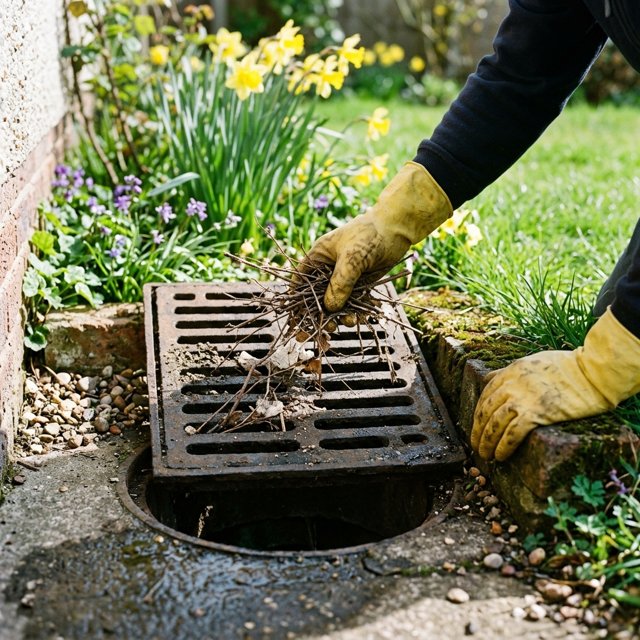
Do not enter a chamber or attempt to clear a public asset. Photographs of the level, the affected fixtures, and the direction from which water returns are safer and more useful. If the ownership remains uncertain, a camera and sonde can trace an accessible private run without pretending that the whole network is mapped.
Five clues that the pipe needs inspecting
- The same fixture or chamber blocks repeatedly. A root, damaged joint, or low section may remain after clearance.
- Rods stop at the same distance. This could mark a bend, but it can also indicate a displaced or deformed section.
- Several fixtures gurgle together. The restriction is probably after their branches meet.
- Soil or stones appear inside the pipe. Material may be entering through an open joint, crack, or collapse.
- The ground remains wet or starts to settle. A leaking drain can wash away bedding around the pipe.
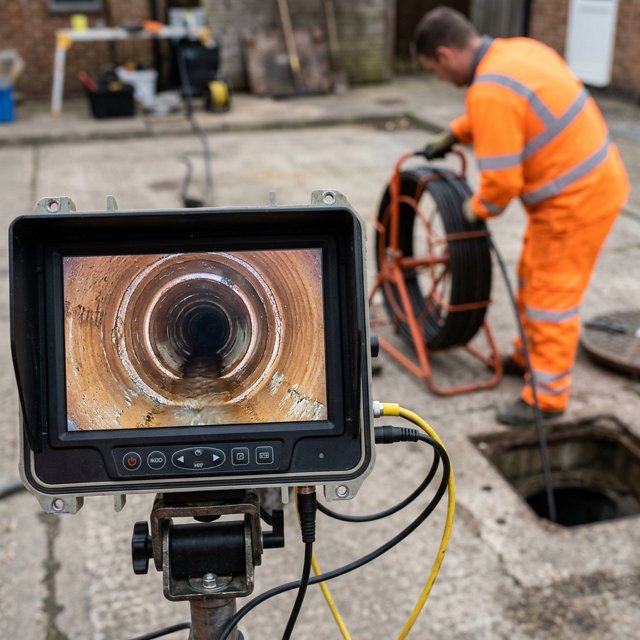
None of these signs proves a particular repair is needed. Our Wolverhampton drain unblocking service clears the bore first, then checks the pipe where access allows. A clean wall gives the camera operator a fair view of cracks, joints, roots, scale, and standing water.
What a CCTV survey should record
A useful survey links every finding to a measured distance and access point. It should distinguish a local defect from a longer damaged run. The footage may show one open socket at 7.2 metres, a section that holds water because it has lost its fall, or roots entering at several joints. Those are different problems with different repair costs.
- Pipe route and direction. Which chamber was used and where the camera travelled.
- Visible material and size. Clay, concrete, pitch-fibre, or plastic, including any change of diameter.
- Defect type and distance. Roots, fractures, open joints, displacement, deformation, or collapse.
- Flow condition. Whether water remains after use, suggesting a low or badly laid section.
- Repair reasoning. Why cleaning, patching, lining, excavation, or monitoring fits the finding.
Our CCTV drain surveys across Birmingham and the wider West Midlands provide recorded evidence and a clear explanation. Ask to see the relevant section of footage. A repair quote should make sense when compared with what is visible on screen.
Root cutting, relining, or excavation?
Root cutting removes the immediate obstruction but does not seal the opening. If the host pipe is stable, a local resin patch or longer liner may close the entry point without lifting a drive or mature garden. The same approach can seal cracks and minor open joints. Our guide to tree-root damage in drains explains why the pipe defect still matters after the roots have gone.
Excavation is more appropriate when the pipe is crushed, badly displaced, or laid with a fall that cannot be corrected internally. A local dig can be better value than lining a pipe that no longer has the right shape. The aim is the smallest repair that fixes the recorded fault, not the least visible method at any cost.
Evidence to ask for before approving a repair
Ask for the camera access point, direction, distance, and a still image of the defect. If lining is proposed, the quote should say how the pipe will be cleaned, whether roots or scale must be removed, the length and diameter of the liner, and how the result will be checked. If excavation is proposed, ask what surface must be lifted, how deep the pipe is believed to be, and what reinstatement is included.
A good recommendation also states its limits. Camera footage may not show a branch beyond a tight bend, a collapsed section may stop the lens, and standing water can hide the bottom of the pipe. These are reasons to collect more evidence, not reasons to label the entire run defective. The final test should match the repair: recorded CCTV for an internal sleeve, or photographs and a flow test for an excavated connection before it is covered.
Drainage across Wolverhampton and the Black Country
We attend older and newer properties across the city, including drainage work in Tettenhall, blocked drains in Penn, and longer residential runs around Wombourne. Similar clay joints, shared laterals, and mixed pipe materials appear while working in Walsall and Dudley. The local context changes, but the diagnosis still comes from the pipe in front of us.
Within Wolverhampton, access and property layout change over short distances. Mature gardens shape how we approach drain work in Finchfield, while converted industrial plots and closely spaced terraces are more common considerations when clearing blocked drains in Bilston. Our local notes for Wednesfield drainage and Bushbury drain unblocking explain the access, pipe and surface-water checks we make in those areas. They are useful context, not a substitute for tracing the affected run at the property.
Three questions we hear on older Wolverhampton streets
Why does an older drain keep blocking?
A structural snag may remain after the blockage is cleared. An open clay joint, a displaced socket, a ribbon of roots, or standing water in a low section can catch paper at the same place every few months. That is why the useful point for a camera survey is after the pipe has been cleaned. Otherwise dirty water can hide the very defect the survey is meant to find.
Who deals with a shared blocked drain?
Severn Trent Water generally manages shared lateral drains and public sewers. A drain serving only one property is normally private. If a neighbour's chamber rises at the same time, keep a note of when it happened and where the levels changed. That simple record can prevent two households paying separate contractors to investigate the same public-side fault.
Can clay drains be repaired without digging?
Some can. One stable open joint may take a short patch; a longer run with several fine cracks may suit a liner. The footage has to show enough sound pipe for the material to bond and hold its shape. If the bottom of the pipe has dropped away, the camera cannot pass a collapse, or the run falls in the wrong direction, digging is usually the honest answer.
Does Your Wolverhampton Drain Keep Blocking?
We can restore the flow, inspect the cleaned pipe, and show you whether a repair is needed.
Call: 0121 296 7829